Images: CIA40 Logo, State Crests and Landmarks of Singapore and Brunei
Singapore and Brunei: Four Decades of Trust and Cooperation
In 2007, we marked 40 years of the Currency Interchangeability Agreement (CIA40) with Brunei, a milestone of our enduring ties that had weathered the years. More than just an economic agreement, this occasion symbolised the trust and mutual respect between two nations that had long supported each other. As our economies grew, so did our friendship, grounded in shared history and aspirations. This enduring relationship reminded us how much stronger we were when we worked together, our success woven into the fabric of regional cooperation.
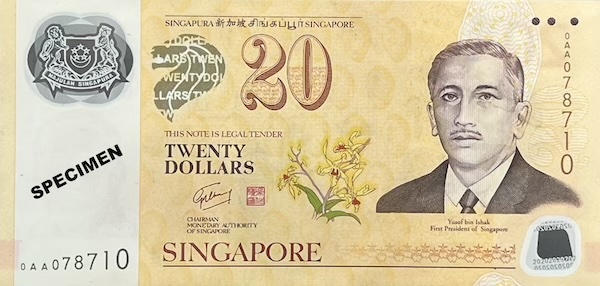
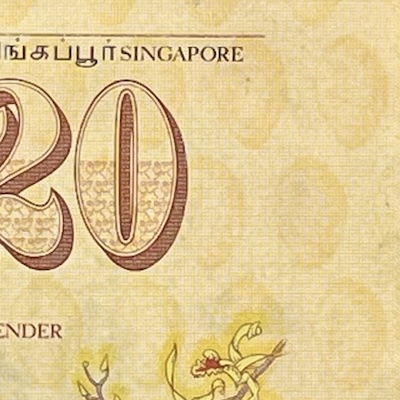
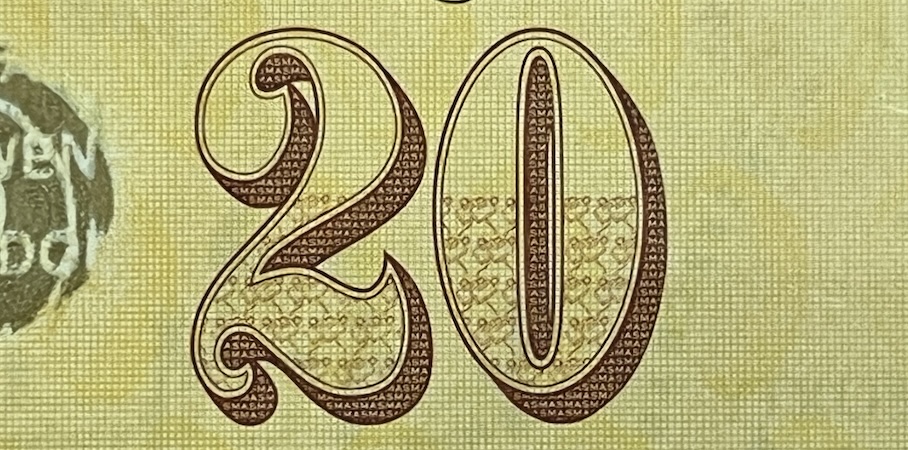
$20 was chosen to symbolise the 40th anniversary of this joint agreement: 20+20=40.
Celebrating Ties And Reviving Traditions
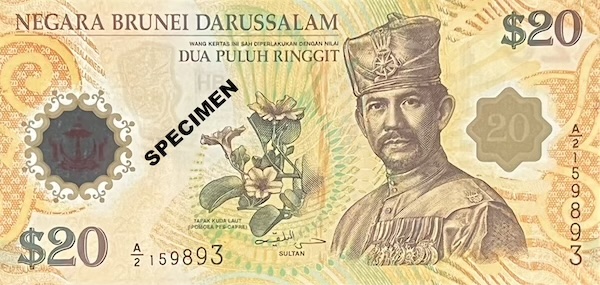
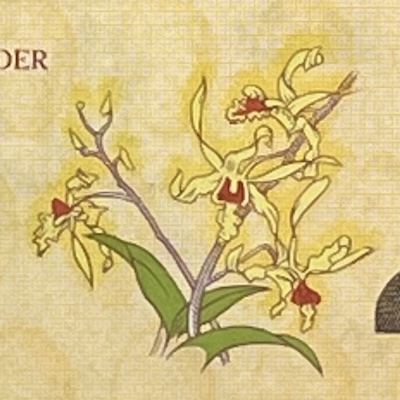
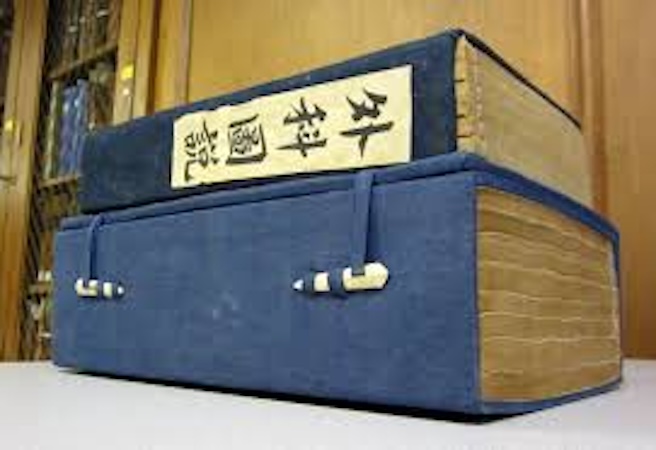
The $20 note issued to mark the 40th anniversary of the Currency Interchangeability Agreement with Brunei was a historic first—it was the first time Singapore and another country released a banknote together. Since then, the only other joint note was for the 50th anniversaryof the same agreement ten years later in 2017. This $20 note is special for other reasons too. It brought back an orchid design on the front of a note for the first time since the Orchid series ended in the 1970s. The orchid featured, Dendrobium Noor Aishah—named after President Yusof Ishak’s wife—had never appeared on any earlier Orchid note. This note also marked the return of the $20 denomination, which had not been issued since the Bird series was phased out in the 1980s. To go with the reintroduced $20, a new $20 tactile markfor the visually impaired was added. The note also introduced a unique fengshui symbol in the form of a pair of books, while re-using the onyx cowrie shell previously featured on the Portrait $10000.
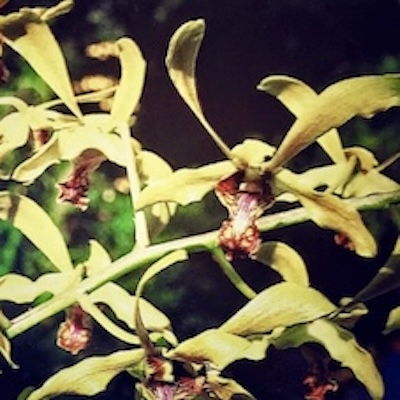
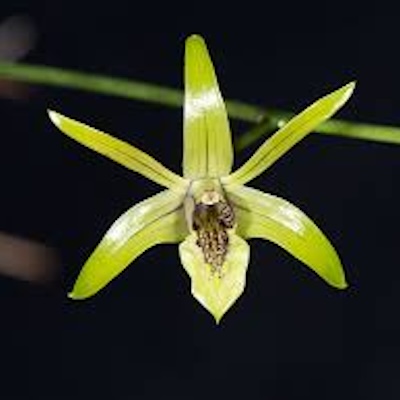
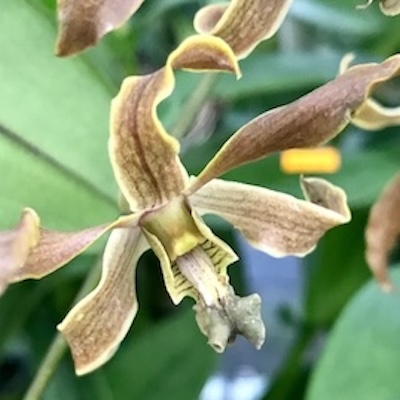
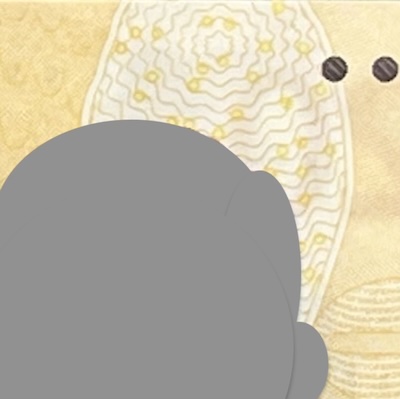
One of Singapore’s earliest orchid hybrids is the Dendrobium Noor Aishah, named after Puan Noor Aishah, our first First Lady, wife of President Yusof Ishak. This orchid was created in 1961, during Singapore’s early years, and was officially registered in 1965 when Singapore became independent. It has purple-violet petals with a bright white centre, giving it a graceful and elegant look. Like many Dendrobiums, it is strong and grows well in Singapore’s warm and humid weather. This orchid was named after Noor Aishah to honour her contributions to social work, volunteerism, and community building.
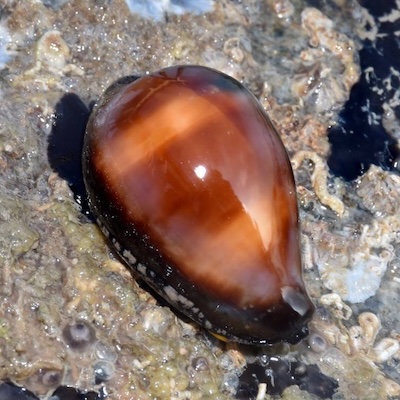
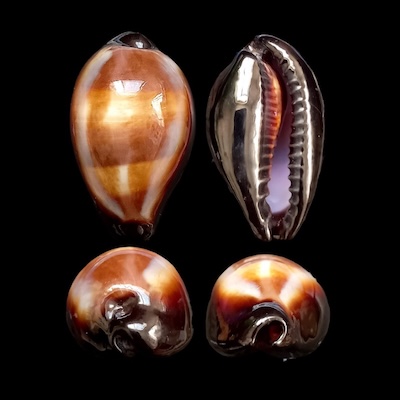
Also featured on the Portrait $10000, the Onyx Cowrie is a small sea snail with a smooth, shiny shell that looks like a polished gemstone. Its shell is usually dark brown or black with lighter lines or streaks, just like the layers of the onyx stone, which is how it got its name. It lives in warm tropical waters across the Indo-Pacific region. A long time ago, people loved this cowrie for its beauty. Some made it into necklaces, decorations, or lucky charms, because they believed it could bring good fortune and protection. Today, shell collectors still admire the Onyx Cowrie for its glossy surface and attractive colours.
Unlike the Portrait currency notes, which often featured items linked to fengshui and good fortune, the 2007 commemorative note chose to feature a pair of books. This was a symbol of knowledge, learning, and discipline. In traditional China, books held a special place in daily life. They were valued not just for education, but for shaping a person’s behaviour and sense of duty. Families often kept books for generations, treating them as part of the household’s legacy. People read to learn how to think clearly, act properly, and take part in society. Books were also used to prepare for the imperial civil service exams, which offered a path to respected government jobs. At home, books were placed with care alongside writing tools, and children were taught to read and copy texts from a young age. A person who read widely was seen as thoughtful, honest, and dependable. In ancient China, books were not simply for learning—they were steady guides for how to live.
Two Nations, One Currency Bond
CIA40 Logo
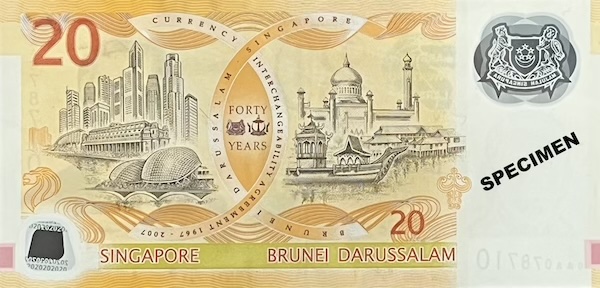
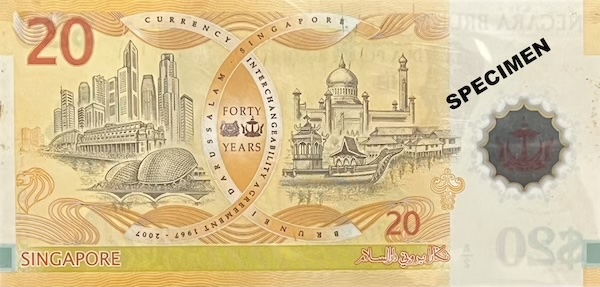
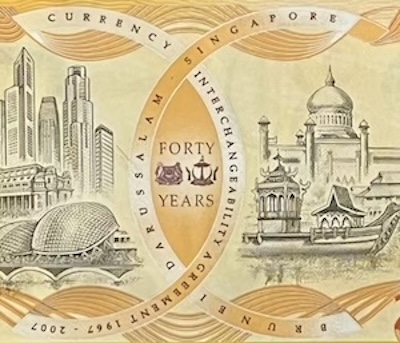
On the commemorative note is a design of two interlocking ‘C’s. These two ‘C’s stand for ‘Currency’ and symbolise the interlocking relationship between Singapore and Brunei. One arm of the ‘C’ has the words ‘Brunei Darussalam · Singapore’, while the other arm shows ‘Currency Interchangeability Agreement 1967–2007’. Enclosed within the two ‘C’s are the state crests of Singapore and Brunei, along with the words ‘Forty Years’.
Landmarks of Singapore
The Currency Interchangeability Agreement (CIA) between Singapore and Brunei began on 12 June 1967—the same date Singapore issued our very first batch of Orchid series currency notes. Under the CIA, we can freely spend our Singapore dollar in Brunei, and the Bruneians can spend their Brunei dollar here at a one-to-one value. Originally, Malaysia was also supposed to be a part of the agreement after separating from British rule. But in 1967, they decided to have their own currency instead. Singapore and Brunei, however, kept our partnership. Until today, our CIA with Brunei remains the only such agreement between countries in Asia.
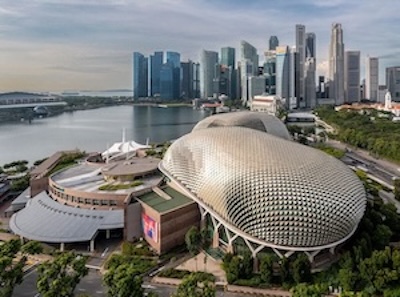
Esplanade and Singapore Skyline9
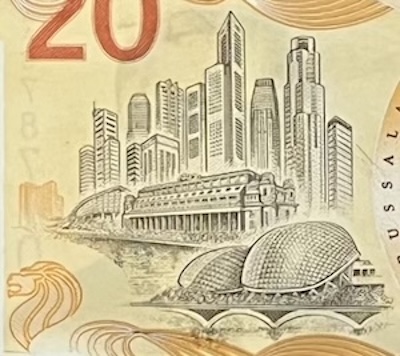
The Esplanade is one of Singapore’s most iconic landmarks, easily recognised by its spiky domes that look like durians. Opened in 2002, it has become a major centre for the arts, where people can enjoy concerts, plays, and performances from around the world. Nearby, the skyscrapers of the financial district and the historic Fullerton Building complete our waterfront view.
Market Value in 2024
Market Price: $30
Condition
• Ungraded
• Brand new
• No tears, pinholes, stains, foxing, creases or folds
Context
• The information here refers specifically to the banknote featured on the top of this page.
9. Image by Darren Son, South China Morning Post. Source: https://www.scmp.com/native/lifestyle/arts-culture/topics/contemporary-theatre-singapore/article/3271671/studios-esplanade-singapore-explores-past-and-present-through-performing-arts.
Disclaimer
I built this website as a hobby, to share with others what I’ve learnt. All the information here is written based on my own research and understanding, and I don’t guarantee that everything is correct, complete, or updated. While I sell banknotes here, I don’t profit from them, as they are spare pieces from my private collection. All the banknote images here are taken by myself and they belong to me. The non-banknote images, with sources that I’ve attributed on every page, are used solely for illustration and non-commercial education purposes. If you are a copyright holder and believe something has been used inappropriately, please contact me, and I will immediately review or remove it.