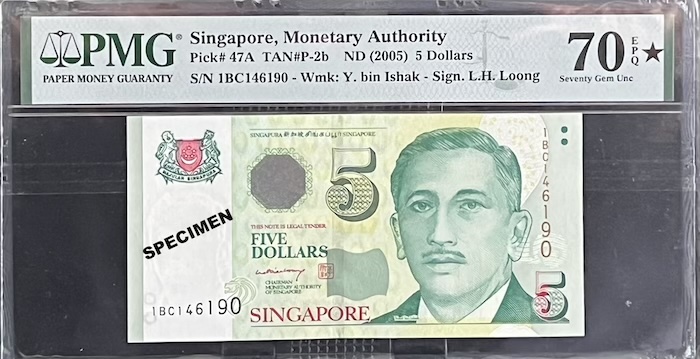
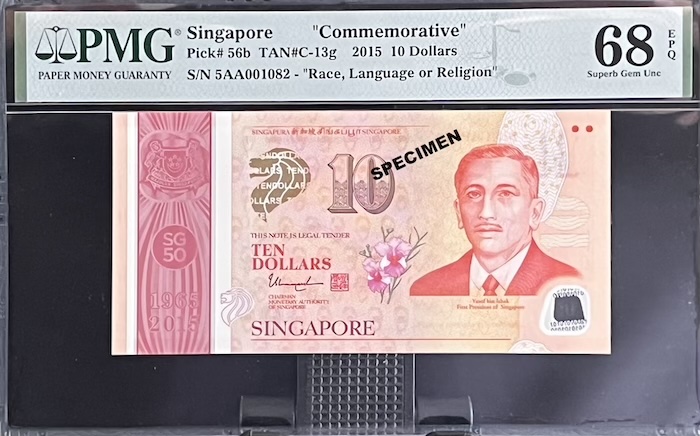
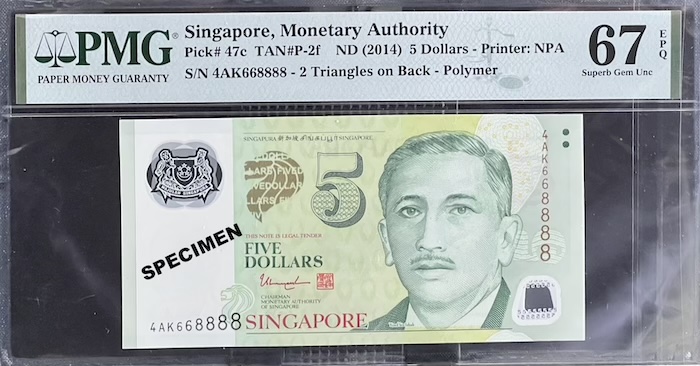
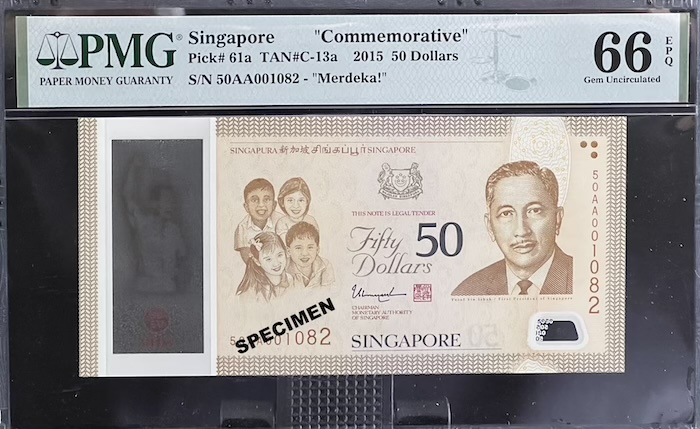
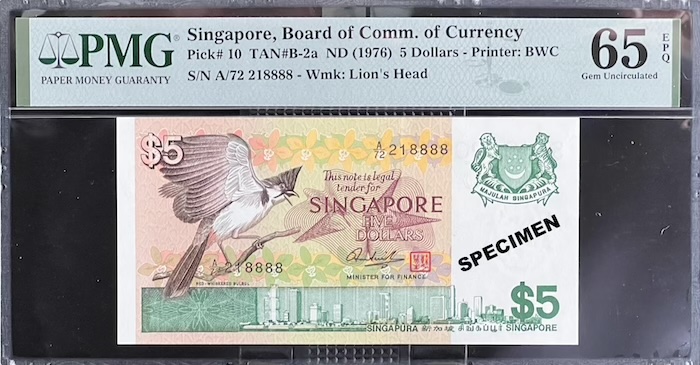
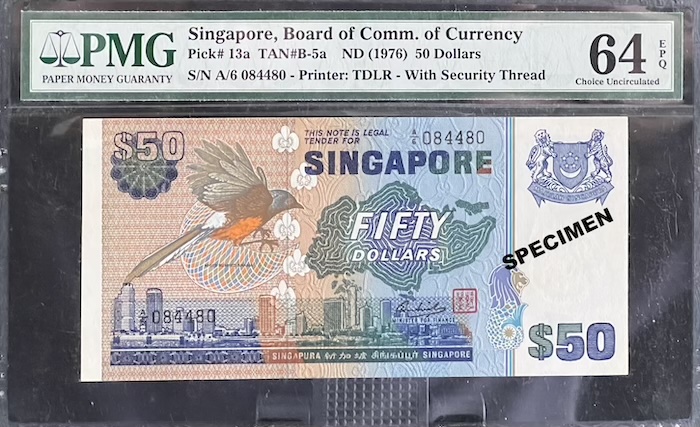
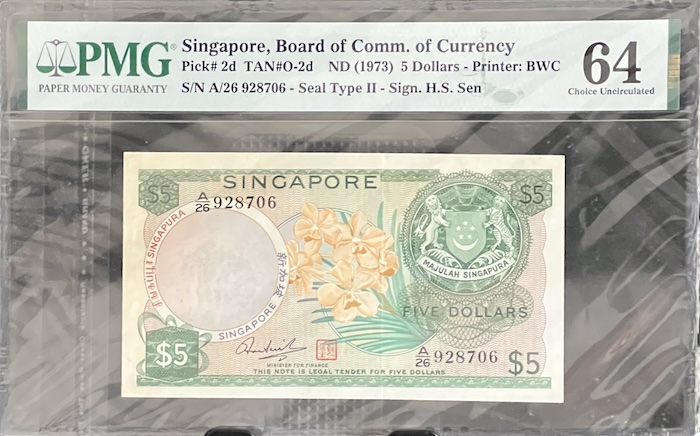
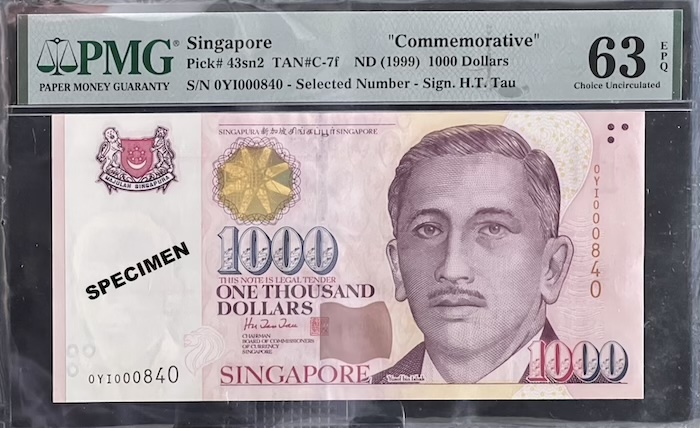
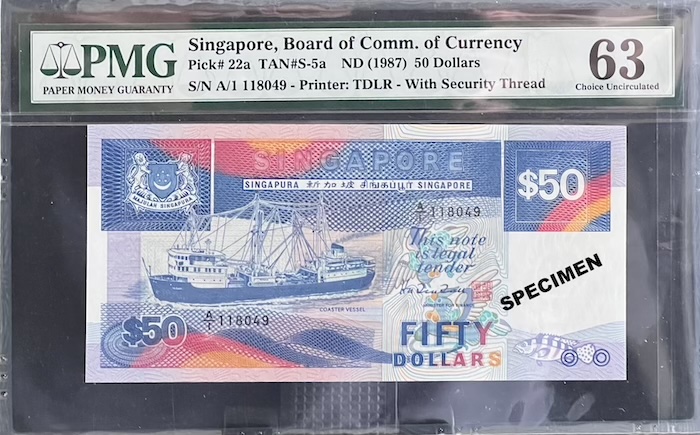
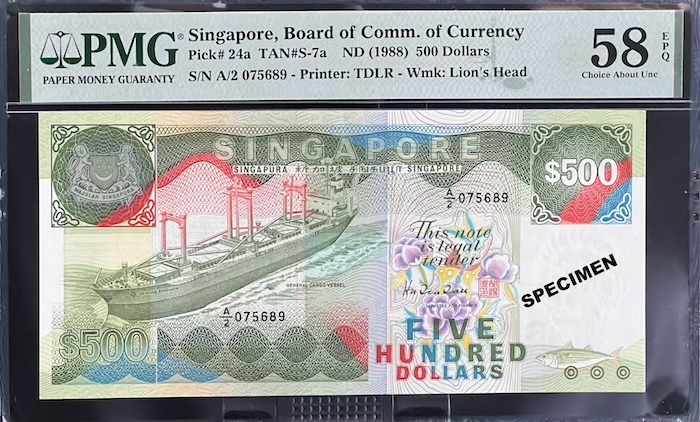
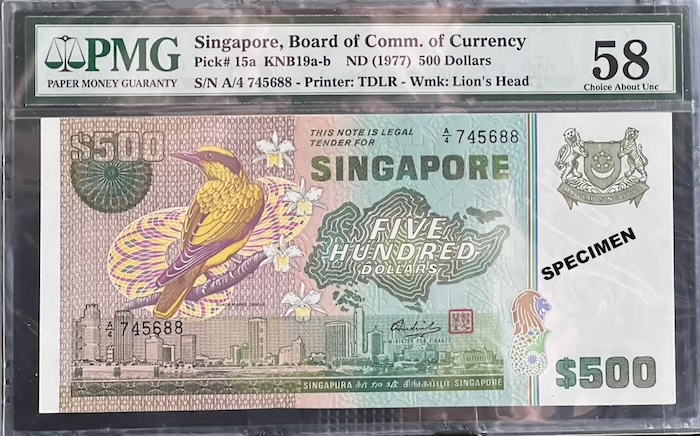
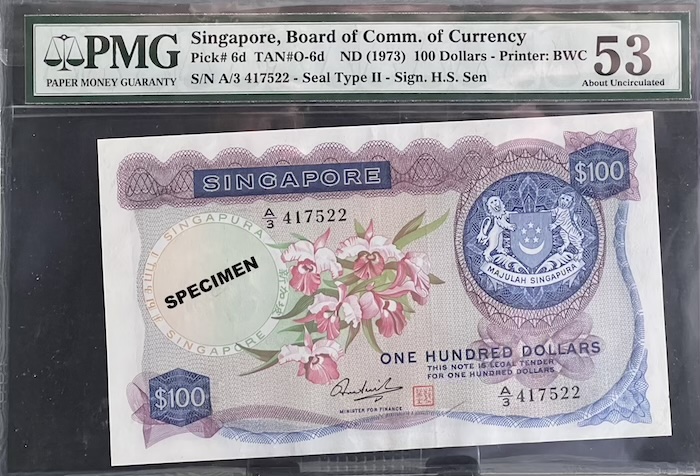
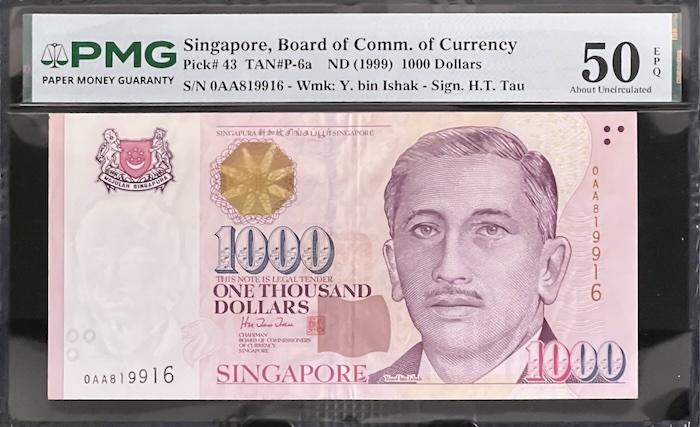
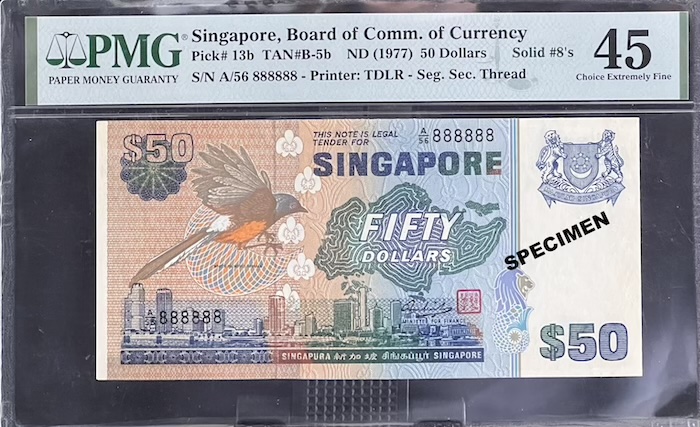
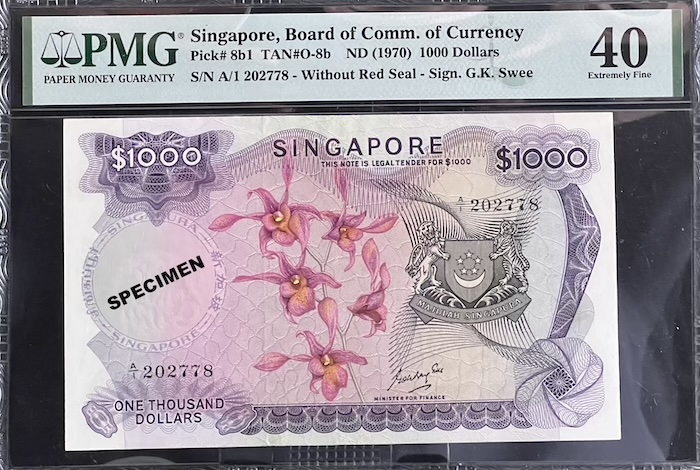
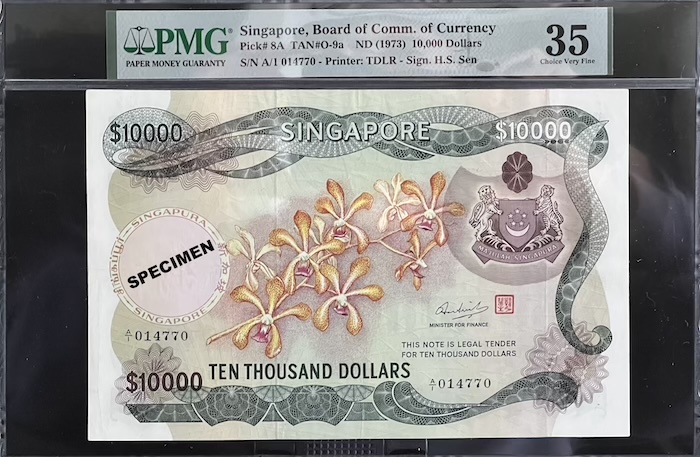
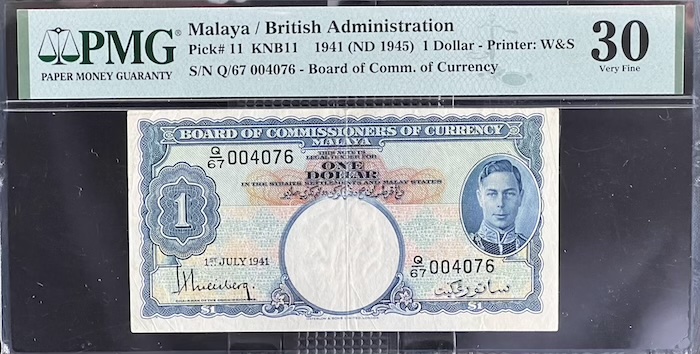
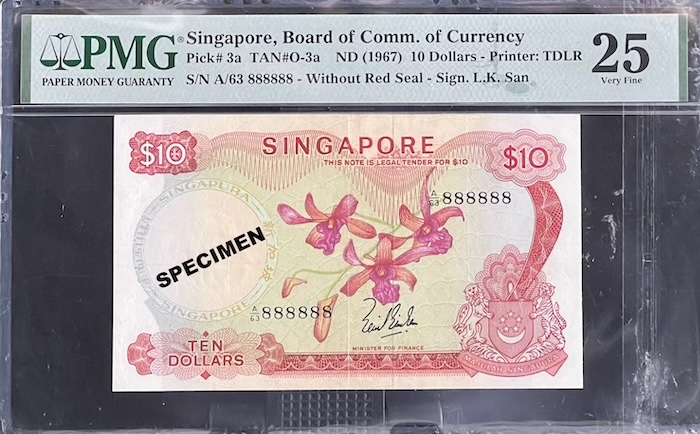
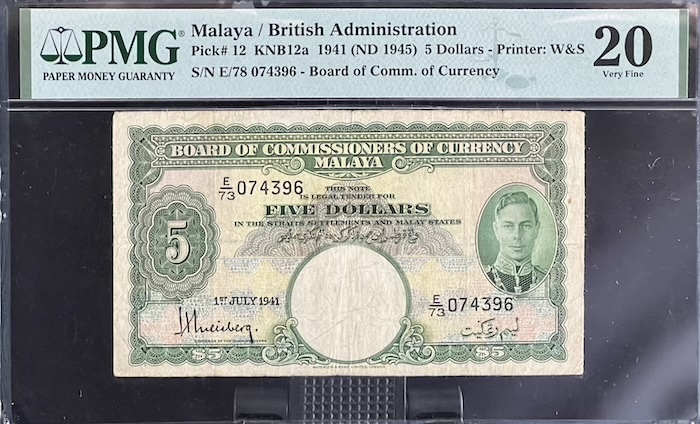
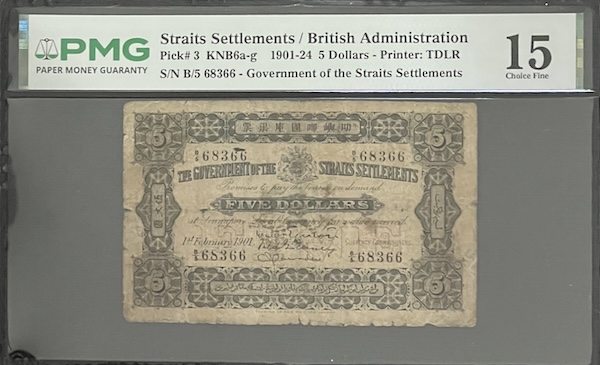
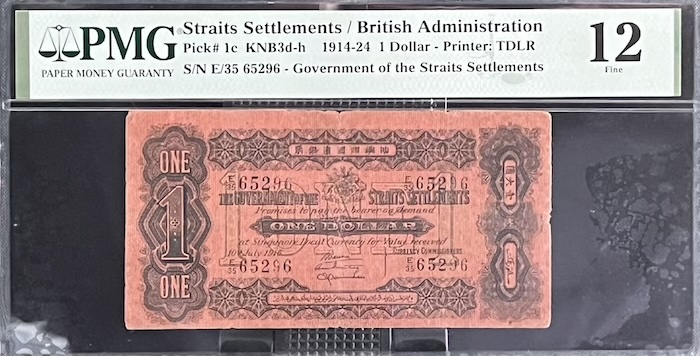
Paper Money Guaranty (PMG), established in 2005, revolutionised the field of banknote collecting by introducing an independent, unbiased, and standardised system of grading. Before PMG, grading was largely subjective and inconsistent, as dealers would assign their own grades to the notes they were selling. PMG addressed this issue by implementing a professional third-party grading system where every note is examined by multiple graders who are not allowed to trade notes commercially. PMG also seals graded notes in protective holders with clear labels, appealing to collectors who intend to preserve their notes for years. Today, PMG has become the world’s largest third-party paper money grading service, certifying over two million notes globally. It is the company of choice for grading Singapore banknotes.
PMG uses a 70-point numeric scale with matching adjectival grades. In general, the higher the PMG grade, the better the condition of the note—fewer folds, sharper corners, better centring, and cleaner paper:
• Grades 4–6: Good (GD)
• Grades 8–10: Very Good (VG)
• Grades 12–15: Fine (FN)
• Grades 20–35: Very Fine (VF)
• Grades 40–45: Extremely Fine (XF)
• Grades 50–58: About Uncirculated (AU)
• Grades 60–64: Uncirculated (UNC)
• Grades 65–70: Gem Uncirculated (GEM)
Sometimes, the terms “Choice”, “Superb”, and “★ (Star)” are used by PMG to highlight notes with exceptional qualities beyond their numeric grade. “Choice” indicates that a note is better than average for its grade—perhaps with cleaner paper, stronger colour, or more balanced margins. For example, a note graded PMG 40 might be described as “Choice Extremely Fine” if it stands out among others at the same level. “Superb” is used for notes graded 67 to 70, meaning they are virtually flawless in terms of centering, print quality, and visual appeal. The ★ (Star) symbol is added to notes graded PMG 70 that have exceptional eye appeal even among other top-graded notes—often due to vibrant inks, wide margins, or unusual freshness. PMG may also include the designation “Exceptional Paper Quality (EPQ)” for notes that have original, unaltered paper with no signs of pressing, cleaning, or other modifications. These additional descriptors help collectors identify notes that are not just technically sound, but also visually and physically superior.
For collection purposes, I simplify graded notes into three categories: museum, collectible, and antique grades. This is my heuristic to decide which notes to consider, and they denote the types of grades suitable for different collectors and collections.