
2015 SG50 $50
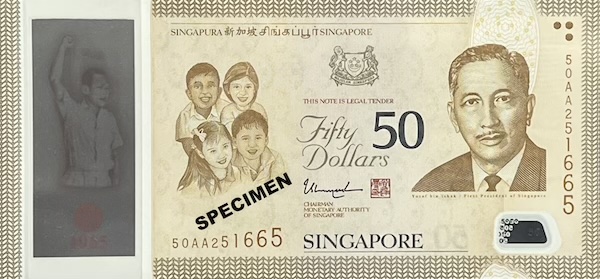
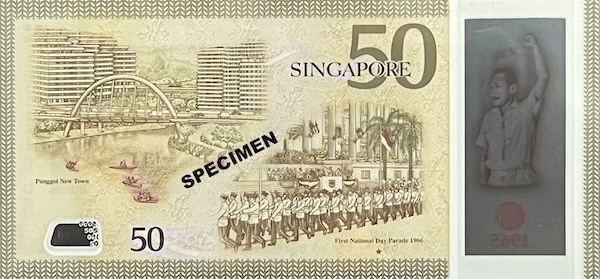
A Golden Anniversary of Hope, Heart, and Home
The year 2015 was our golden anniversary (SG50)—50 years since we first stood as an independent nation. Led by our first Prime Minister, Mr Lee Kuan Yew, Singapore’s early years were filled with uncertainty but also great determination and hope. Our first National Day Parade in 1966 captured the pride of a young nation, even as the future remained unclear. Within decades, however, we turned things around. Even the once-distant Punggol had become our latest, thriving new town, a testament to the progress we made since our early days. Our 50th anniversary paid tribute to the spirit of our pioneers who turned our tiny island into a modern metropolis.
Circulation status: Commemorative
Issuing authority: MAS
First issued: 20 August 2015
Pieces issued:
• 20 million (regular edition)
• 50,000 (SG50 prefix edition)
• 5,000 sheets (3-in-1 uncut edition)
• 5,000 sets (identical number edition)
Printer: Probably Note Printing Australia
Material: Polymer
Artists:
• Chua Mia Tee
• Fabian Lim
‘Singapore’ in caps
‘Singapore’ in four languages
National Coat of Arms
Portrait: Yusof Ishak
Cowrie: Cylindrical cowrie (front, background)
Images:
• Lee Kuan Yew (front)
• SG50 logo & ‘2015’ (front)
• Children of different races (front)
• First National Day Parade (back)
• Punggol new town (back)
• Fluorescent ink & fibres
• Intaglio & reverse intaglio printing
• Micro-lettering
• Asymmetrical serial number digits
• EURion constellation
• Floral patterns
• Colour-switching SG50 logo
• Switching images of ‘1965’ & ‘2015’
• Perfect registration of Lee Kuan Yew & SG50 logo
• Two see-through windows
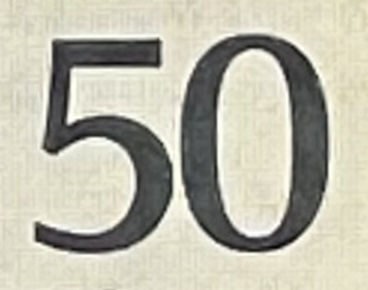
Gold was chosen as the colour of this note as it is symbolic of our Golden anniversary.
SG50: Tribute Mr Lee Kuan Yew and Record-Breaking Release
With 20 million pieces issued, the SG50 $50 note is the largest commemorative note issue in Singapore’s history. This was more than four times the next biggest issue—the Millennium $2 note, which had 4.9 million pieces. The SG50 note also shared some similarities with the 1990 SG25 note: both left out the security thread and the ultraviolet-visible serial numbers, differences that were later repeated in the 2017 CIA50 and 2019 Bicentennial notes. More importantly from the historical lens, the SG50 note remains the only banknote in Singapore’s history to clearly show an image of our founding Prime Minister, Mr Lee Kuan Yew. The SG25 note did include him in a group photo of the first Parliament sitting in December 1965, but he was small and hard to recognise.
The Little Red Dot: From Merdeka Cries to Independence
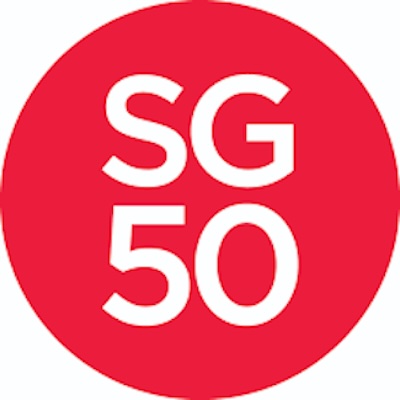
The design of the SG50 logo was inspired by the ‘little red dot’. This term came from former Indonesian President B. J. Habibie in 1998, during a time when Indonesia was facing political and economic troubles. After Singapore called for stability in the region, Habibie dismissed us, saying we were just a little red dot on the map, belittling our small size and influence. However, we embraced the term with pride, and turned it into a symbol of strength and resilience. Over time, the ‘little red dot’ came to represent our ability to rise above our limitations and succeed on the world stage. The red circle in the SG50 logo was meant to capture this spirit.
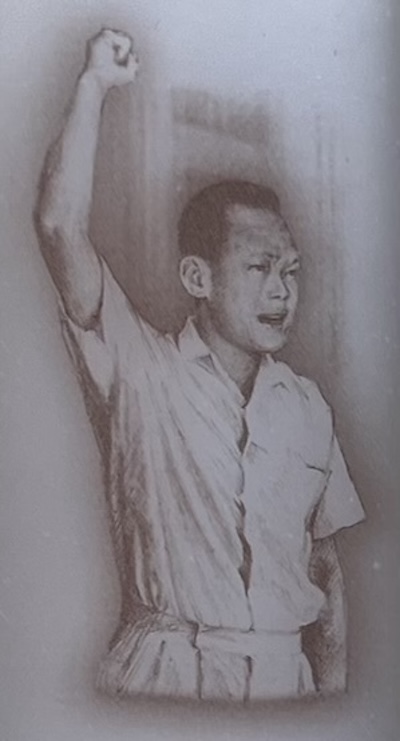
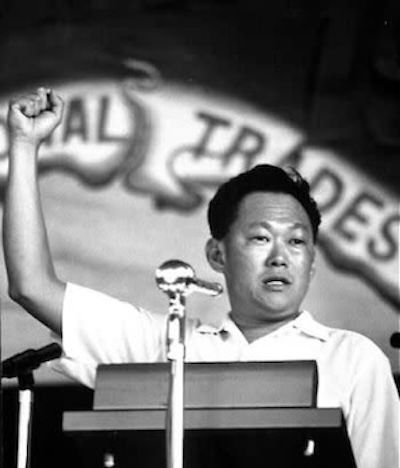
The ‘Merdeka’ moments were powerful milestones in our journey towards self-rule. ‘Merdeka’ means ‘freedom’ or ‘independence’ in Malay. Mr Lee Kuan Yew shouted ‘Merdeka!’ at many key moments to inspire Singaporeans towards independence. In 1956, he led a rally at the Padang, calling out ‘Merdeka!’ loudly. In 1957, after talks in London, he cried ‘Merdeka!’ again when Singapore gained more control over its government. In 1959, when we achieved full self-governance, Mr Lee stood at City Hall and once again shouted ‘Merdeka!’ to celebrate the victory. In 1961, at a National Day event outside City Hall, he led the crowd to shout ‘Merdeka’ three times. Then in 1963, during Malaysia Solidarity Day, he shouted ‘Merdeka’ three more times to mark Singapore’s independence through joining Malaysia. Each time he cried ‘Merdeka,’ it gave Singaporeans hope and strength to believe we could take charge of our own future.
When Singapore finally became independent from Malaysia, however, there were no shouts of ‘Merdeka’. Instead, it was a very different mood. Mr Lee announced our separation from Malaysia in a sombre television broadcast. He spoke with sadness, even breaking down in tears. Unlike the earlier ‘Merdeka’ moments filled with hope and celebration, independence in 1965 came with uncertainty and sorrow, as we were forced to stand alone against our wishes. Nonetheless, with Mr Lee’s leadership and the hard work and unity of Singaporeans, we overcame the odds, and fifty years later, stood proud as a thriving, independent nation.
From Newfound Independence to New Town achievements
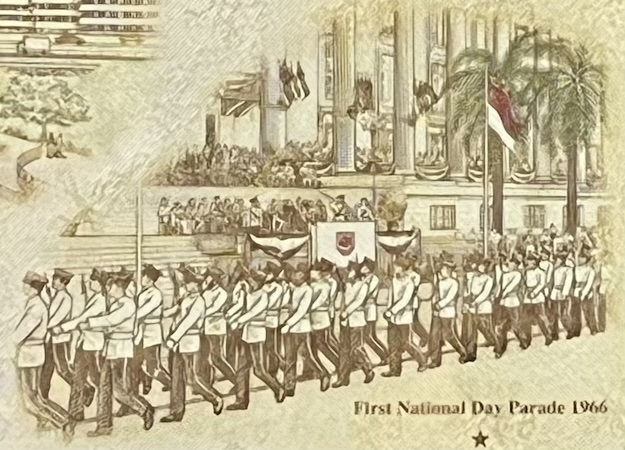
The idea for Singapore’s first National Day Parade in 1966 came soon after independence. The government wanted to mark the occasion, to show the world—and ourselves—that we could stand on our own as a new and united nation. It was a chance to build confidence and pride among the people. The Padang was chosen as the parade location because it was a well-known and central place, where large crowds could gather. But there were concerns. No one knew for sure if people would show up. There were worries about safety, and the weather in August was unpredictable. The decision was taken nonetheless to proceed with the parade.
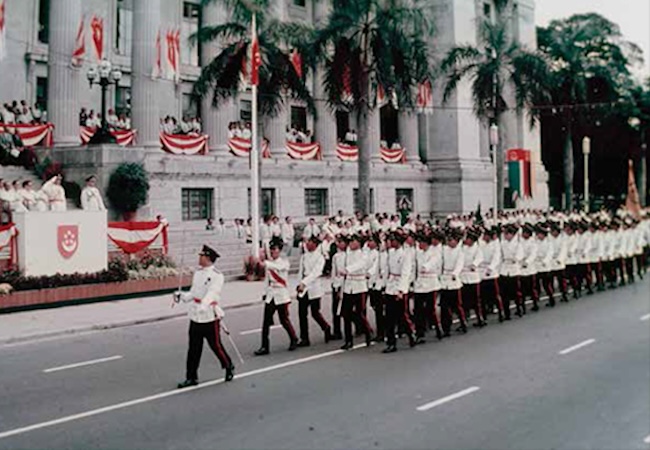
The parade turned out well. For many Singaporeans, life was still hard at the time. Jobs were uncertain, and food and housing were daily concerns. Even so, people felt that this parade was important. It was more than just a show—it was a moment to come together, to show support for the country, and to feel a part of something larger than themselves. There was a strong mix of emotions. People were proud to be part of a young nation, but they were also anxious about the future. Still, many chose to take part—to watch, to cheer, and to celebrate the fact that Singapore had taken our first steps as an independent country.
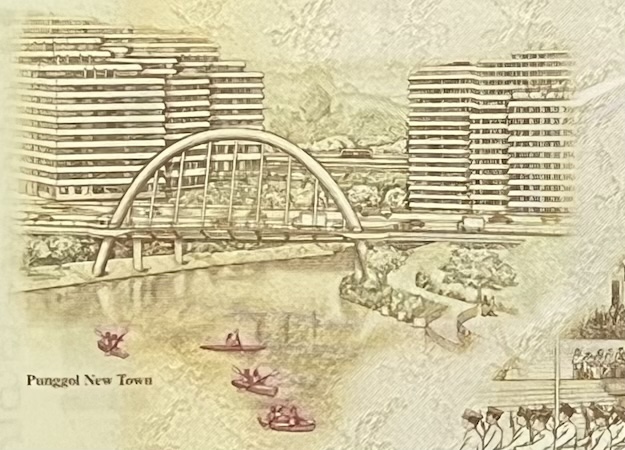
Punggol used to be a quiet area with farms, fishing villages, and seafood restaurants by the sea. Families would visit on weekends to enjoy the food and peaceful surroundings. In 1996, the government announced the Punggol 21 plan to turn the area into a new town with modern housing, transport, and facilities. But progress was slow in the early 2000s because of a weak economy and the SARS outbreak. Many parts of Punggol stayed empty for years.
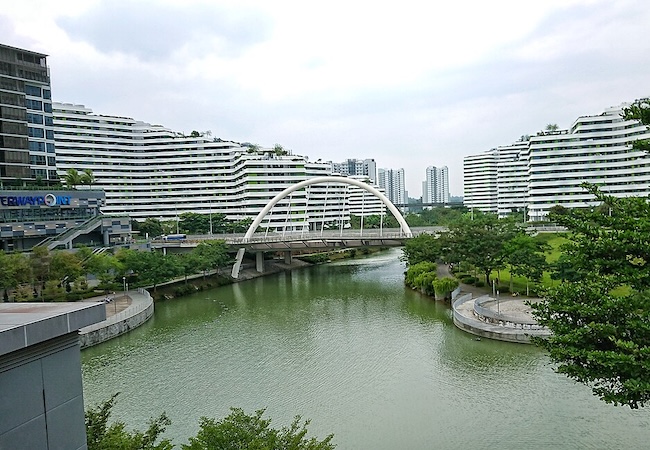
Things picked up in 2007 with the Punggol 21+ plan, which added new ideas like green spaces, parks, and a waterway running through the town. After that, new HDB flats, schools, and playgrounds were built. The Punggol MRT and LRT stations made it easier to get around. A shopping mall called Waterway Point opened near the MRT, offering shops, food, and a cinema. The town also became known for its parks, like Punggol Waterway Park and Coney Island, where people could walk, cycle, or relax by the water. Today, Punggol is a lively town filled with young families, with a mix of nature and city life.
Market Value in 2024
Market Price: $110
Condition
• Ungraded
• Brand new
• No tears, pinholes, stains, foxing, creases or folds
Context
• The information here refers specifically to the banknote featured on the top of this page.
• The same note may fetch a higher price if it is graded, issued as a special edition, has special prefixes or serial numbers, or is a specimen or error note.
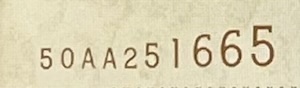
• The same note may fetch a lower price if it lacks the first prefix 50AA or is in poorer condition.
Attributions
1. Prefix and banknote details from Vincent Tan and Tan Wei Jie, Singapore Banknotes: Complete Prefix Reference, Mr Banknotes, 2017.
2. Image from National Archives of Singapore. Source: https://dollarsandsense.sg/what-young-singaporeans-must-never-forget-about-our-country/.
3. Image from National Heritage Board. Source: https://www.roots.gov.sg/stories-landing/stories/50-years-and-counting/story.
4. Image from Deoma12, Wikipedia. Source: https://en.m.wikipedia.org/wiki/File:Punggol_Town_Centre.jpg.