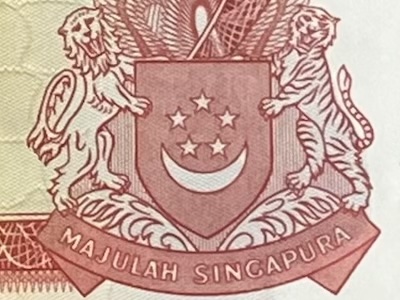
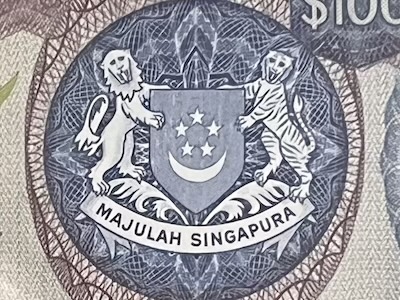
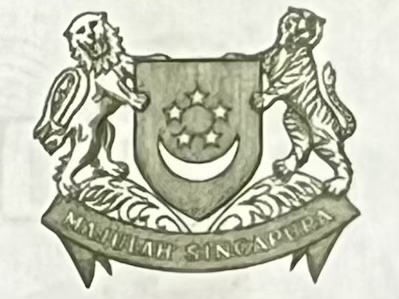
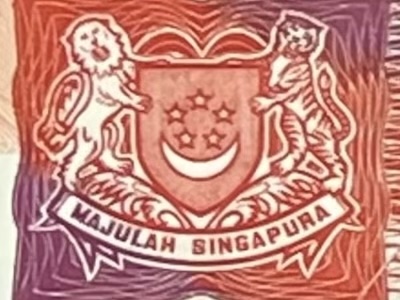
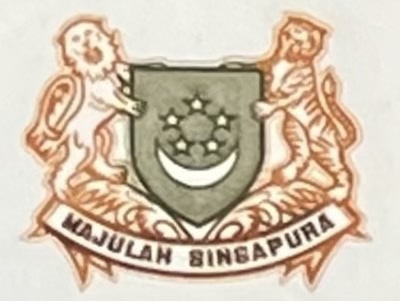
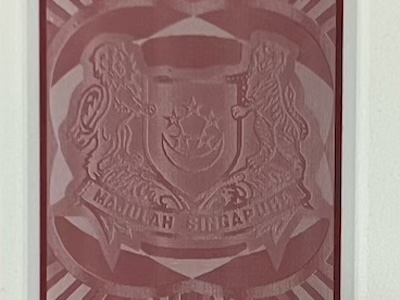
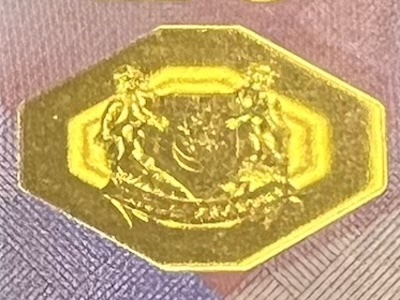
Singapore’s state crest—or national coat of arms—appears on every one of our banknotes since independence. It was first introduced in 1959, when we achieved self-government. At the centre is a red shield with a white crescent moon and five white stars. The crescent represents a young nation on the rise, while the five stars stand for democracy, peace, progress, justice, and equality. Supporting the shield are a lion and a tiger. The lion represents Singapore and our courage and strength. The tiger represents our close historical ties with Malaysia. Below them is a blue ribbon with the words “Majulah Singapura,” which means “Onward Singapore” in Malay—our national anthem.
O10
O100
B500
S10
S10
P100
P5 Polymer
P10 Polymer
The term “coat of arms” comes from medieval Europe, where knights and nobles used special symbols to show who they were. These symbols were often displayed on a coat (a piece of cloth) worn over their arms (weapons and armour) during battles or tournaments. This made it easier to identify them on the battlefield. Over time, the name “coat of arms” came to refer to the whole design of symbols—like shields, animals, colours, and mottos—that represented a person, family, group, or country. So when we say Singapore’s “coat of arms,” we’re using this traditional term to describe our national emblem—a design that shows what our country stands for, using symbols like the lion, tiger, shield, stars, and crescent moon.
CIA40
SG50-10
CIA50
B200
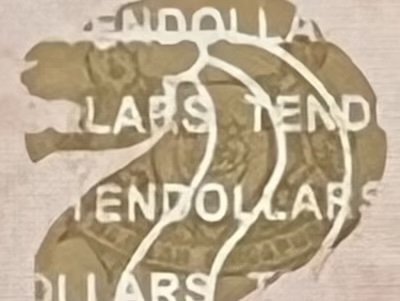
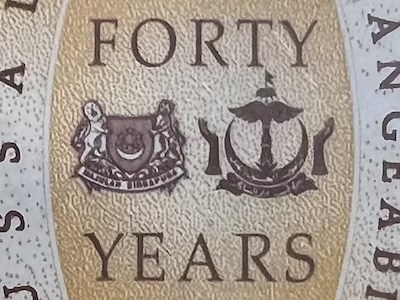
In the polymer versions of our Portrait series and some commemorative notes, the Coat of Arms also appears as one of the images in the Gold Lion Head. In the 2007 commemorative note, it also appears within the CIA40 logo, placed side by side with the state crest of Brunei.
Disclaimer. I built this website as a hobby, to share with others what I’ve learnt. All the information here is written based on my own research and understanding, and I don’t guarantee that everything is correct, complete, or updated. While I sell banknotes here, I don’t profit from them, as they are spare pieces from my private collection. All the banknote images here are taken by myself and they belong to me. The non-banknote images, with sources that I’ve attributed on every page, are used solely for illustration and non-commercial education purposes. If you are a copyright holder and believe something has been used inappropriately, please contact me, and I will immediately review or remove it.