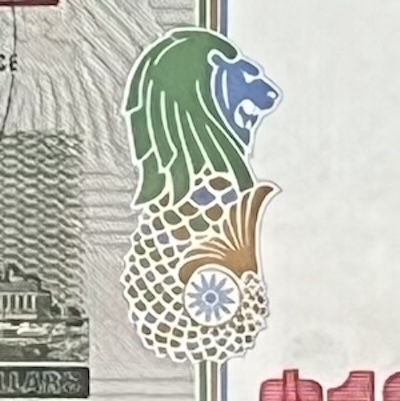
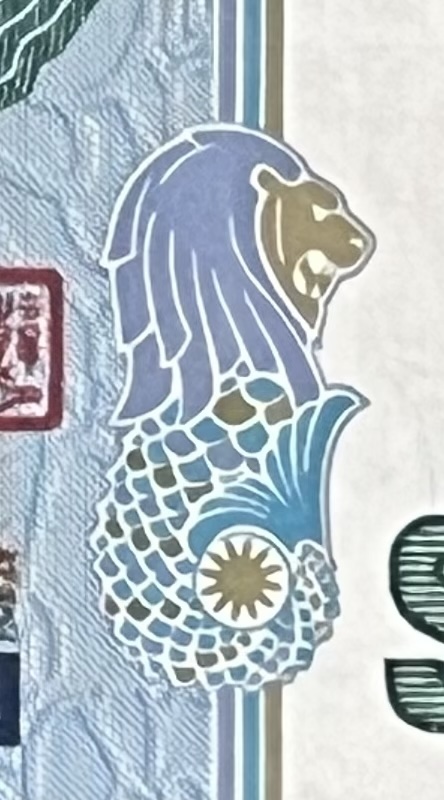
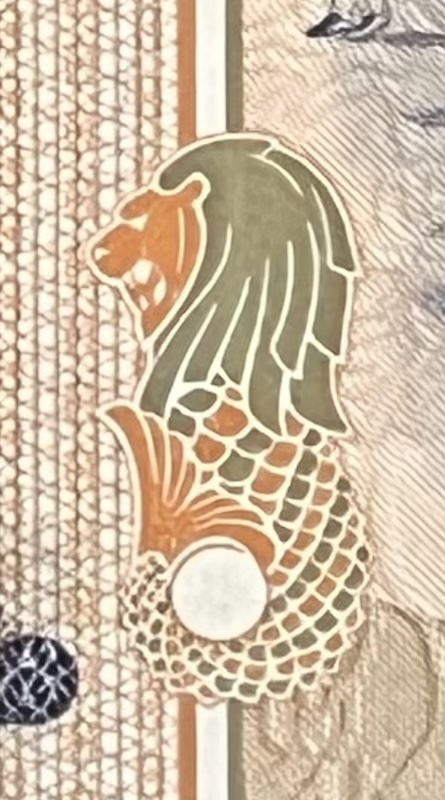
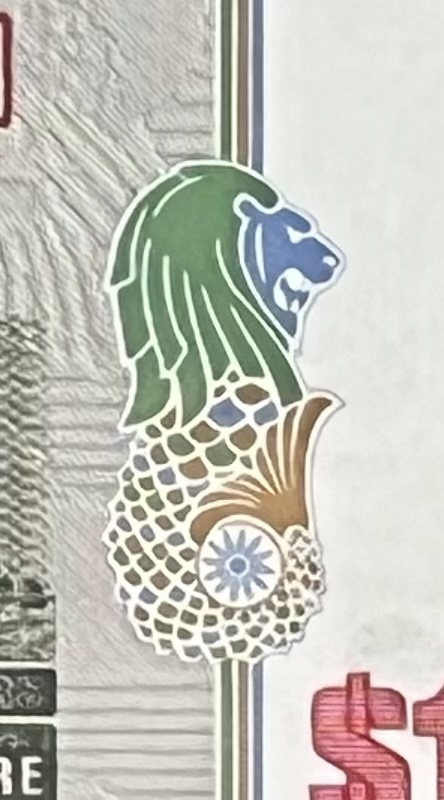
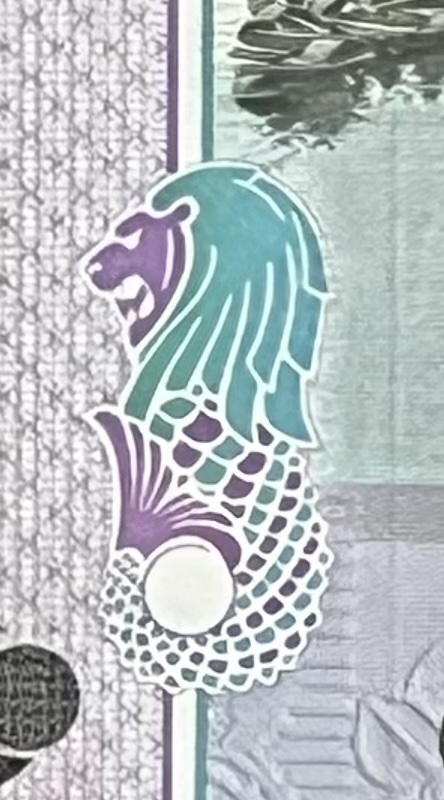
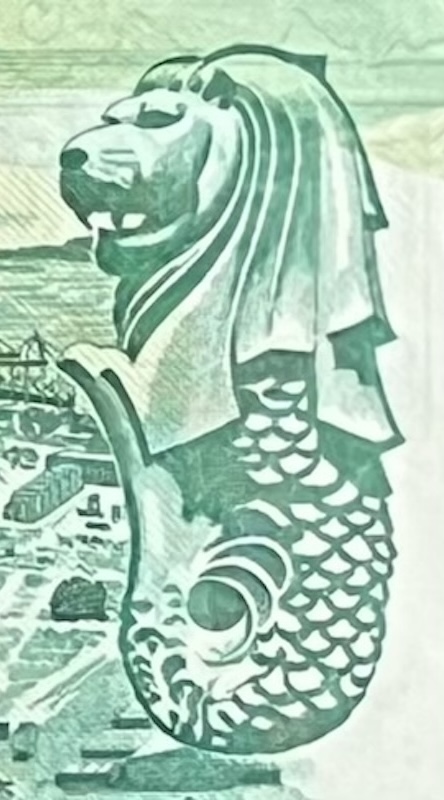
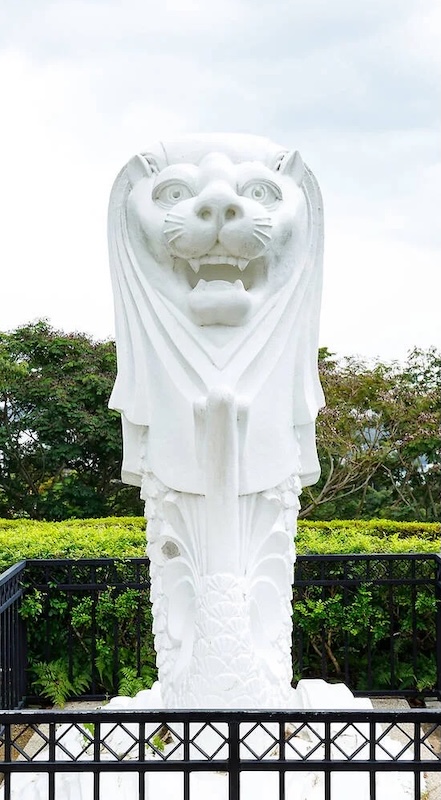
The Merlion was created in 1964, one year before our independence. It was designed by a British ichthyologist—a scientist who studies fish—named Alec Fraser-Brunner for the Singapore Tourism Board. The lion head stands for “Singapura” or “Lion City,” and the fish body reflects Singapore’s beginnings as a fishing village. The first Merlion statue was built by local sculptor Lim Nang Seng and placed at the mouth of the Singapore River in 1972. It was meant to be a symbol for tourism and to represent Singapore to the world.
B50: Front
B50: Back
B10000: Front
B10000: Back
In the Bird Series, the Merlion appears twice each on the $10, $50, $500, $1000, and $10000 notes—those printed by Thomas De La Rue. On each note, the two Merlions are perfectly aligned front and back. In the Ship Series, it appeared only once on the back of the $5 note. After that, the Merlion no longer appeared in any of our Portrait notes. It also never appeared in any of our commemorative notes. One reason might be because the Lion Head symbol was introduced in 1986 as our national mark. The Merlion is used more for tourism, while the Lion Head is used for national identity and official use. The government probably felt that it was more appropriate to feature our official Lion Head symbol on our currency notes.
S5: Back Design
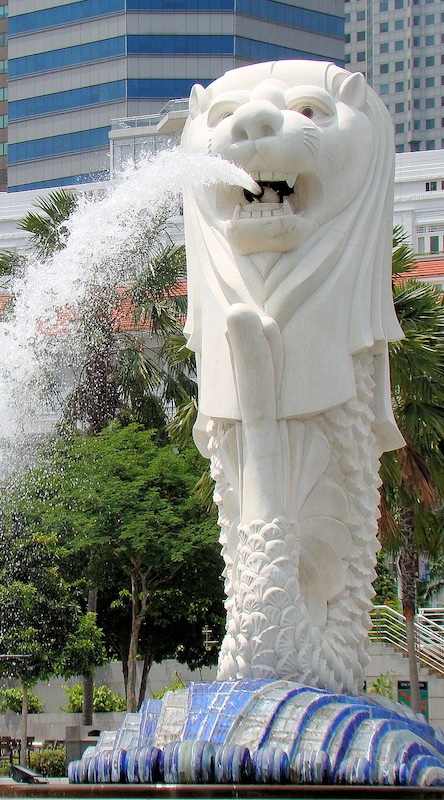
8m Merlion, Merlion Park1
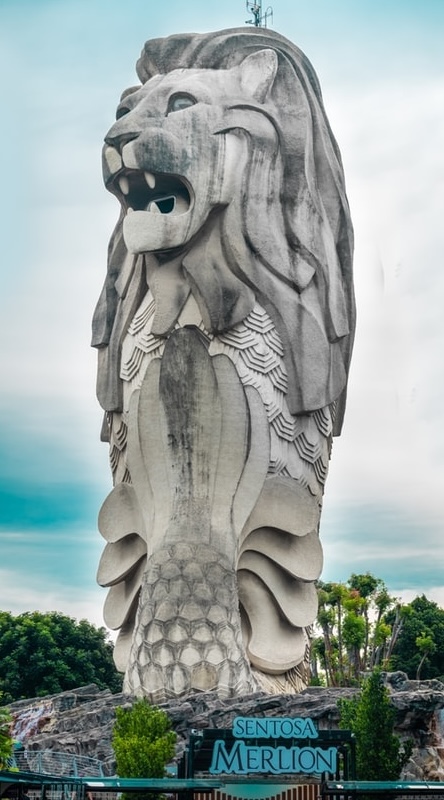
37m Merlion, Sentosa2
Mini Merlion, Mt Faber3
You can still see the Merlion statue today at the Merlion Park, near Marina Bay. That’s the 8-metre tall and most famous one. There used to be an even taller 37-metre Merlion in Sentosa, but it was closed in 2019. There are also at least five other small Merlion statues in other parts of Singapore, such as Ang Mo Kio and Mount Faber. In fact, the Merlion statue can also be found overseas, in Japan, South Korea, Thailand, Indonesia, and even as faraway as England .Alternatively, you may see our Merlion in movies, like Crazy Rich Asians.
Attributions
1. Image by Bjørn Christian Tørrissen, Wikipedia. Source: https://commons.wikimedia.org/wiki/File:Singapore_Merlion_BCT.jpg.
2. Image by Steven HWG, Unsplash. Source: https://theindependent.sg/news-of-sentosa-merlion-demolition-gets-90-million-views-on-weibo/#google_vignette.
3. Image by One Faber Group. Source: https://www.timeout.com/singapore/things-to-do/merlions-in-singapore.
Disclaimer. I built this website as a hobby, to share with others what I’ve learnt. All the information here is written based on my own research and understanding, and I don’t guarantee that everything is correct, complete, or updated. While I sell banknotes here, I don’t profit from them, as they are spare pieces from my private collection. All the banknote images here are taken by myself and they belong to me. The non-banknote images, with sources that I’ve attributed on every page, are used solely for illustration and non-commercial education purposes. If you are a copyright holder and believe something has been used inappropriately, please contact me, and I will immediately review or remove it.