• Portrait series all denominations, except $10000 note
• All commemorative notes, except 2019 B200 $20 note
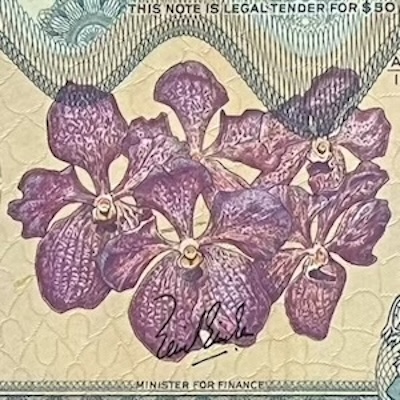
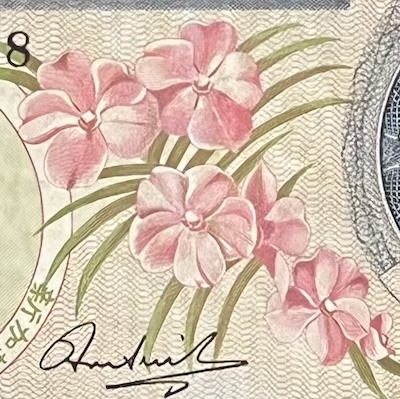
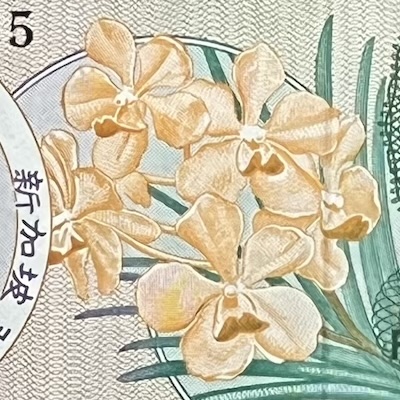
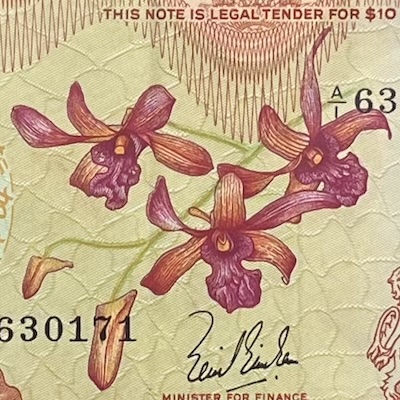
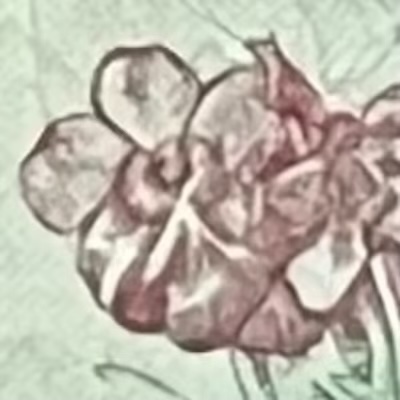
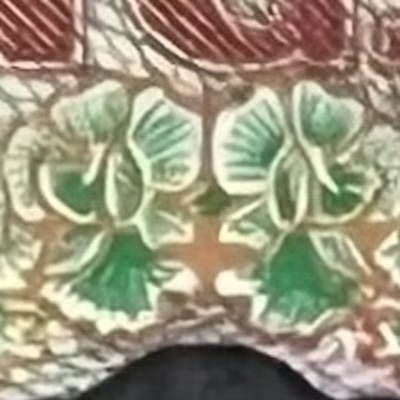
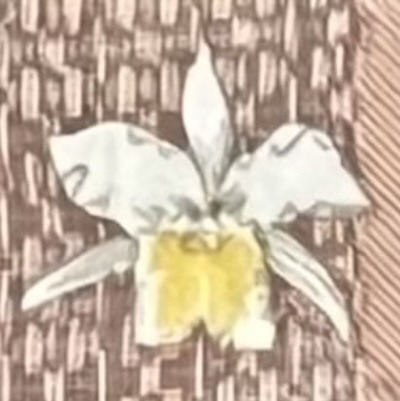
Orchids appear in almost every Singapore banknote. As the theme design, they were used in all denominations of the Orchid series, as well as the 2007 CIA40 $20 and 2015 SG50 $10 commemorative notes. As a supplementary motif, orchids appear on the back of all the Ship series notes, the Portrait $5 note, the 1990 SG25 commemorative note, and the 2017 CIA50 commemorative note, where it was bundled with the Simpur from Brunei to form the CIA50 logo. Even when orchids don’t appear prominently, they are still in the background design of almost all the other notes. The only two notes in Singapore’s history without an orchid anywhere on the note were the Portrait $10000 and the 2019 Bicentennial notes.
O1: Papilionanda 'Janet Kanealii'
O5: Papilionanda T.M.A.
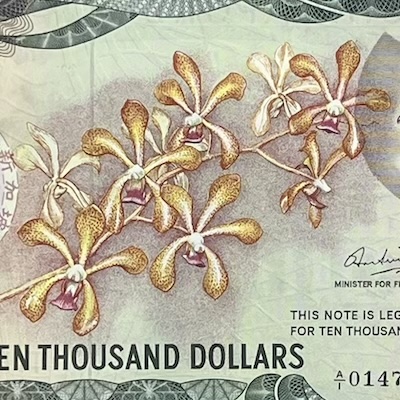
O10: Dendrobium Marjorie Ho 'Tony Pek'
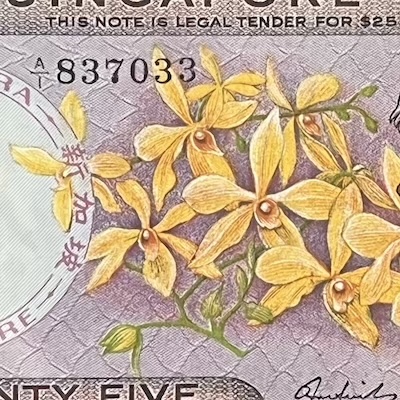
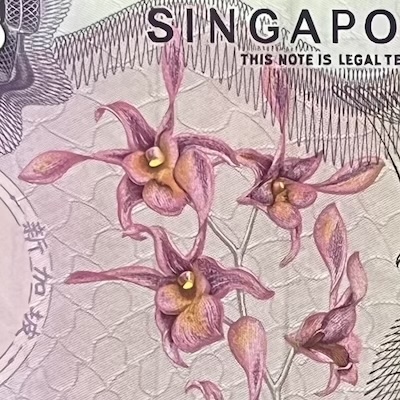
O25: Renanthopsis Aurora
Not all the orchids in our banknotes are Vanda Miss Joaquim, which became our national flower only in 1981. Singapore has already been growing and exporting orchids since the 1800s. The Singapore Botanic Gardens, started in 1859, had helped make Singapore known worldwide for orchid cultivation. In the 1920s, the Gardens began creating new and different orchid hybrids. Orchid hybrids are created by transferring pollen from the male part of one orchid to the female part of another, using a toothpick. The work of the Botanic Gardens made Singapore a leader in orchid breeding and trade long before the Vanda Miss Joaquim became our national flower.
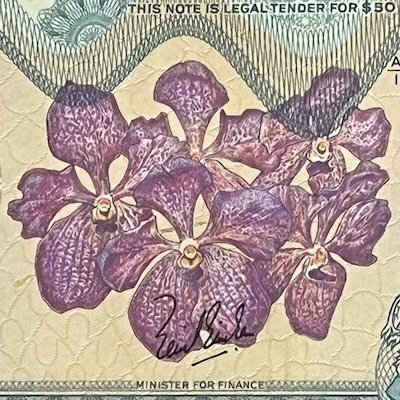
O50: Vanda Rothschildiana 'Teo Choo Hong'
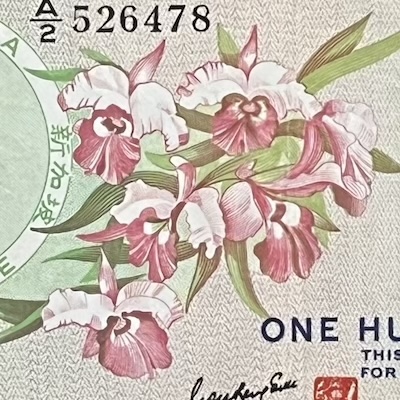
O100: Cattlianthe Portia
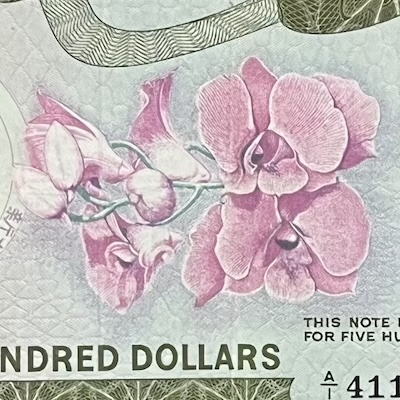
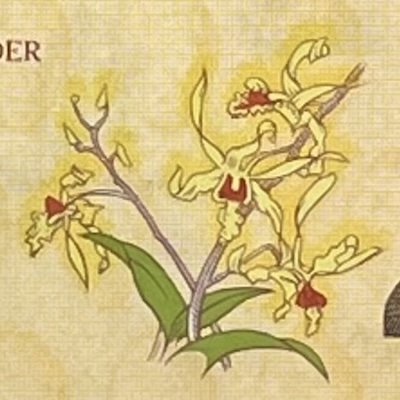
O500: Dendrobium Shangri-la
O1000: Dendrobium Kimiyo Kondo 'Chay'
The naming of orchid hybrids follow a system: the genus (category of orchids), the grex (group of hybrids from the same parentage), and the cultivar (specific variety). This is not unlike car naming. The genus is like the brand of the car (e.g. Honda), the grex is the model (e.g. Civic), and the cultivar is the version (e.g. Civic RS). For example, in Dendrobium Marjorie Ho ‘Tony Pek’, “Dendrobium” is the genus (brand), “Marjorie Ho” is the hybrid group (model), and ‘Tony Pek’ is the name of one special plant from that group (version). Another example is Vanda Rothschildiana ‘Teo Choo Hong’, where Vanda is the genus (brand), Rothschildiana is the grex (model), and ‘Teo Choon Hong’ is the cultivar (version). This naming system identifies exactly what kind of orchid it is and how it is different from others.
O10000: Aranda Majula
CIA40: Dendrobium Puan Noor Aishah
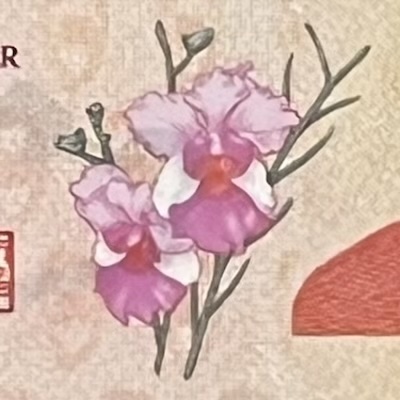
SG50-10: Vanda Miss Joaquim
S5: Vanda Miss Joaquim (Back)
Singapore practices something called orchid diplomacy—we name orchid hybrids after important guests and public figures to show respect or to build relationships. This started in 1956, when the orchid Aranthera Anne Black was named after the wife of the then-Governor, Robert Black. Since then, we have named approximately 300 orchids after presidents, royalty, and well-known visitors. Some examples include Dendrobium Barack and Michelle Obama, Paravanda Nelson Mandela, and Vanda William Catherine, named after Prince William and Catherine, Princess of Wales. We have also honoured our own athletes this way. Dendrobium Joseph Schooling and Dendrobium Yip Pin Xiu were named after our Olympic and Paralympic gold medallists. Some orchids are also named after celebrities, such as local singer Stefanie Sun, pop star Ricky Martin, and Korean actor Bae Yong Jun.
P5: Vanda Miss Joaquim (Back)
SG25: Vanda Miss Joaquim (Front)
B100 (Background)
B500 (Background)
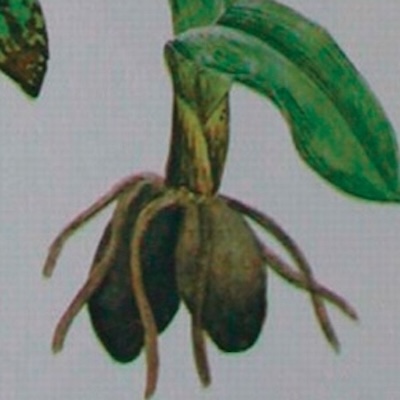
The word “orchid” comes from the Greek word orkhis, which means “testicles.” This is because some wild orchids in Europe have round roots that look like testicles, and the ancient Greeks named the plant after that. Later, scientists used this Greek word to create the plant family name Orchidaceae, and over time, the word became just “orchid” in English. Today, most people don’t know the origins of the name, but only appreciate the beauty of the flower. But now you know, our national flower is the modern word for testicles!
Disclaimer. I built this website as a hobby, to share with others what I’ve learnt. All the information here is written based on my own research and understanding, and I don’t guarantee that everything is correct, complete, or updated. While I sell banknotes here, I don’t profit from them, as they are spare pieces from my private collection. All the banknote images here are taken by myself and they belong to me. The non-banknote images, with sources that I’ve attributed on every page, are used solely for illustration and non-commercial education purposes. If you are a copyright holder and believe something has been used inappropriately, please contact me, and I will immediately review or remove it.