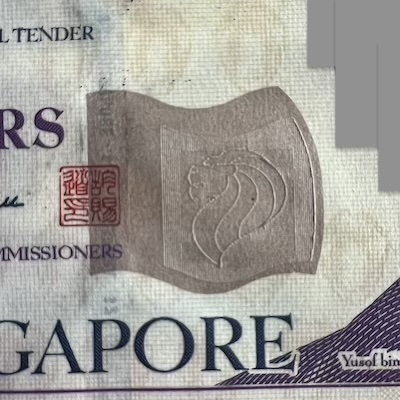
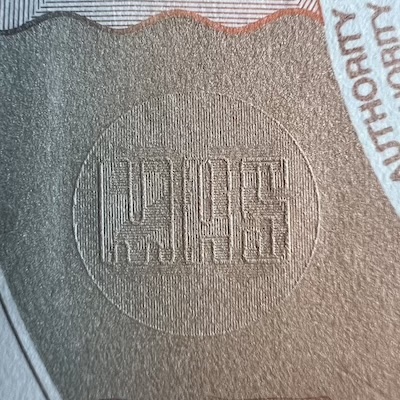
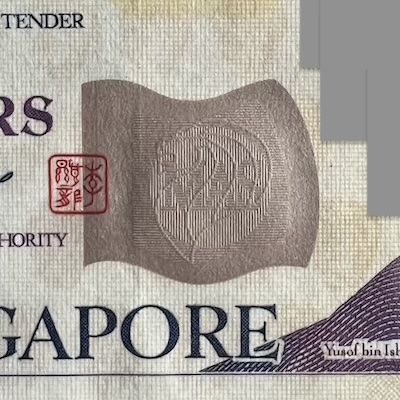
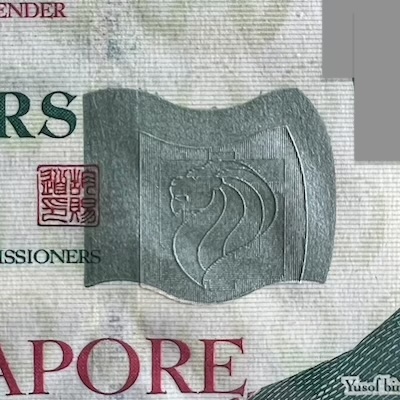
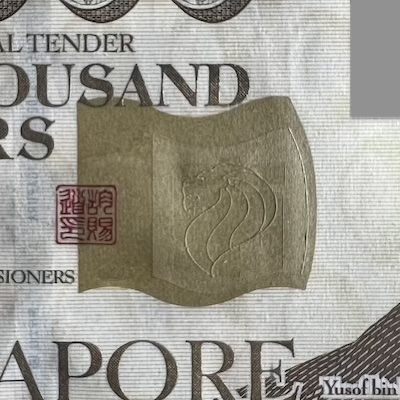
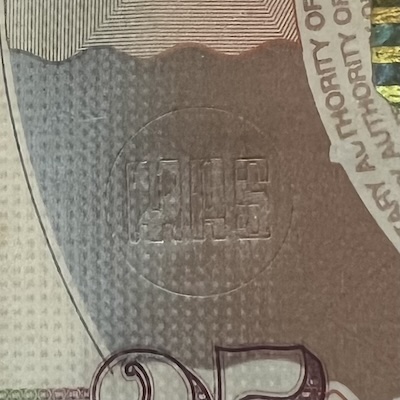
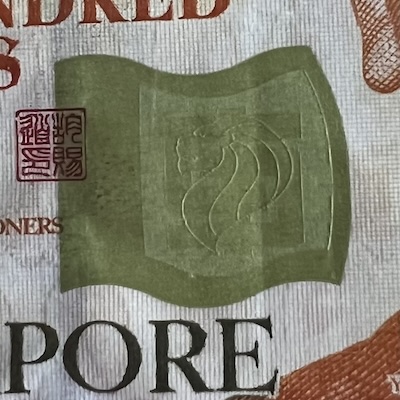
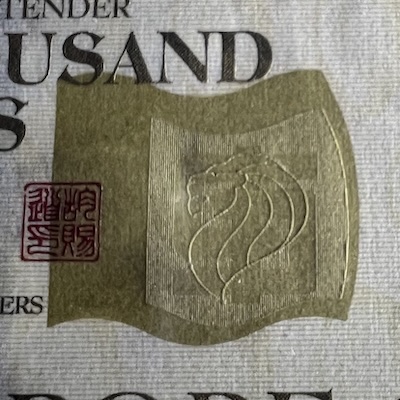
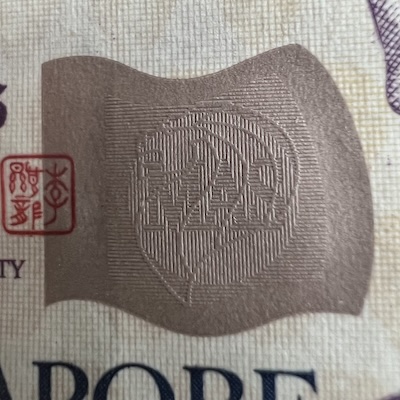
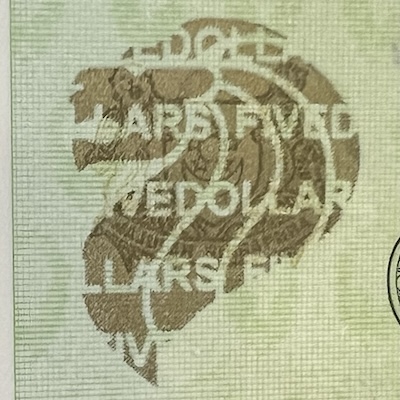
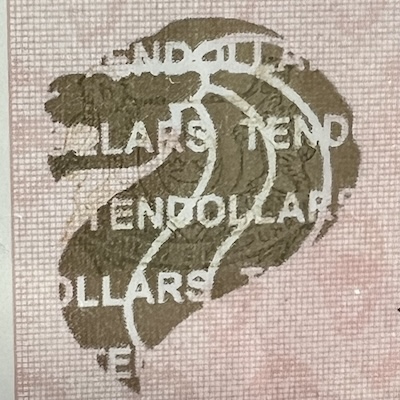
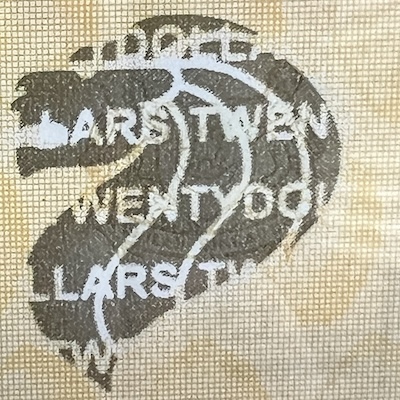
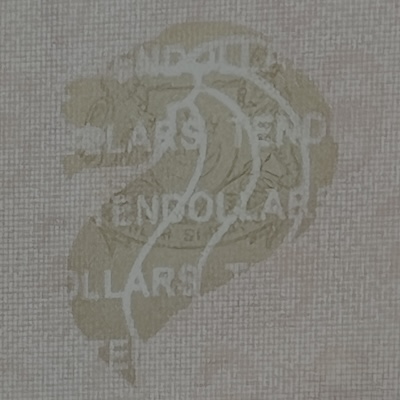
Latent image patches are security features that reveal a hidden image only when the banknote is tilted at certain angles. When viewed straight on, the image is either invisible or faint. This effect is created by fine surface-level printing or embossing techniques that control how light reflects off the area. The image appears and disappears depending on the viewing angle, making it difficult to replicate with standard scanning or printing equipment.
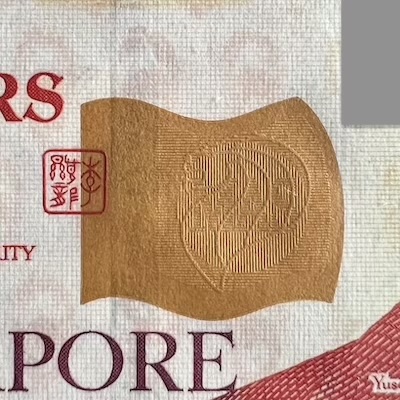
MAS25: MAS
P2: Lion Head
P5: Lion Head
P10: Lion Head
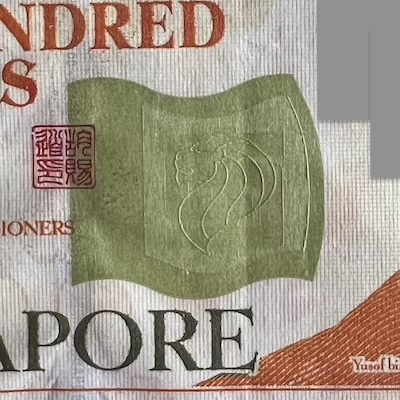
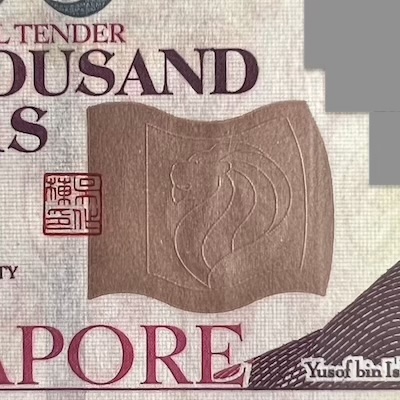
In Singapore, latent image patches were first introduced in the 1996 MAS25 $25 commemorative note, where the letters “MAS” become visible when the note is tilted. This feature was later included in all paper notes of the Portrait series, as well as the 1999 M2 commemorative note, which shares the same design as the Portrait $2 note. On these notes, the latent image takes the form of a Lion Head symbol, located near the centre of the note. It is not printed with ink, but formed as part of the note’s surface.
P50: Lion Head
P100: Lion Head
P1000: Lion Head
P10000: Lion Head
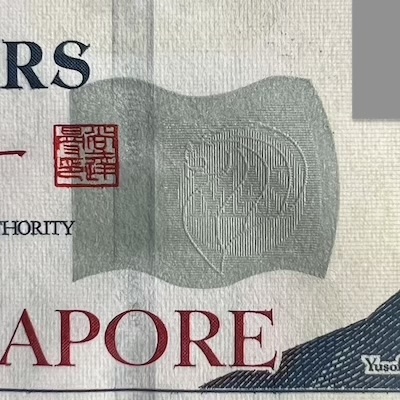
Besides the MAS and Lion Head symbols, there is another image embedded within the patch, but far more difficult to spot. For the 1996 MAS25 note, the number 25 appears very faintly at some specific angles. For the Portrait notes, the BCCS or MAS logo appears, similarly very fairly. Some of these features are barely visible even in brand new notes and under bright lights.
MAS25: 25
P100: BCCS Logo
P10000: BCCS Logo
P2: MAS Logo
In the polymer notes, a latent image is featured in the Portrait $2, $5, and $10 notes, but in a different place. At certain angles, the National Coat of Arms can be seen beneath the gold patch of the Lion Head symbol. This latent Lion Head also appeared in the 2007 CIA40 $20 and 2015 SG50 $10 notes, at the same position beneath the gold patch.
Disclaimer. I built this website as a hobby, to share with others what I’ve learnt. All the information here is written based on my own research and understanding, and I don’t guarantee that everything is correct, complete, or updated. While I sell banknotes here, I don’t profit from them, as they are spare pieces from my private collection. All the banknote images here are taken by myself and they belong to me. The non-banknote images, with sources that I’ve attributed on every page, are used solely for illustration and non-commercial education purposes. If you are a copyright holder and believe something has been used inappropriately, please contact me, and I will immediately review or remove it.