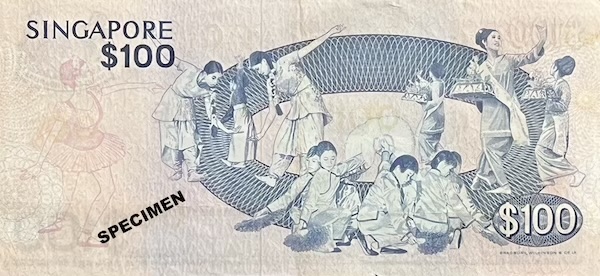
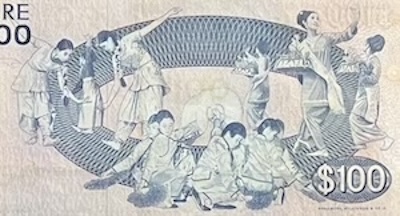
The ethnic dances were a vibrant display of our multiculturalism. Each dance, whether Malay, Chinese, Indian, or Eurasian, told a story of our diverse heritage. These performances brought together different communities, allowing us to share and appreciate each other’s traditions. From the graceful movements of Malay dancers to the vibrant steps of Indian and Chinese performers, these dances were celebrations of the rich cultural tapestry that made us who we were.
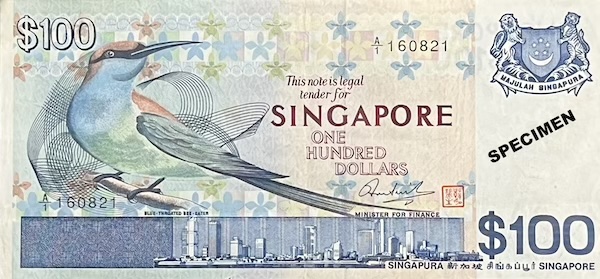
The largest banknote ever printed by Bradbury Wilkinson & Co. for Singapore was the $100 note, which appeared in both the Orchid and Bird Series. Bigger notes like the $500, $1000, and $10000 were printed by Thomas De La Rue. This means the Bird $100 note was the last Singapore banknote ever printed by Bradbury Wilkinson. In 1986, Bradbury Wilkinson was bought over by Thomas De La Rue, which has since gone on to print most of Singapore’s paper banknotes.
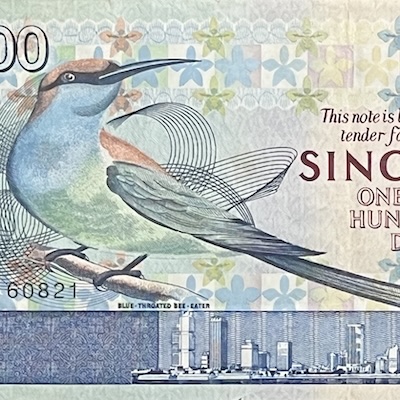
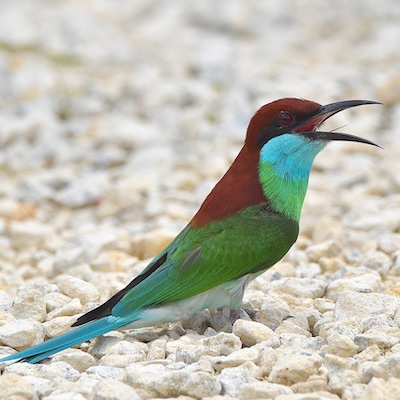
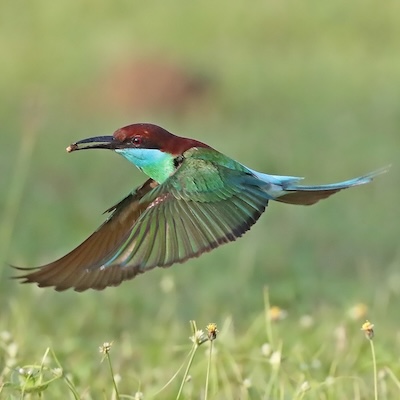
The Blue-throated Bee-eater is a colourful bird about 23cm long, known for its bright blue throat, greenish-blue body, chestnut brown head, black eye stripe, and long tail streamers. Young birds are greener and lack the long tail and brown head. As its name suggests, it feeds on flying insects like bees, wasps, and dragonflies—prey that many other birds avoid. In Singapore, it can be found in open areas such as Bukit Batok Nature Park, grassy fields, scrubland, and old plantations. It prefers sandy soil with good drainage, such as beaches, quarries, golf courses, and airfields. A breeding site was specially set up at Ketam Quarry on Pulau Ubin, where sand mounds were shaped to encourage nesting, leading to 21 successful nesting records as of 2022. The birds dig holes in these sand banks to lay their eggs, and many migrate to Indonesia around September. Though native to Singapore and common across Southeast Asia and parts of Australia, the species had rarely nested here—until years of effort finally paid off.
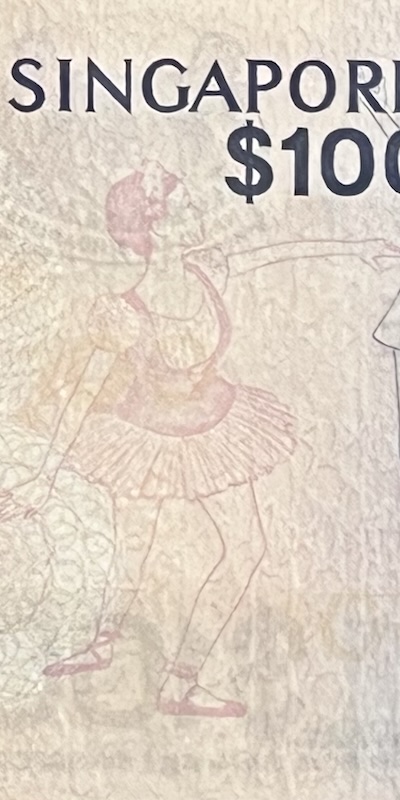
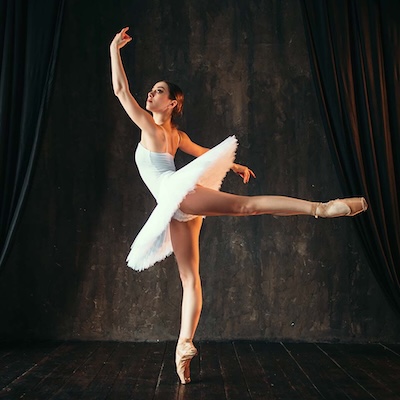
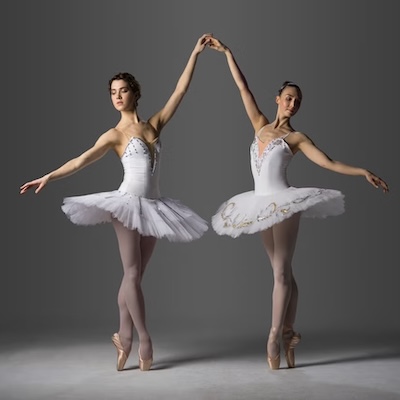
Western ballet is a classical dance style that started in the royal courts of Italy during the Renaissance period and later became more refined in France and Russia. Ballet is known for its graceful and controlled movements, and it often tells a story through dance, music, and expressive body language. In the banknote illustration, the ballerina’s pose and costume show what a traditional ballet performance looks like. In Singapore, ballet is commonly taught in dance schools and arts institutions, and it is performed by both local and international ballet groups.
Dancing as One Nation
Ethnic Dancers
In the 1970s, the Singapore government and community organisations such as the People’s Association actively promoted racial harmony by organising multicultural dance performances. These events showcased traditional dances from the Malay, Chinese, Indian, and Eurasian communities, helping Singaporeans appreciate the richness of each other’s cultures.
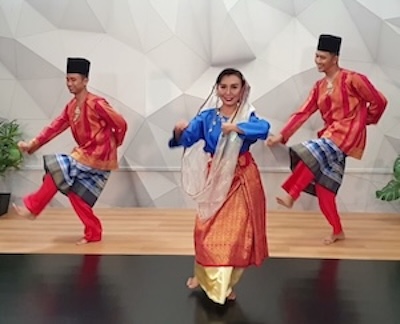
Malay Dancers7
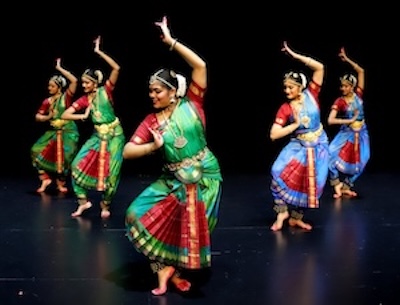
During this time, traditional Malay dances like Zapin, Asli, and Joget became popular again, especially in schools and community centres. These dances have a mix of Arab, Indian, and Malay influences, and were often seen at cultural festivals and wedding celebrations. Indian classical dances such as Bharatanatyam and Kathak also became more well-known. They used to be performed mainly in temples, but later became highlights at cultural shows and community competitions. To help keep these traditional dances true to their roots, teachers from India were invited to conduct workshops and train local performers.
Indian Dancers8
Over time, ethnic dances in Singapore evolved from being exclusive to their own communities, to becoming a shared part of our national identity. These dances helped connect people to their own cultural roots, while also showing the multicultural spirit that brings all Singaporeans together. Today, dance is like a bridge—it helps us remember our roots and celebrate our diversity as one united nation.
Market Value in 2024
Market Price: $140
Condition
• Ungraded
• Well used
• No stains, foxing or pinholes
• Small tear at bottom edge
• Visible creases & folds
Context
• The information here refers specifically to the banknote featured on the top of this page.
1. Prefix and banknote details from Vincent Tan and Tan Wei Jie, Singapore Banknotes: Complete Prefix Reference, Mr Banknotes, 2017.
2. Information about birds from Yong Ding Li and Lim Kim Chuah, A Naturalist’s Guide to the Birds of Singapore, 2016; and Birds of Singapore, https://singaporebirds.com.
3. Image by Joseph Lin, The Straits Times. Source: https://www.straitstimes.com/singapore/environment/years-of-trial-and-error-bear-fruit-as-native-bird-species-raises-young-on-pulau-ubin.
4. Image by Lim Sheau Tong, Flickr. Source: https://www.flickr.com/photos/wavethree/27438550353/.
5. Image by Redland Dance. Source: https://redlanddance.com.au/from-swan-lake-to-the-nutcracker-fascinating-ballet-facts-you-never-knew-existed/.
6. Image from Getty Images. Source: https://www.cosmopolitan.com/lifestyle/a8650232/11-things-you-didnt-know-about-the-life-of-a-ballet-dancer/.
7. Image from Sri Warisan, YouTube. Source: https://www.youtube.com/watch?v=ZIRPS3za4po.
8. Image by Swarna Kala Mandir. Source: https://swarnakalamandir.org/.
Disclaimer
I built this website as a hobby, to share with others what I’ve learnt. All the information here is written based on my own research and understanding, and I don’t guarantee that everything is correct, complete, or updated. While I sell banknotes here, I don’t profit from them, as they are spare pieces from my private collection. All the banknote images here are taken by myself and they belong to me. The non-banknote images, with sources that I’ve attributed on every page, are used solely for illustration and non-commercial education purposes. If you are a copyright holder and believe something has been used inappropriately, please contact me, and I will immediately review or remove it.