The Singapore river, once a lifeline for early settlers and bustling with sampans and traders, had become a polluted eyesore by the 1970s. Our government then took the bold, but unpopular, step of clearing the clutter, relocating the hawkers, and rejuvenating the waterway. Beyond eliminating the filth and stench, the effort was about reclaiming a vital part of our heritage and transforming it for the future. This massive clean-up turned the river into a vibrant, picturesque waterfront, mirroring our journey from a gritty trading post to a modern metropolis.
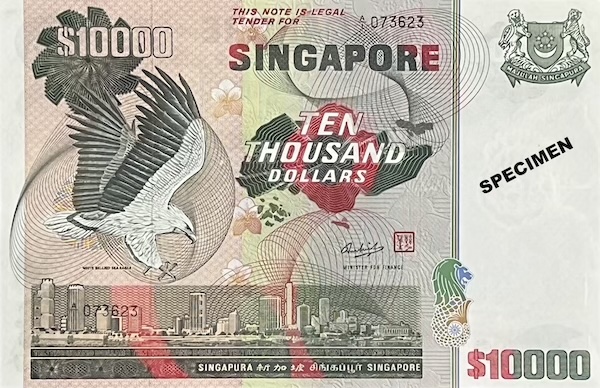
Two vertical security threads: one solid & one segmented
Intaglio print
Perfect registration of Merlion
Ultraviolet-visible text
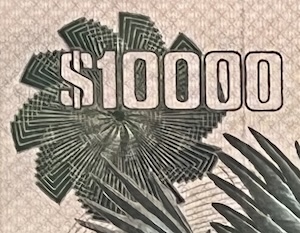
Geometric & floral patterns
Two Views, Two Texts, and Two Threads
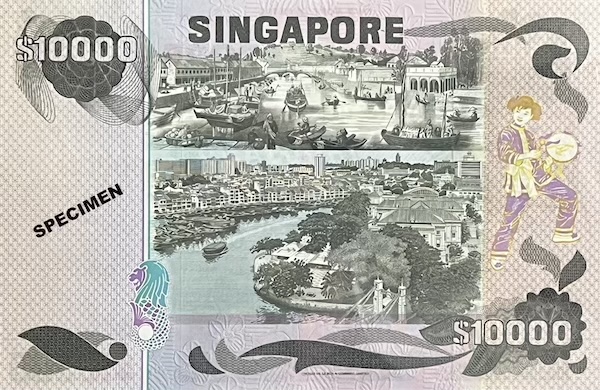
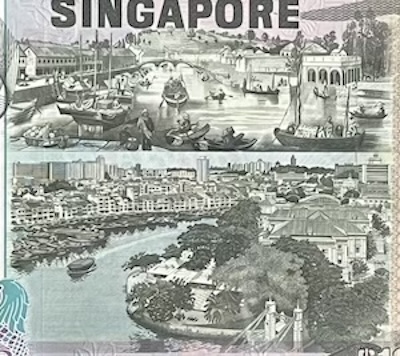
The Bird $10000 is the only circulation note in Singapore’s history to feature two different images of the Singapore River—one showing the river before its clean-up, and the other after. It is also the only note where the text denomination ‘TEN THOUSAND DOLLARS’ appears twice on the front—once in the usual position, and repeatedly again near the bottom, between the image of the financial district and the names of Singapore in four languages. In addition, it is one of only two Singapore banknotes, along with the Bird $1000 note, to contain both a solid and a segmented security thread within a single piece.
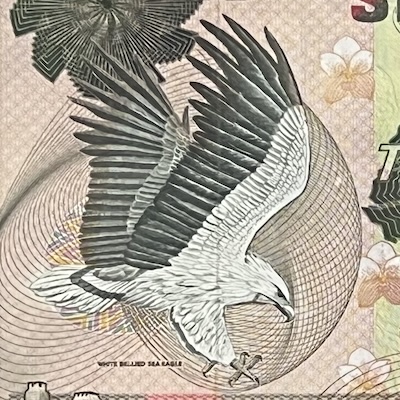
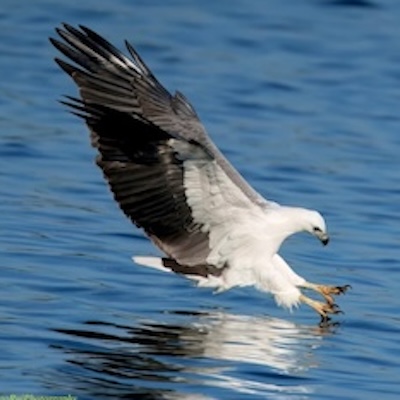
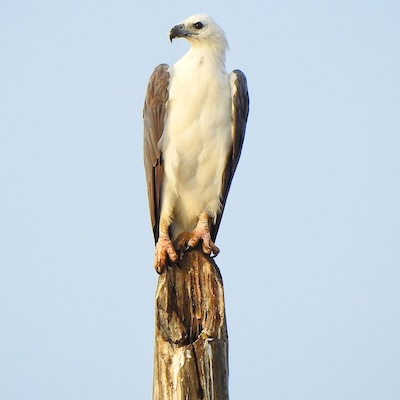
The White-bellied Sea Eagleis the biggest bird of prey in Singapore, growing up to 85 cm long. It has a white head, neck, and belly, with grey wings and back, and black tips on its wings. This eagle lives in many places across Asia and Australia, especially near the coast. It can be found in forests, mangroves, old plantations, and near rivers or the sea. In Singapore, you might spot it at places like the Central Catchment Nature Reserve or Bukit Batok Nature Park, often seen flying over water while hunting for fish. It sometimes competes with the Grey-headed Fish Eagle for food and nesting spots, which can make survival harder.
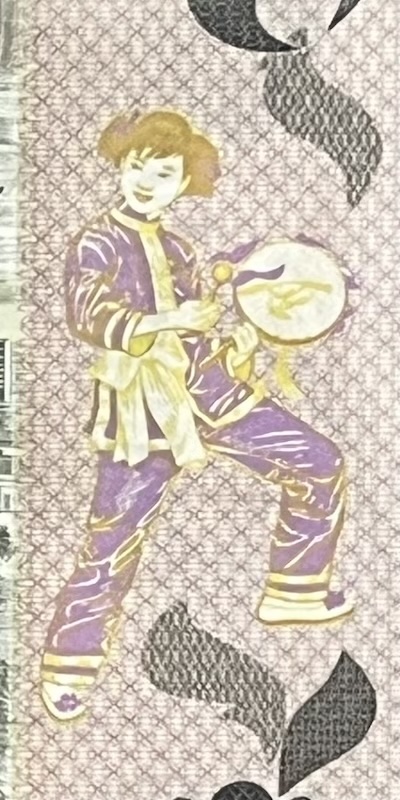
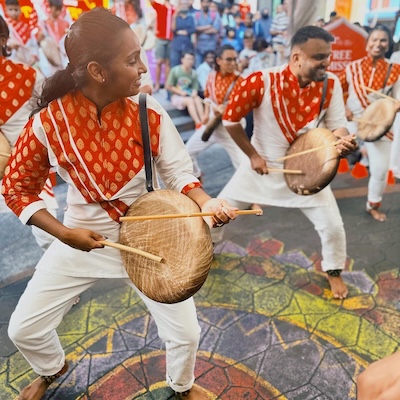
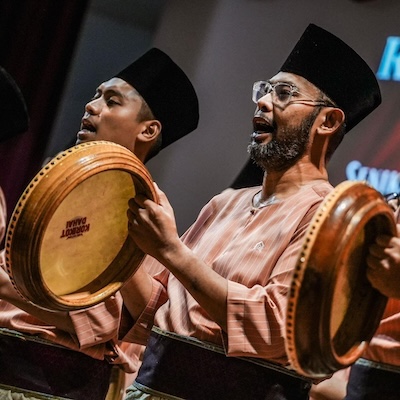
In 1970s Singapore, hand drum dances became a popular way to perform, mixing rhythm, movement, and cultural tradition. These dances were found in the Chinese, Malay, and Indian communities, each using their own style of small handheld drums. In the Chinese community, hand drum dances (手鼓舞) were performed at festivals and cultural events, often based on folk dances from China. In Malay culture, Kompang performances—which used small drums—were common at weddings and celebrations. In the Indian community, there was Parai Attam, a lively dance using the parai drum, usually seen during festive occasions.
From Waste to Wonder
Two Scenes of Singapore River
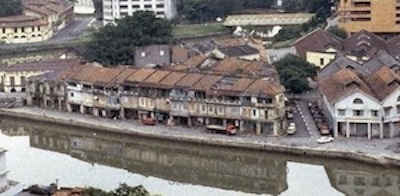
In the 1970s, the Singapore River was heavily polluted and struggling with serious environmental problems. The river had become a dumping ground for waste from boats, street hawkers, squatters, and nearby industries. Oil spills, rotting food, sewage, and rubbish filled the water, causing a strong stench. The crowded banks were lined with makeshift homes, warehouses, and small businesses, all contributing to the mess. Flooding was also a frequent issue, made worse by poor drainage and clogged waterways.
Singapore River After the Clean-up7
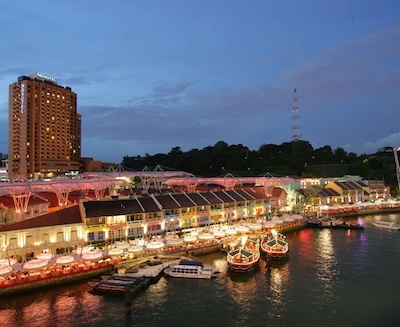
Recognising the situation, the government launched a major clean-up in 1977. The effort aimed to remove rubbish, stop pollution, and improve the lives of people living and working along the river. Over 10 years, thousands of squatters and street hawkers were relocated, and proper housing, drainage, and waste systems were put in place. Factories and boats were also ordered to stop dumping waste into the river. By the late 1980s, the clean-up was complete, and the area was transformed.
Singapore River Today8
One of the biggest challenges during the clean-up was convincing the hawkers to relocate, as many feared losing their livelihoods. To ease their transition, the government built purpose-designed hawker centres with proper sanitation and amenities, ensuring they had a sustainable way forward. Today, these hawker centres have become an integral part of Singapore’s food culture, while the Singapore River itself has been revitalised.
Market Value in 2024
Market Price: $12,000
Condition
• Ungraded
• Like new
• No tears, pinholes, stains, foxing, or creases
• One light fold
Context
• The information here refers specifically to the banknote featured on the top of this page.
1. Prefix and banknote details from Vincent Tan and Tan Wei Jie, Singapore Banknotes: Complete Prefix Reference, Mr Banknotes, 2017.
2. Information about birds from Yong Ding Li and Lim Kim Chuah, A Naturalist’s Guide to the Birds of Singapore, 2016; and Birds of Singapore, https://singaporebirds.com.
3. Image by Kow Hao Rui, Facebook. Source: https://www.facebook.com/photo/?fbid=10227217556566381&set=pcb.9024747980944939.
4. Image by Afsarnayakkan, Wikipedia. Source: https://commons.wikimedia.org/wiki/File:White_bellied_sea_eagle_3.jpg.
5. Image by damarusg, Instagram. Source: https://www.instagram.com/p/CyaME8rLIdr/?img_index=8.
6. Image by zaqym, Instagram. Source: https://www.instagram.com/zaqym/p/C27Lsw1J7Qe/.
7. Image by Carol Marianne Tan-Soh, Pinterest. Source: https://www.pinterest.com/pin/350154939779481760/.
8. Image from Urban Redevelopment Authority. Source: https://citynomads.com/5-things-to-do-in-singapore-this-week-30th-november-to-6th-december-2020/.
Disclaimer
I built this website as a hobby, to share with others what I’ve learnt. All the information here is written based on my own research and understanding, and I don’t guarantee that everything is correct, complete, or updated. While I sell banknotes here, I don’t profit from them, as they are spare pieces from my private collection. All the banknote images here are taken by myself and they belong to me. The non-banknote images, with sources that I’ve attributed on every page, are used solely for illustration and non-commercial education purposes. If you are a copyright holder and believe something has been used inappropriately, please contact me, and I will immediately review or remove it.