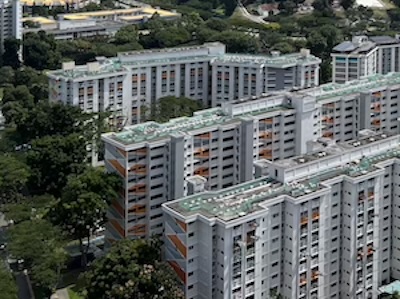
As we pursued new horizons, the importance of public housing never left our mind. We knew that economic progress would be meaningless without a home that made us feel secure—public housing therefore remained a cornerstone of our social policy. We continued to build new towns with modern amenities, playgrounds and green spaces, creating communities where our lives intertwined and everyone felt we belonged.
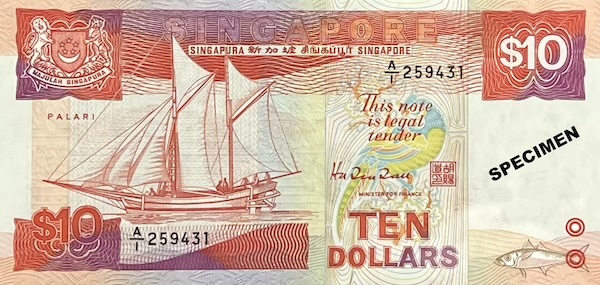
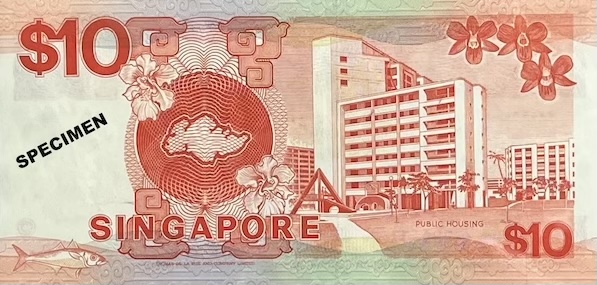
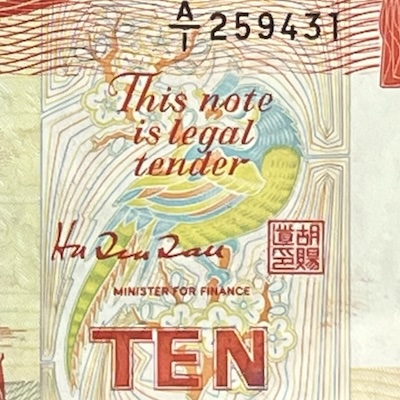
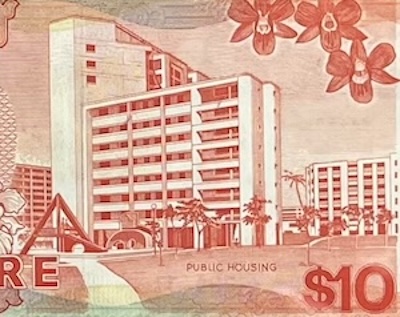
The Ship $10 note stands out in an unusual way—for not standing out at all. It is the only banknote in Singapore’s currency history that is unique for having no unique features. Every element on the note can be found on another denomination: the public housing blocks, outline map of Singapore, Chinese phoenix, Vanda Miss Joaquim, as well as a maritime vessel and a fish—though the exact types, like those on all Ship series notes, do vary. Even the note’s security features are not firsts. Micro-lettering, ultraviolet-visible text, and perfect registration printing had all been used on earlier notes in the series. In this way, the Ship $10 is therefore quietly consistent—reliable, familiar, and reflective of the steady strength the denomination often represents in daily life!
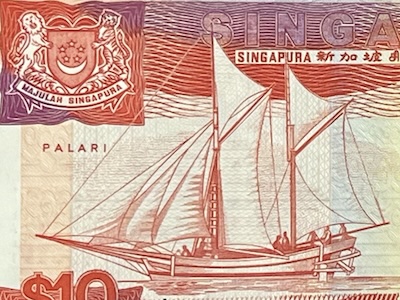
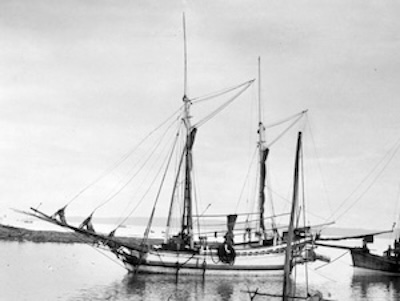
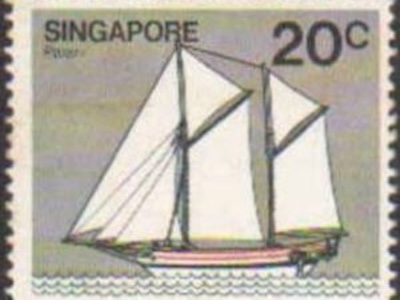
The Palari was a traditional wooden sailing boat used by the Bugis people from South Sulawesi, Indonesia. It had a curved shape, two rudders, and big triangle-shaped sails. These boats were commonly used for barter trade, where goods were exchanged without using money. Palari boats carried items like spices, cloth, and ceramics between different islands in Southeast Asia. In the 18th and 19th centuries, many of them came to Singapore’s shores, bringing goods and trading with local merchants. They didn’t follow fixed schedules and depended on the monsoon winds to travel. The Palari was an important part of early regional trade, and its visits to Singapore show how the island has always been a busy meeting point for different traders and cultures.
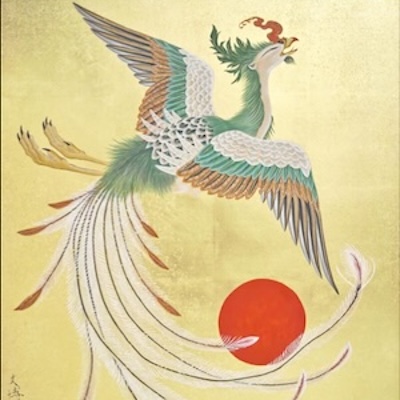
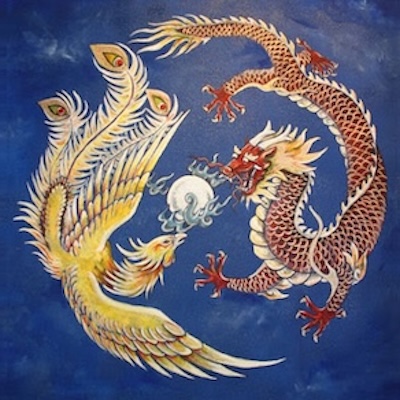
In Chinese folklore, the phoenix (凤凰, fènghuáng) is a strong and beautiful symbol of grace, kindness, and new beginnings. It often appears in traditional art, clothing, and buildings, and is believed to rise from ashes, showing the idea of rebirth and starting fresh. Unlike the Western firebird, the Chinese phoenix is made up of parts from different animals, which stands for balance and harmony in the world. In ancient times, the phoenix was linked to the empress and stood for high status, beauty, and gentle strength. Stories say the phoenix appears during peaceful and lucky times, bringing blessings and good fortune. When shown with the dragon (which stands for the emperor), the phoenix represents yin and yang—the perfect match. This pairing is often used in Chinese weddings to wish the couple a happy and lasting marriage. Today, the phoenix is seen as a symbol of hope, peace, and renewal.
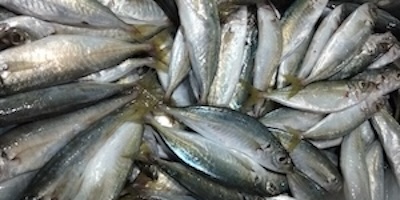
The Round Scad (圆鲹,yuán shēn) is a small silver fish that has been a common sight in Singapore’s markets and kitchens for many years. It has a smooth, round body and is often used in fried or dried dishes. Because it is affordable and easy to cook, many families, especially in the past, ate it regularly as part of their daily meals. In the old kampongs by the sea, fishermen would catch round scad and dry them under the sun, filling the air with a familiar smell. For older Singaporeans, this fish brings back memories of simple home-cooked food and family life. While it may not be special in stories or legends, the round scad has always been a part of everyday life, reminding us of our connection to the sea and our forefathers who lived by it.
Housing Our Way of Life
Public Housing
As housing estates expanded, HDB made efforts to strengthen social ties among residents. In the 1980s, void decks were introduced—open spaces under the flats that quickly became part of daily life. These areas hosted everything from Malay weddings to Chinese funeral wakes, as well as community events and play sites for children.
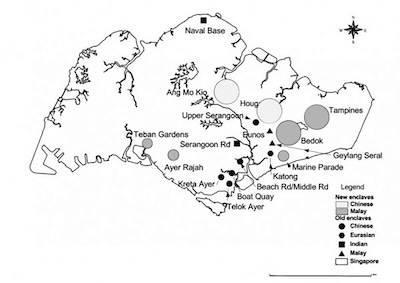
Ethnic Enclaves in 19898
At the same time, to prevent communities from becoming racially divided, HDB launched the Ethnic Integration Policy (EIP) in 1989. This policy set ethnic quotas for each block and precinct, so that all races could live together in harmony. The goal was to stop ethnic enclaves from forming and to promote interaction among people of different backgrounds. The EIP remains in place today as a key part of Singapore’s social cohesion efforts.
HDB Flats Today
In the 1980s, HDB flat prices rose quickly because of fast economic growth, higher incomes, and better flat designs like maisonettes and executive flats. In the 1970s, a three-room flat cost around $15,000, but by the 1980s, the price went up to $50,000. In turn, five-room flats could cost more than $100,000. Many people, especially young families and those with lower incomes, started to worry about affordability. In response, the government built more flats and gave out better housing subsidies. These measures laid the foundation for some of our housing policies today.
Market Value in 2024
Market Price: $100
Condition
• PMG 58 with no remarks
• Almost brand new
• No tears, pinholes, stains, foxing or creases
• One light fold
Context
• The information here refers specifically to the banknote featured on the top of this page.
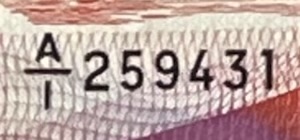
1. Prefix and banknote details from Vincent Tan and Tan Wei Jie, Singapore Banknotes: Complete Prefix Reference, Mr Banknotes, 2017.
2. Image from Wereldmuseum Amsterdam. Source: https://commons.wikimedia.org/wiki/File:COLLECTIE_TROPENMUSEUM_Een_Boeginese_prauw_aan_de_kust_van_West-Celebes_TMnr_10010875.jpg.
3. Image from Colnect listing. Source: https://colnect.com/en/stamps/stamp/231998-Palari_sailing_craft-Ships-Singapore.
4. Image by Gallery Seek, Art Knot listing. Source: http://blog.livedoor.jp/soratobu_penguin/archives/8845783.html.
5. Image from ChinaCulture.Org. Source: http://en.chinaculture.org/chineseway/2014-07/31/content_553822.htm.
6. Image from Kanihachidai, Rakuten listing. Source: https://www.rakuten.ne.jp/gold/kanihachidai/osakana/muroaji.html.
7. Image from Thai Lien Manufacturing and Trading. Source: https://tlcthailien.com/exploring-round-scad-varieties-dissections-and-export-prospects/.
8. Image from SG101-Nexus, Ministry of Defence. Source: https://www.sg101.gov.sg/social-national-identity/examples/hdb/.
Disclaimer
I built this website as a hobby, to share with others what I’ve learnt. All the information here is written based on my own research and understanding, and I don’t guarantee that everything is correct, complete, or updated. While I sell banknotes here, I don’t profit from them, as they are spare pieces from my private collection. All the banknote images here are taken by myself and they belong to me. The non-banknote images, with sources that I’ve attributed on every page, are used solely for illustration and non-commercial education purposes. If you are a copyright holder and believe something has been used inappropriately, please contact me, and I will immediately review or remove it.