Image: Singapore Armed Forces and Civil Defence Force
In Uniform and In Service
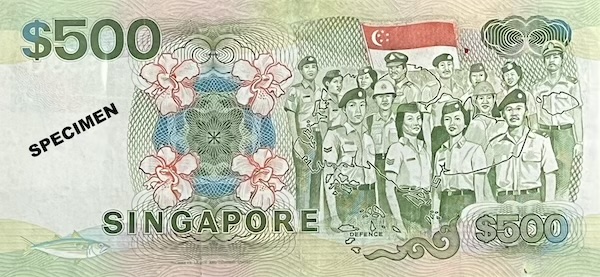
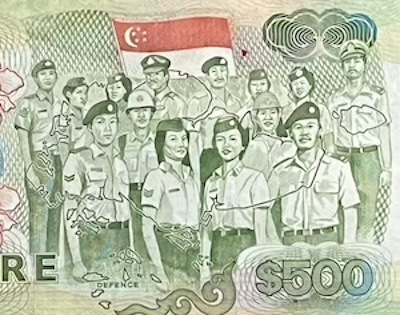
The Singapore Armed Forces and the Singapore Civil Defence Force were guardians of our safety and security. The SAF, with its rigorous training and advanced hardware, embodied our determination to protect our hard-earned sovereignty. The SCDF, with its dedication to emergency response and community safety, provided us with a sense of security and reassurance. The everyday sight of uniformed personnel symbolised our collective, unwavering effort to safeguard our nation’s future.
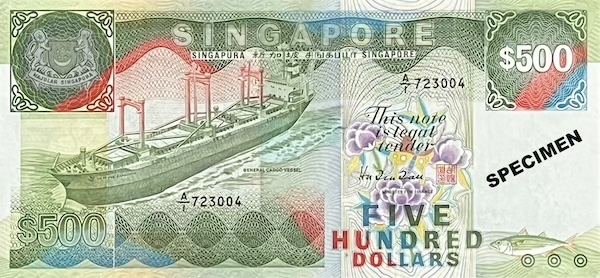
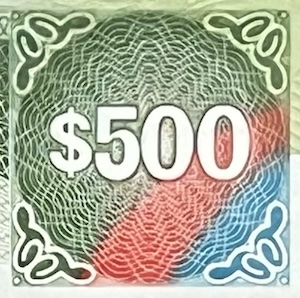
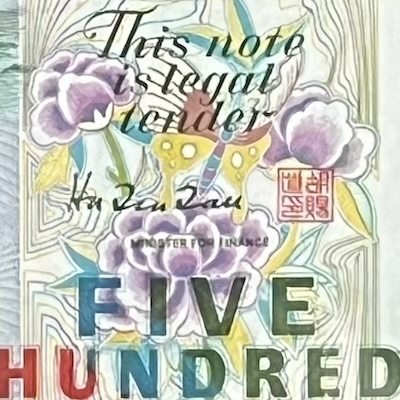
The Ship $500 marked the final appearance of the $500 denomination in Singapore’s banknotes. This denomination had not been used during the colonial era and was only introduced after Singapore’s independence, in the Orchid, Bird, and Ship series. However, it never gained widespread popularity. With the existence of the higher-value $1000 note, which itself saw limited use due to its high value, the $500 note was deemed unnecessary. The government then decided to discontinue it, and it became consigned to our history. The Ship $500 was also only one of two notes in our currency history—the other being the 1990 Singapore 25th anniversary note—to feature a Singapore flag as a deliberate design placement, rather than as part of a landmark where it happens to appear.
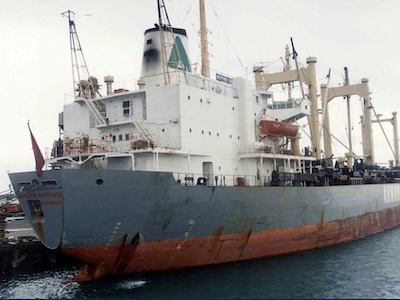
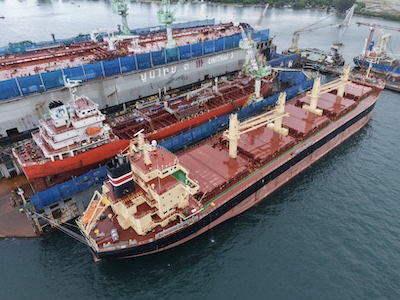
Before big metal containers were used to carry goods, general cargo ships were the main way to trade across the seas. These ships carried all kinds of items—like food, clothes, tools, and machines—packed in wooden boxes, sacks, or barrels. Everything had to be loaded and taken off by hand, which took a lot of time and hard work. In Singapore, ships like the Neptune Sardonyx came often, bringing goods to and from other countries. But in the 1970s, a new way of shipping started—called containerisation. Goods were packed into large metal containers, which made it much faster and easier to move things between ships, trucks, and trains. This new method slowly replaced the old cargo ships. Even though general cargo ships are no longer the main way we trade, they helped Singapore grow into a busy port and an important place for trade around the world.
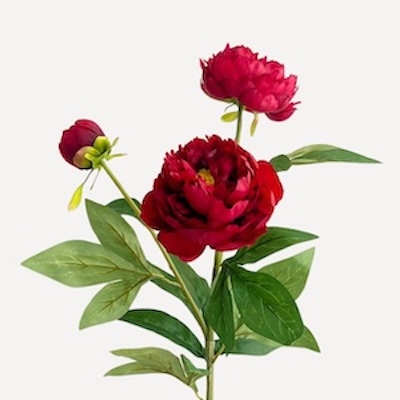
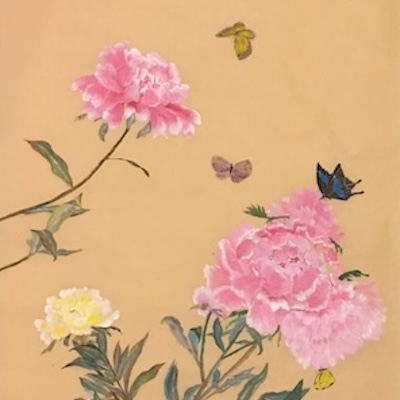
Celebrated for its large, graceful blooms, the Chinese peony (牡丹) is known as the ‘king of flowers’ and has long been a symbol of wealth, honour, and beauty in Chinese folklore. Its full petals and rich colours made it a favourite in imperial gardens and classical paintings, where it often stood for nobility and good fortune. The peony is also associated with feminine elegance and the flourishing of life. In traditional art, it is often shown alongside a butterfly—a pairing that carries its own meaning. The butterfly represents joy and light-heartedness, and when seen hovering near a peony, it suggests love, romance, and the delicate beauty of fleeting moments. Together, they express a wish for happiness, harmony, and a prosperous life.
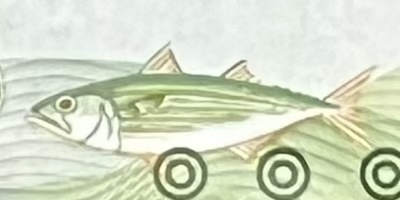
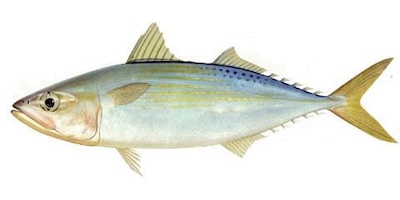
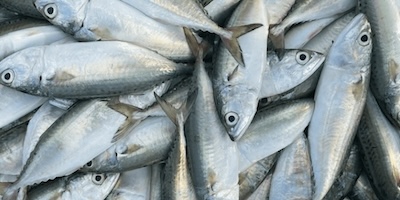
The Indian mackerel is a fish that carries both culinary and cultural significance. Known for its firm texture and rich flavour, it has been a common sight in local wet markets and a staple in many home-cooked meals across Malay, Indian, and Eurasian households. Often grilled with turmeric, cooked in spicy curries, or paired with sambal, the Indian mackerel brought warmth and familiarity to the dining table. In coastal kampongs of the past, it was one of the key catches for local fishermen, who relied on the sea for both livelihood and food. Its affordability and strong taste made it a practical choice for families looking to stretch their meals without sacrificing flavour.
The Rise of Singapore’s Military and Civil Defence Forces
SAF and SCDF
The Singapore Armed Forces (SAF) was set up in 1965 after we became independent. It started with a small army and later added the Navy in 1967 and the Air Force in 1968. In turn, the Singapore Civil Defence Force (SCDF) was formed in 1982. At first, it was part of the Singapore Police Force (SPF), but it became a separate organisation in 1986. In 1989, it joined with the Singapore Fire Service to better handle emergencies and fires across the country.
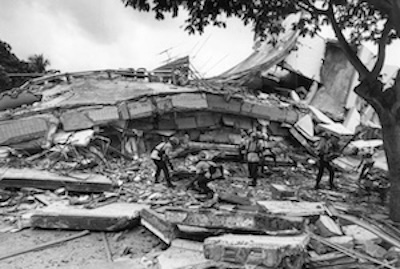
Collapse of Hotel New World in 19868
In March 1986, the six-storey Hotel New World suddenly collapsed due to structural flaws. More than 500 people from the SCDF, the Singapore Fire Service, the SAF, and the SPF took part in the rescue work. They worked day and night, using their hands and simple tools to search for people trapped under the rubble. After six days, 17 people were rescued alive, but sadly, 33 lives were lost. This tragedy showed that Singapore needed to be better prepared for such emergencies. It led to big improvements in rescue training, better equipment, and the joining of the SCDF and Fire Service to form a stronger emergency team.
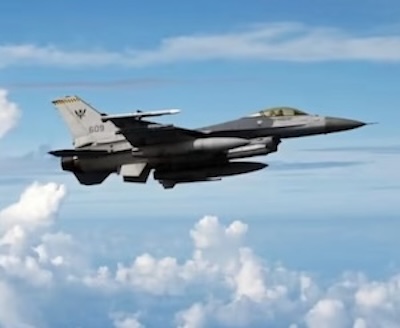
RSAF F-16 Fighting Falcon9
In the 1980s, the SAF adopted a ‘poisoned shrimp’ approach to national defence. This strategy likened us to a small shrimp that, while tiny and vulnerable, would be so lethal when attacked that any predator must think twice before trying to eat it. The idea was to make Singapore a costly and formidable target for any potential aggressor by building a highly capable military. To do so, the SAF underwent significant modernisation, acquiring advanced weaponry, equipment, and training systems to project strength despite our small land size. It also expanded its reservist system, creating a large pool of trained personnel who could be mobilised in a time of conflict.
Market Value in 2024
Market Price: $625
Condition
• Ungraded
• Well used
• No tears, pinholes, stains or foxing
• Visible creases & folds
Context
• The information here refers specifically to the banknote featured on the top of this page.
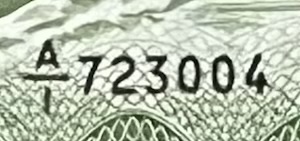
1. Prefix and banknote details from Vincent Tan and Tan Wei Jie, Singapore Banknotes: Complete Prefix Reference, Mr Banknotes, 2017.
2. Image by Dedge. Source: https://www.shipspotting.com/photos/1090347?page=1&perPage=8&navList=moreOfThisShip&imo=7641138&lid=1746257.
3. Image by Geir Vinnes. Source: https://www.shipspotting.com/photos/3804398?page=1&perPage=8&navList=moreOfThisShip&imo=9913535&lid=3576520.
4. Image from Ett Hem London listing. Source: https://etthemlondon.com/products/chinese-peony.
5. Image by Hong Lu. Source: https://www.saatchiart.com/en-gr/art/Painting-Chinese-painting-peony-and-butterflies/1135062/4508988/view.
6. Image from Know Your Fish. Source: https://www.knowyourfish.org.in/fish/indian-mackerel.
7. Image from Nghi Son Food Group. Source: https://nghisonfoodsgroup.com/product/indian-mackerel/.
8. Image from The New Straits Times Press (Malaysia) Berhad. Source: https://sg.news.yahoo.com/hotel-new-world-the-day-it-fell-151850141.html.
9. Image by Republic of Singapore Air Force, Facebook. Source: https://www.facebook.com/TheRSAF/posts/two-of-our-f-16-aircraft-were-scrambled-at-approximately-1240hrs-in-response-to-/689580776532525/.
Disclaimer
I built this website as a hobby, to share with others what I’ve learnt. All the information here is written based on my own research and understanding, and I don’t guarantee that everything is correct, complete, or updated. While I sell banknotes here, I don’t profit from them, as they are spare pieces from my private collection. All the banknote images here are taken by myself and they belong to me. The non-banknote images, with sources that I’ve attributed on every page, are used solely for illustration and non-commercial education purposes. If you are a copyright holder and believe something has been used inappropriately, please contact me, and I will immediately review or remove it.