A Nation’s Salute: 20 Years of Service, A Day of Tribute
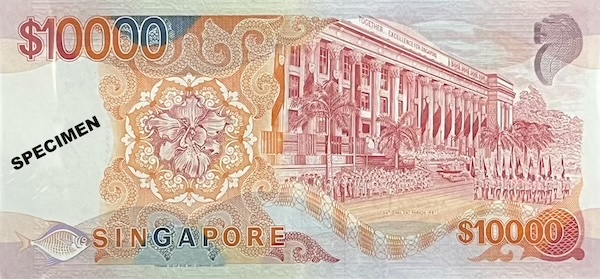
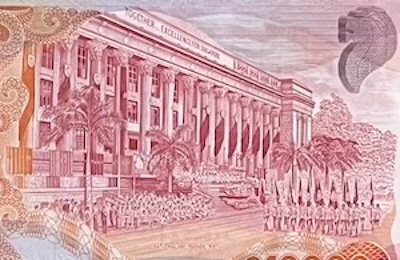
The 1987 National Day Parade marked not only our nation’s independence, but also twenty remarkable years of National Service. The event was a tribute to the young men who had donned their military, police, and civil defence uniforms and served the nation with dedication. Held at the historic Padang, the parade that year also treated us to a display of military precision and the roar of fighter jets. Along with heartfelt renditions of patriotic songs, it was a day where our past, present, and future converged, reminding every Singaporean of our shared journey.
A Trailblazer in Prefix and Serial Number Innovations
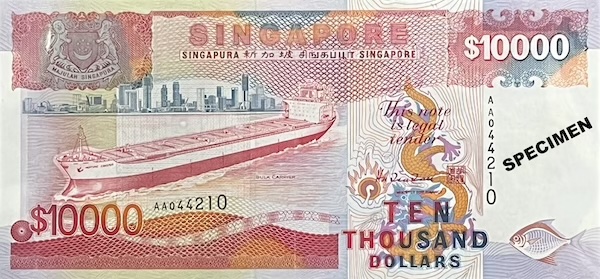
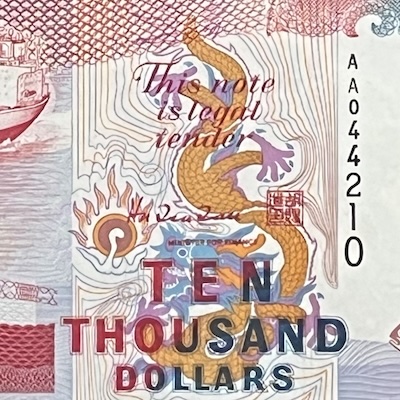
The Ship $10000 introduced several innovations to the management of prefixes and serial numbers. It was the first note to use a two-letter prefix (such as AA or AB), replacing the older system that combined letters and numbers (like A1 or G7), which had been used in the Orchid and Bird series, as well as denominations of the Ship issued earlier. It changed the layout of the serial numbers—one set remained horizontal, but the other was arranged vertically for the first time. It also modified the sizing of the serial number digits, which gradually increased from left to right and top to bottom. This was a security feature to make it harder for counterfeiters to copy the font exactly. Apart from the prefix and serial number, the Ship $10000 was also the first note to feature our Lion Head symbol, which was officially adopted in 1986. This symbol would appear in most of our banknotes ever since.
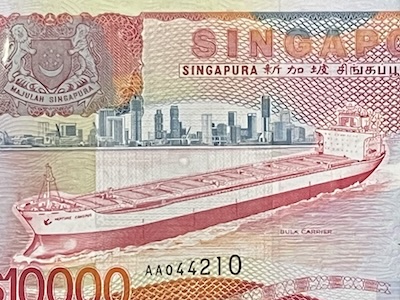
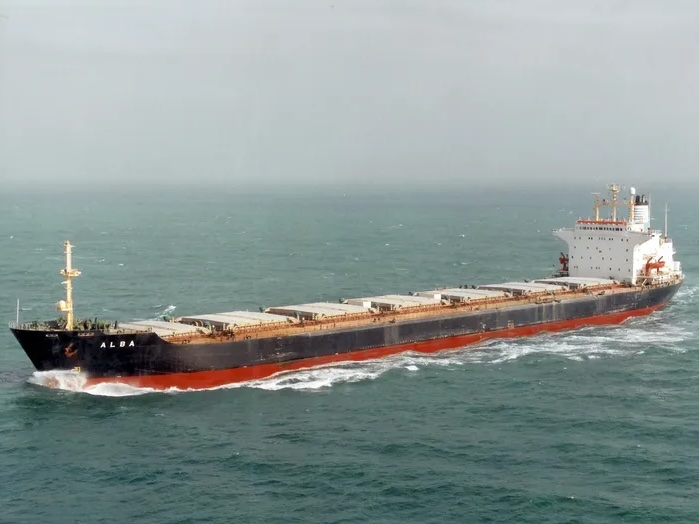
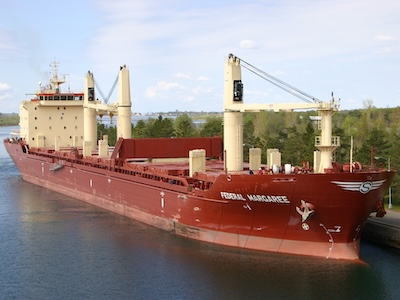
General bulk carriers are like the workhorses of the sea, built to carry huge amounts of loose cargo such as grain, coal, cement, and iron ore. Unlike container ships, these vessels transport raw materials in large open holds, supporting industries and helping to build cities. For Singapore, bulk carriers have played a big part in our rise as a global trading hub. In the 1980s, as our city rapidly grew, these ships brought in key materials like cement and steel that helped shape the skyline we see today. In addition, our strategic location and world-class port made us an important stop for bulk carriers moving goods between East and West. Ships like the Neptune Canopus—now renamed Alba—were part of this busy trade, carrying essential cargo between countries. Even today, bulk carriers remain vital to Singapore’s maritime industry, keeping supply chains moving and powering economies around the world.
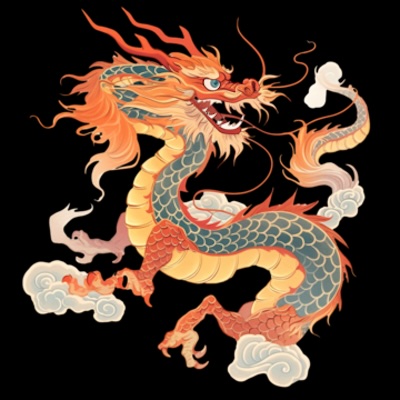
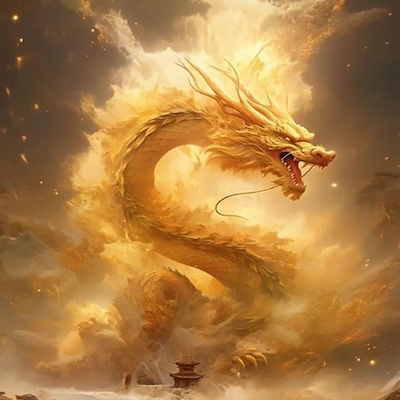
In Chinese folklore, the dragon 龙is revered as a powerful and auspicious creature, deeply woven into art, literature, and culture. Unlike the fire-breathing beasts of Western myths, the Chinese dragon is a benevolent symbol of strength, wisdom, and prosperity. It is believed to control the elements, especially water, bringing rain and fertility to the land. Associated with imperial power, the dragon was the emblem of emperors, signifying divine authority and unparalleled status. It is also linked to cosmic energy, and its presence in celebrations, such as dragon dances, is believed to bring good fortune and ward off evil spirits.
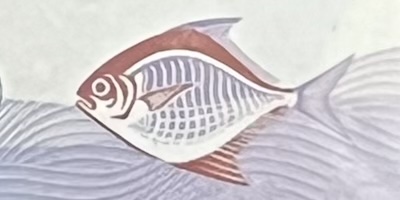
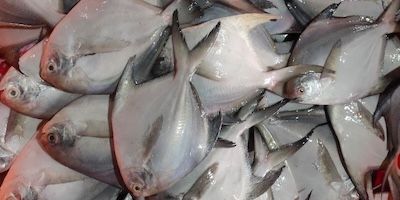
The white pomfret (白鲳, Bái Chāng) is a fish that holds both culinary and symbolic meaning, especially in Chinese households. With its soft, delicate flesh and shiny, silvery-white body, the pomfret is a prized choice for steaming with soy sauce, garlic, and ginger. It is especially popular during festive occasions like the Lunar New Year, where it represents abundance, harmony, and good fortune. In Cantonese, the word for pomfret (鲳 chāng) sounds like the word for prosperity (昌 chāng), making it a favourite at reunion dinners and celebration banquets. More than just a tasty dish, the white pomfret carries wishes for success and well-being, and has long been a symbol of joyful gatherings and flourishing opportunities in Singapore’s food culture.
Nationhood, National Service, and the Spirit of Singapore
1987 National Day Parade
In 1966, the Padang was chosen as the venue for our inaugural National Day Parade (NDP) as it was the site where our independence was first declared. Its colonial-era architecture, such as the Supreme Court and City Hall, added to its grandeur. From the late 1980s onwards, the NDP began to be held at different venues. In particular, the National Stadium became increasingly popular due to its larger seating capacity and ability to host more elaborate performances. The Padang was then used only every five years, and during milestone celebrations, such as Singapore’s 25th and 50th anniversaries.
20 Years of National Service8
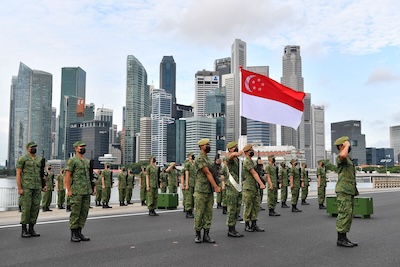
National Service (NS) was introduced in 1967, shortly after Singapore gained independence, to build a strong and reliable defence force for our young nation. From the very beginning, NS required young men to serve not only in the Singapore Armed Forces (SAF), but also in the Police Force and Civil Defence Force. While many people associate NS mainly with the military, thousands have also served with pride in the other two uniformed services, playing key roles in maintaining law and order, and responding to emergencies.
National Service Today9
Over time, NS has evolved to become a rite of passage that fosters discipline and a sense of identity among Singaporeans. Exemptions are rare; possible reasons include severe physical or mental health conditions or extreme family hardship (but this has become even rarer today as such cases are mitigated through government assistance schemes). Religious objections, such as those from Jehovah’s Witnesses, are not valid grounds for exemption, and can result in fines or imprisonment for refusal to serve. Exceptional talents in areas like sports or arts could occasionally secure deferment, but never full exemptions.
Market Value in 2024
Market Price: $10,800
Condition
• Ungraded
• Brand new
• No tears, pinholes, stains, foxing, creases or folds
Context
• The information here refers specifically to the banknote featured on the top of this page.
1. Prefix and banknote details from Vincent Tan and Tan Wei Jie, Singapore Banknotes: Complete Prefix Reference, Mr Banknotes, 2017.
2. Image from BalticShipping.com. Source: https://www.balticshipping.com/vessel/imo/8103262.
3. Image from BalticShipping.com. Source: https://www.balticshipping.com/vessel/imo/9299472.
4. Image from Pngtree listing. Source: https://pngtree.com/freepng/shenlong-chinese-dragon-cartoon-hand-drawn-43-year-of-the-dragon_14080354.html.
5. Image from Buddha III Bodhi. Source: https://buddha3bodhi.com/blogs/news/what-does-the-dragon-symbolize-unveiling-the-mystique-of-dragons-in-chinese-culture.
6. Image from Crab Seafood listing. Source: https://livecrab.com.sg/wild-white-pomfret.
7. Image from Royal Enterprise listing. Source: https://www.royalenterpriseexport.com/white-pomfret-fish.htm.
8. Image from Smithfield Stamps, eBay listing. Source: https://www.ebay.com/itm/197071280703.
9. Image from The Straits Times. Source: https://www.straitstimes.com/opinion/ukraines-lessons-in-total-defence-for-singapore.
Disclaimer
I built this website as a hobby, to share with others what I’ve learnt. All the information here is written based on my own research and understanding, and I don’t guarantee that everything is correct, complete, or updated. While I sell banknotes here, I don’t profit from them, as they are spare pieces from my private collection. All the banknote images here are taken by myself and they belong to me. The non-banknote images, with sources that I’ve attributed on every page, are used solely for illustration and non-commercial education purposes. If you are a copyright holder and believe something has been used inappropriately, please contact me, and I will immediately review or remove it.