Images: Early Pioneers, Old Singapore River, Modern Singapore
A Legacy of 200 Years
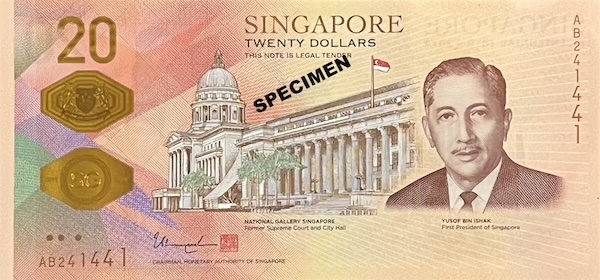
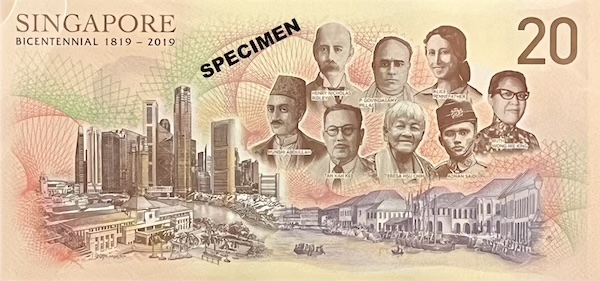
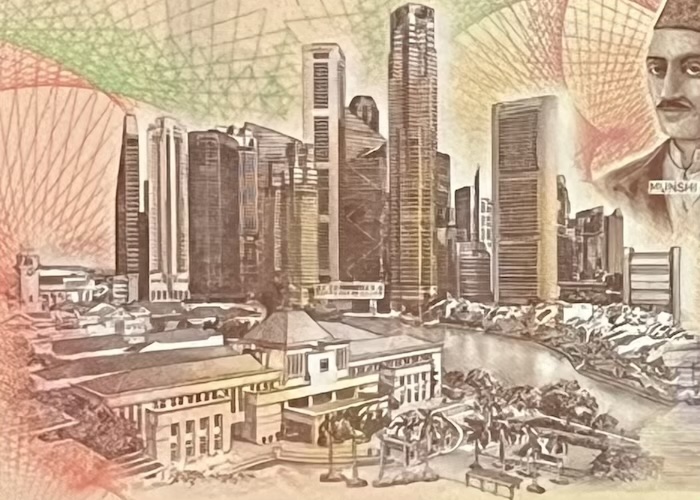
Singapore’s Bicentennial (B200) in 2019 was a commemoration of 200 years of transformation. The milestone reflected not just the arrival of Sir Stamford Raffles in 1819, but also the resilience and contributions of the many pioneers and communities that built our nation. It reminded us of our deep historical roots, from our days as a thriving maritime hub along the Singapore River, where traders and settlers from diverse backgrounds forged their livelihoods, to our modern role as a global financial centre. Landmarks of growth, including colonial-era buildings such as the former Supreme Court and City Hall, the development of an effective system of governance symbolised by the Parliament House, and the rise of a multicultural society among our people, illustrated our evolution over centuries. 2019 was a moment for us to remember the struggles and triumphs that defined Singapore’s past—from the bustling trade of the 19th century to the towering skyscrapers that now dominates our skyline.
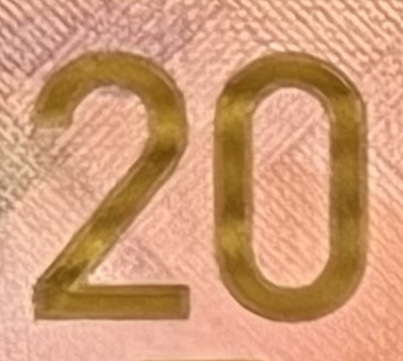
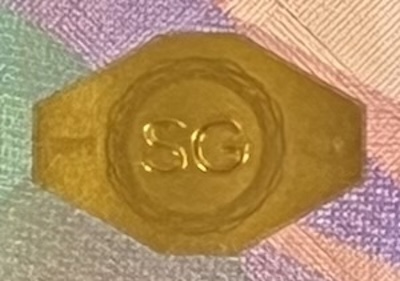
Security stripe with shifting colours and moving visual effects of:
• Denomination value ’20’
• National Coat of Arms
• Bicentennial logo
• ‘1819’ & ‘2019’
$20 was the chosen denomination instead of $200, as $200 would be too costly for many Singaporeans.
A Fresh Look for a Historic Moment
The Bicentennial note issued in 2019 is the latest banknote from Singapore, and officially our 42nd note since independence. Even though it was our 42nd, it still saw several firsts. It was the first time we used Oberthur Fiduciaire, a French company that designs and prints banknotes, as the printer. This note moved away from some of our usual national symbols—it did not feature the Lion Head, the Vanda Miss Joaquim, the outline map of Singapore, or even the word ‘Singapore’ printed in four languages, which had been a tradition. It was also the first note to not feature any orchids, not even as background patterns. The intent was probably to place the focus on our history before we turned independent. The new printer also used different security features. For the first time, there was no security thread or shadow image, no ultraviolet-visible text, no micro-lettering, and no see-through window. Instead, the note introduced a security stripe with ‘Kinegram Colors®’ technology and a ‘Flux’ effect, which creates dynamic images—shifting colours and moving visual effects—when tilted.
Echoes of Our Past, Paths to Our Future
Bicentennial Logo
The Bicentennial logo is made up of seven shapes, each representing a century, showing that Singapore’s history stretches back 700 years. The shapes slowly change and come together to form a circle, symbolising how Singapore has adapted over time. It means that while Singapore keeps changing, there is also continuity, with every step helping to build the country we know today.
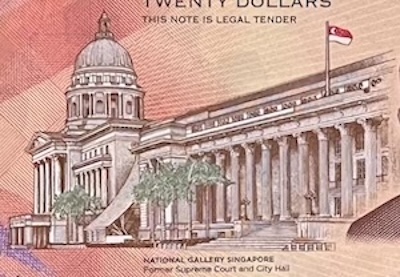
Former Supreme Court Building
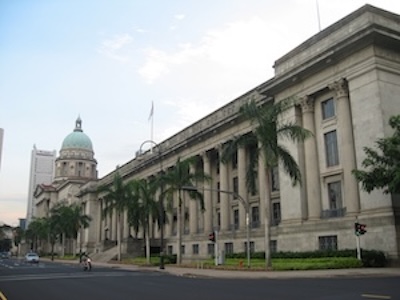
When Raffles arrived in 1819, the area where the old City Hall and Supreme Court buildings now stand was just an open field near the Padang. Over time, as Singapore grew, the colonial government built civic buildings around this area. The old City Hall was completed in 1929 and served as the Municipal Building where British officials worked. Beside it, the former Supreme Court building was completed in 1939 to house the highest court in the land. During the Japanese Occupation from 1942 to 1945, the Municipal Building was used by the Japanese administration, and it was also where the British formally surrendered Singapore to the Japanese in 1942.
National Gallery Singapore Today2
After the war, the old City Hall and Supreme Court buildings were returned to government use. They later became the site of many historic events. The area hosted the swearing-in of Singapore’s first Cabinet in 1959. It was also where Lee Kuan Yew read the Proclamation of Malaysia in 1963, and where Singapore’s independence was officially announced in 1965. The Supreme Court handled many major cases too, including famous murder trials and political cases during our early years. In the 2000s, the Supreme Court moved to a new building nearby, and the old City Hall and Supreme Court were turned into the National Gallery Singapore.
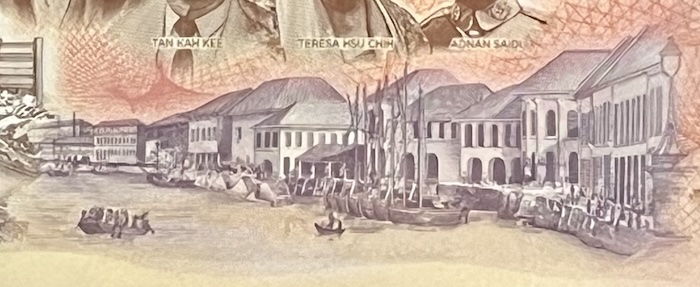
Old Singapore River
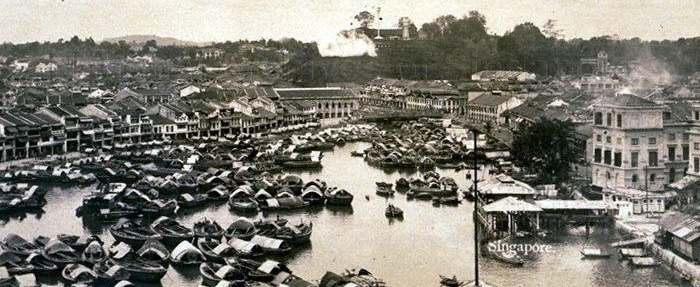
Old Singapore River, in 1900s3
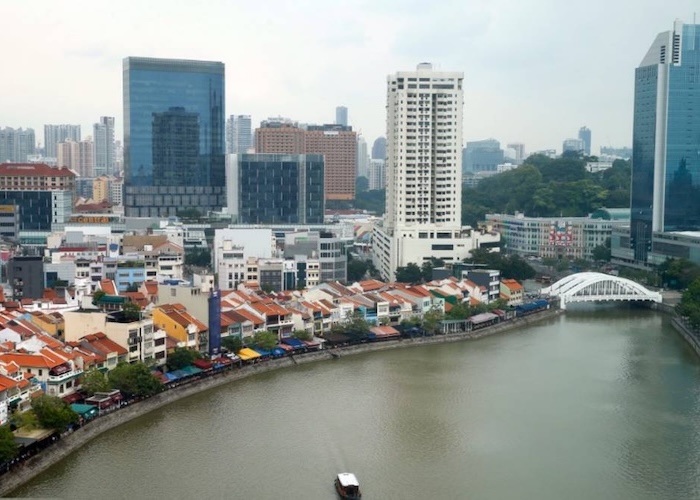
Singapore River Today
In 1819, the Singapore River was just a muddy stream surrounded by mangrove trees. But very quickly, it became the centre of activity. Traders from China, India, the Malay world, and Europe would anchor their ships offshore and use small boats to bring goods into the river. By the mid-1800s, the riverbanks were lined with warehouses called godowns. Merchants traded things like gambier, pepper, tin, and later, rubber. Chinese coolies unloaded sacks and barrels from bumboats, while Indian Chettiar moneylenders set up shop to help traders with loans. By the late 1800s, Boat Quay had become packed with merchants and shops, while upstream, Clarke Quay grew into a hub for rice, spices, firewood, and boatbuilders.
Singapore River Today4
From the early 1900s, the river grew even busier. Hundreds of bumboats filled the narrow river, and the banks buzzed with activity. But the area also became very polluted, as waste from homes and factories was dumped into the water. By the early 1960s, the river was overcrowded, and no longer able to handle the growing demands of modern trade. After Singapore became independent in 1965, the government began a major clean-up. Over ten years, street hawkers and factories were moved away, squatters were resettled, and proper drains and toilets were built. By the 1980s, the river became clean again. Today, it is a lively place with parks, walkways, and restaurants.
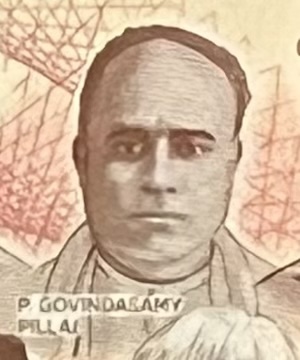
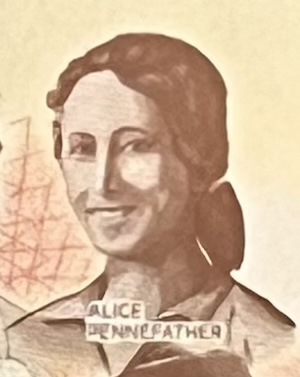
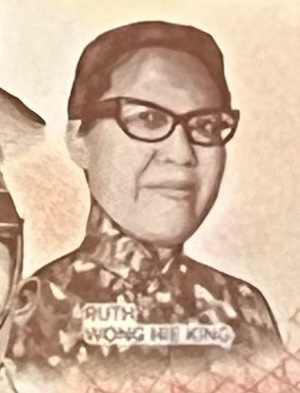
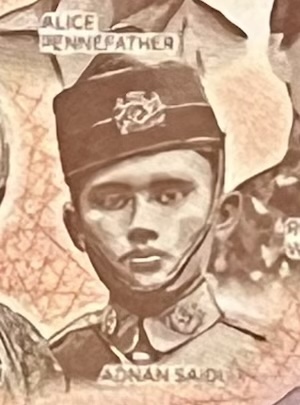
Honouring our Early Pioneers Who Shaped Singapore
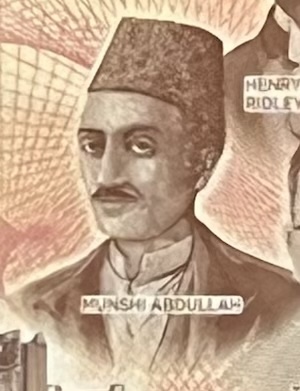
Munshi Abdullah (1797-1854) was the “Father of Modern Malay Literature”; he introduced a new literary style and documented early Singapore’s development.
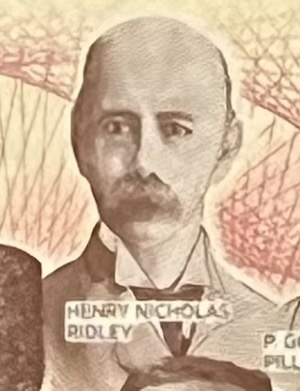
Henry Nicholas Ridley (1855-1956) was the first Director of the Singapore Botanic Gardens; he pioneered rubber cultivation, laying the foundation for the region’s rubber industry.
P. Govindasamy Pillai (1887-1980) was a businessman and philanthropist known for his contributions to Hindu temples and social welfare organisations.
Alice Pennefather (1903-1983) was a pioneering female athlete who championed women’s participation in sports.
Ruth Wong Hie King (1918-1982) was an educationist who revolutionised teacher training, elevating the professionalism of Singapore’s educators.
Adnan Saidi (1915-1942) became a war hero for his courageous stand in the Battle of Pasir Panjang during World War II.
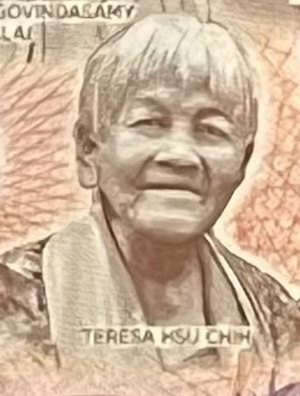
Teresa Hsu Chih (1898-2011) was ‘Singapore’s Mother Theresa’; she dedicated her life to humanitarian work, establishing homes for the aged sick and aiding the underprivileged.
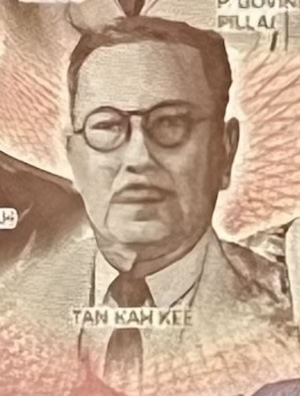
Tan Kah Kee (1874-1961) was a philanthropist and educationist who started many schools, including the Chinese High School, and fostered education across communities.
Market Value in 2024
Market Price: $30
Condition
• Ungraded
• Brand new
• No tears, pinholes, stains, foxing, creases or folds
Context
• The information here refers specifically to the banknote featured on the top of this page.
1. Prefix and banknote details from Tan Wei Jie, blog. Source: https://tanwj.com/.
2. Image by User:Sengkang, Wikipedia. Source: https://en.wikipedia.org/wiki/File:City_Hall_and_Old_Supreme_Court_Building,_Jan_06.JPG.
3. Image from National Archives of Singapore. Source: https://www.nas.gov.sg/archivesonline/photographs/record-details/87dac93a-1162-11e3-83d5-0050568939ad.
4. Image from ExploreBees. Source: https://www.explorebees.com/Singapore/activity/Singapore-River/pl93961.
Disclaimer
I built this website as a hobby, to share with others what I’ve learnt. All the information here is written based on my own research and understanding, and I don’t guarantee that everything is correct, complete, or updated. While I sell banknotes here, I don’t profit from them, as they are spare pieces from my private collection. All the banknote images here are taken by myself and they belong to me. The non-banknote images, with sources that I’ve attributed on every page, are used solely for illustration and non-commercial education purposes. If you are a copyright holder and believe something has been used inappropriately, please contact me, and I will immediately review or remove it.