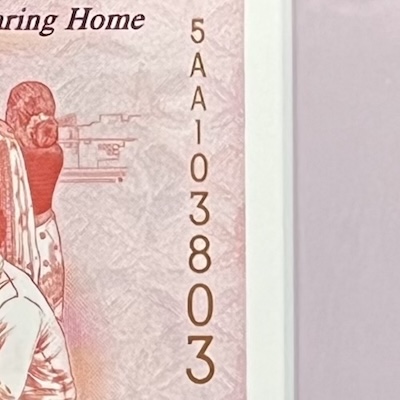
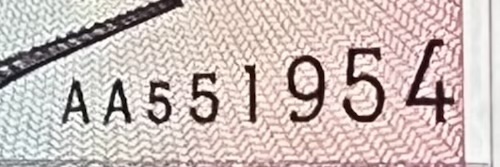
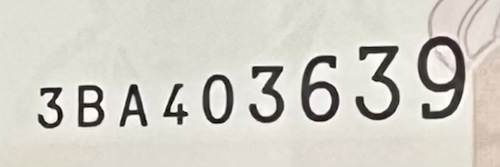
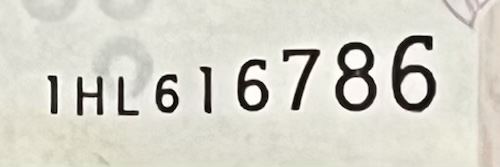
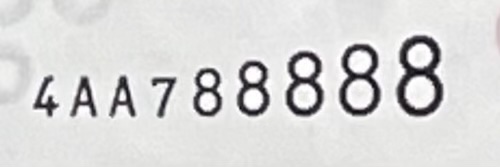
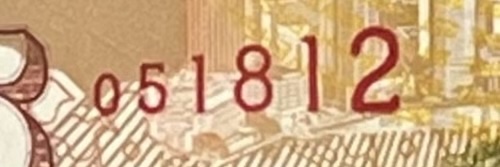
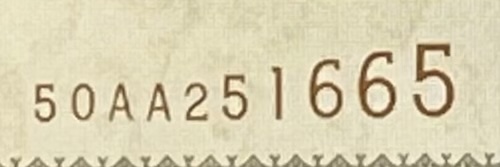
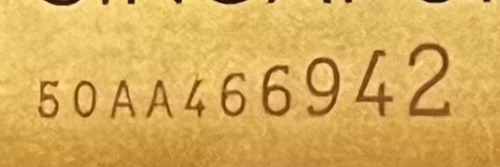
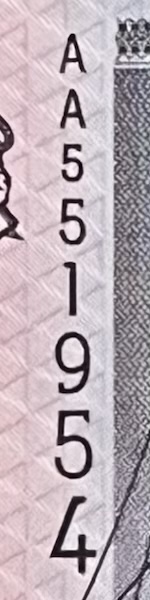
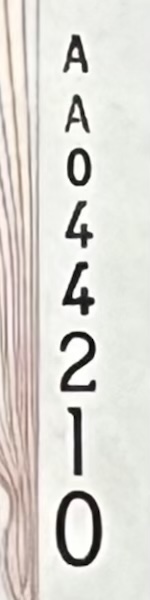
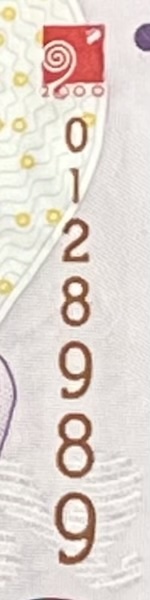
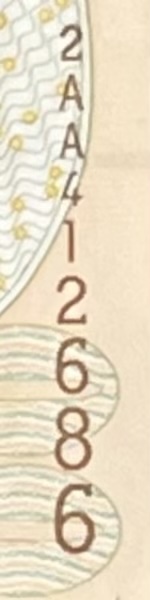
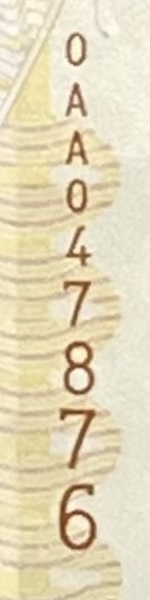
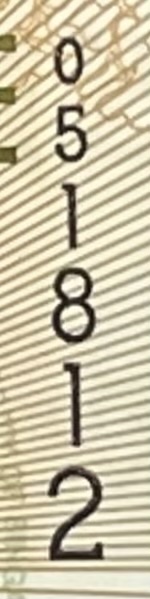
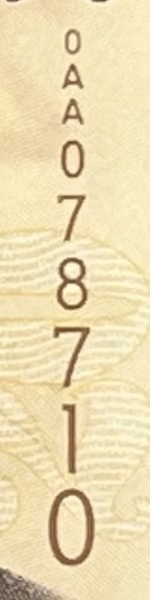
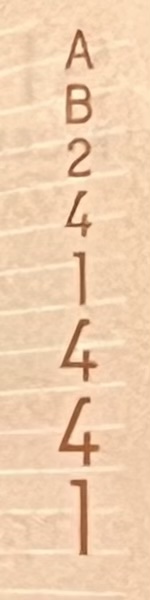
Asymmetrical serial numbers are serial numbers where the digits gradually increase in size from one end to the other. This uneven look, applied to both the horizontally and vertically arranged numbers, is a security feature. It makes the numbers harder to counterfeit using normal printing methods, because the size change follows a set pattern that is not easy to fake. The digits need to be scaled and aligned very precisely, which is difficult without specialised equipment.
P1000
MAS25
SG50-50
CIA50
Asymmetrical serial numbers first appeared in Singapore on the Ship series $2 purple note and $10000 note. On both notes, the vertical and horizontal serial numbers showed digits that grew larger with each digit. This later became a standard feature in the Portrait series, where the serial numbers of all denominations used this design. Asymmetrical serial numbers is also used in all of Singapore’s commemorative notes except the 1990 SG25 $50 note.
Disclaimer. I built this website as a hobby, to share with others what I’ve learnt. All the information here is written based on my own research and understanding, and I don’t guarantee that everything is correct, complete, or updated. While I sell banknotes here, I don’t profit from them, as they are spare pieces from my private collection. All the banknote images here are taken by myself and they belong to me. The non-banknote images, with sources that I’ve attributed on every page, are used solely for illustration and non-commercial education purposes. If you are a copyright holder and believe something has been used inappropriately, please contact me, and I will immediately review or remove it.