The National Day Parade became a beloved tradition, a jubilant celebration of our achievements. Each year, as the fireworks lit up the sky, we felt a surge of pride and hope. The parade wasn’t just a display of military might; it was a reflection of our collective journey. It was a reminder that we were building something special, something worth celebrating.
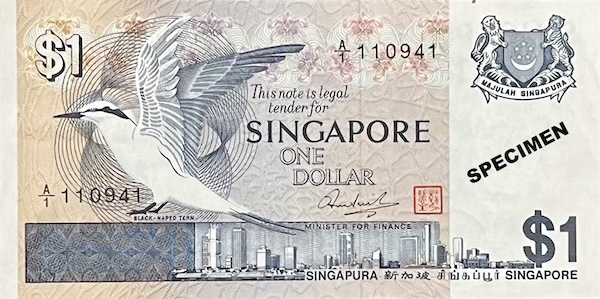
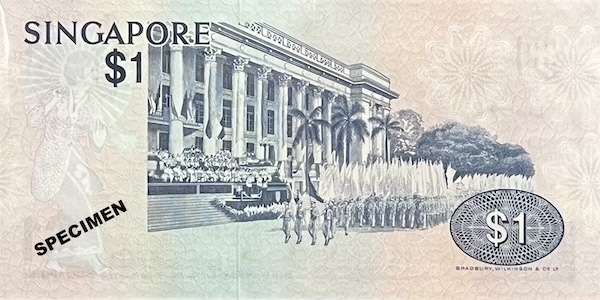
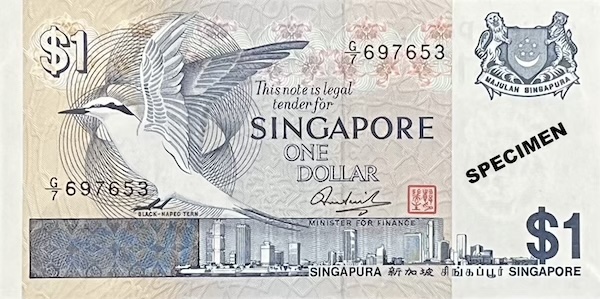
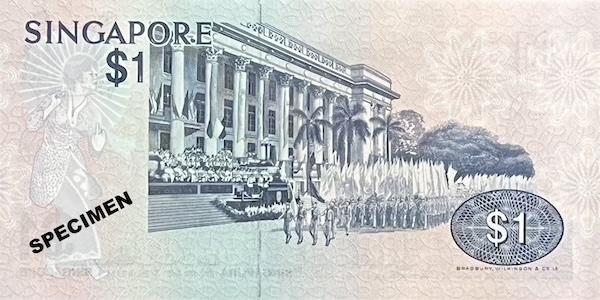
One vertical security thread • Prefix A1 to G6: Solid thread • Prefix G7 to H6: Segmented thread
Intaglio print
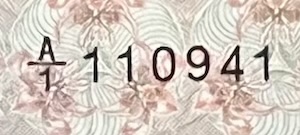
Geometric & floral patterns
Solid Security Thread (Front)
Segmented Security Thread (Front)
Solid Security Thread (Back)
Segmented Security Thread (Back)
A New Picture of Progress
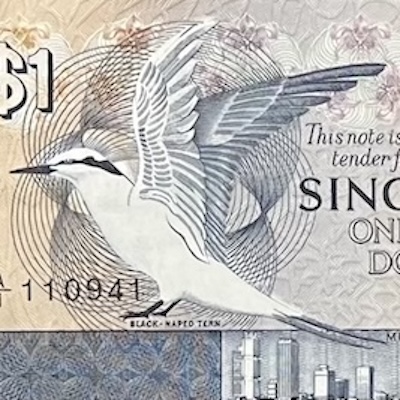
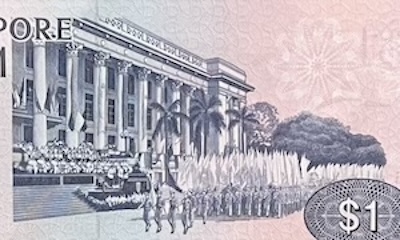
While the Orchid Series mainly showed historical icons from Singapore’s past, the Bird Series introduced images that showed our early progress as a young nation. These included scenes like the financial district, cable cars, oil refineries, container ports, and the National Day Parade. The Bird $1 was the first to feature the National Day Parade—a moment that gave Singaporeans a sense of pride and reminded us of our growing identity as an independent nation. The parade would go on to appear on several of our banknotes in later years too.
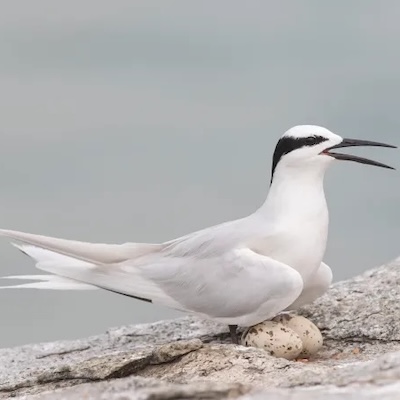
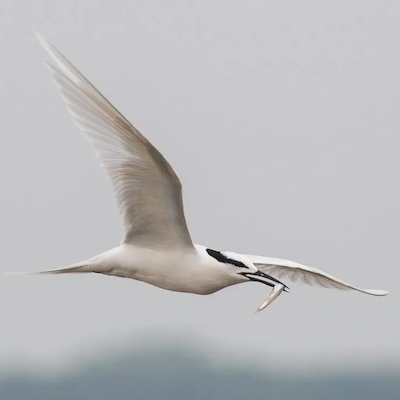
The Black-naped Tern is a striking seabird that looks almost entirely white from a distance, with a thin black stripe from its eyes to the back of its head. It breeds on tropical islands across the Indian and Pacific Oceans. In Singapore, it was first recorded nesting in 1949 on a small rocky outcrop off Changi Point, which remains its only known local breeding site. The bird is most often seen between April and September during its breeding season. Although common in the region, it is considered nationally endangered here due to the unprotected and vulnerable nature of its breeding site. You might spot it at Changi Point, Pulau Ubin, Pasir Ris Park, or over nearby waters.
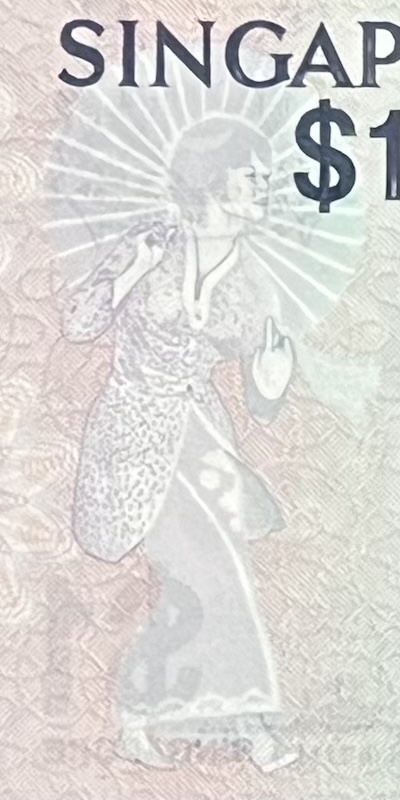
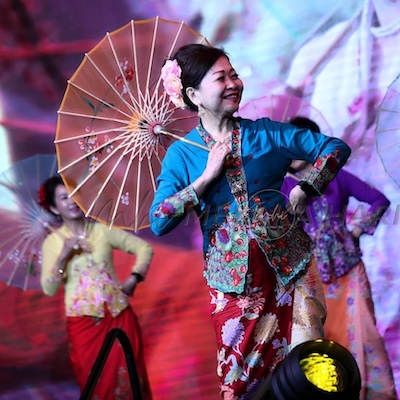
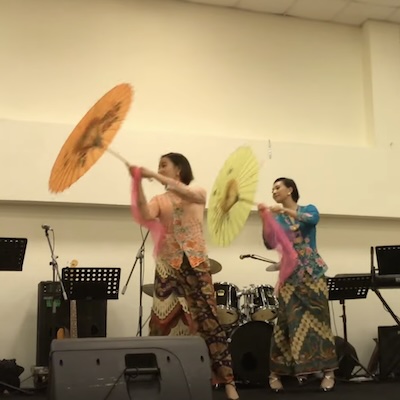
Peranakan dance is a traditional dance that shows the rich culture of the Peranakan community, which came from a mix of Chinese, Malay, and Indonesian influences. It is usually performed at weddings, festivals, and family gatherings. The dance is known for its graceful movements, detailed hand gestures, and beautiful costumes. Dancers often wear embroidered sarongs, kebayas, and fancy jewellery. The dance style mixes elements from Malay joget and Chinese opera, showing how different cultures come together in Peranakan traditions. Today, Peranakan dance is still performed at cultural festivals and heritage events.
Our National Day Journey: From Struggle to Spectacle
National Day Parade
Before gaining full independence, Singapore had already celebrated a National Day, though on a different date. After we attained self-governance in 1959, 3 June was celebrated as our National Day. This continued till 1963 when we joined Malaysia, after which Malaysia Day on 16 September became our key national celebration. But everything changed on 9 August 1965, when we were expelled from Malaysia. This date became the defining moment of our sovereignty, and 9 August has been our National Day ever since.
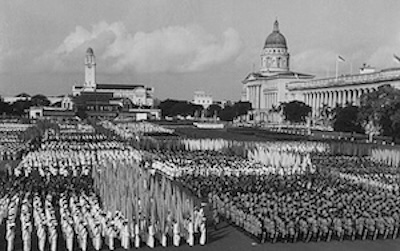
First National Day Parade in 19667
Our inaugural National Day Parade in 1966 began at 9:00 a.m., featuring a march-past of 23,000 participants, including men, women, and children. With the Singapore Armed Forces still in its infancy, schoolchildren played a vital role—not just as performers, but also in crowd control and logistics. Meanwhile, opposition members of parliament boycotted the parade, dismissing it as a ‘phoney independence’ and refusing to fly the Singapore flag at their headquarters.
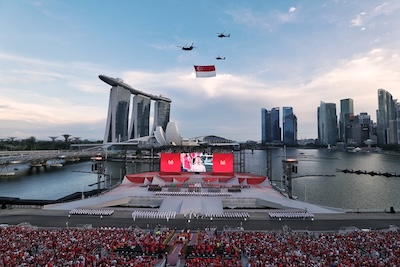
National Day Parade at The Float8
The National Day Parade was held at the Padang every year, until 1975, when it was decentralised to different venues across Singapore. In 1976, it was held at the National Stadium for the first time, and in 2007, it was moved to The Float @ Marina Bay. The proceedings in the early years were simpler, focusing on military parades and school contingents marching in formation. The turning point came in 1984 when mass displays were introduced along with synchronised movements and props. This led to the high-tech performances and multimedia displays we see today.
Market Value in 2024
Market Price: $30
Condition
• Ungraded
• Brand new
• No tears, pinholes, stains, foxing, creases or folds
Context
• The information here refers specifically to the banknote featured on the top of this page.
1. Prefix and banknote details from Vincent Tan and Tan Wei Jie, Singapore Banknotes: Complete Prefix Reference, Mr Banknotes, 2017.
2. Information about birds from Yong Ding Li and Lim Kim Chuah, A Naturalist’s Guide to the Birds of Singapore, 2016; and Birds of Singapore, https://singaporebirds.com.
3. Image by See Toh Yew Wai. Source: https://singaporebirds.com/species/black-naped-tern/#jp-carousel-4673.
4. Image by Francis Yap. Source: https://singaporebirds.com/species/black-naped-tern/#jp-carousel-2466.
5. Image by Mr Azli. Source: https://www.melakahariini.my/melaka-anjur-hari-kebaya-baba-nyonya-sempena-tmm2024/.
6. Image by DAP Jessica@TheJessicaBoey, Youtube. Source: https://www.youtube.com/watch?v=ynINbH91_mA.
7. Image by The Straits Times. Source: https://www.straitstimes.com/singapore/community/on-57th-birthday-singapore-to-name-the-padang-its-75th-national-monument.
8. Image by Kevin Lim, The Straits Times. Source: https://www.straitstimes.com/singapore/ndp-goodbye-floating-platform-hello-national-stadium.
Disclaimer
I built this website as a hobby, to share with others what I’ve learnt. All the information here is written based on my own research and understanding, and I don’t guarantee that everything is correct, complete, or updated. While I sell banknotes here, I don’t profit from them, as they are spare pieces from my private collection. All the banknote images here are taken by myself and they belong to me. The non-banknote images, with sources that I’ve attributed on every page, are used solely for illustration and non-commercial education purposes. If you are a copyright holder and believe something has been used inappropriately, please contact me, and I will immediately review or remove it.