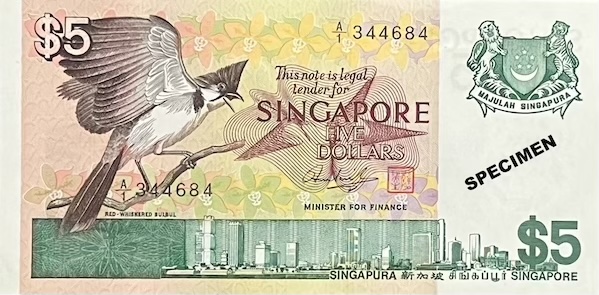
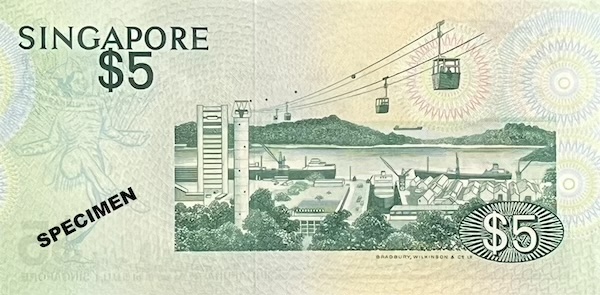
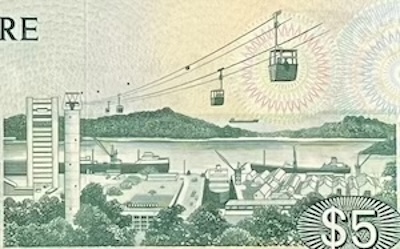
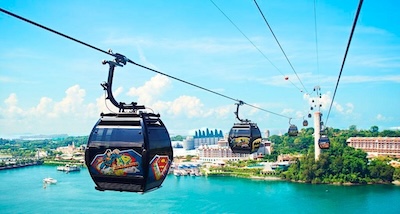
The cable car linking Mount Faber to Sentosa was a marvel of engineering. As we sat in the skies, we could admire the lush greenery and sparkling waters, a breathtaking view that showcased the beauty of our country. It was an unforgettable experience riding it with family and friends, while being transported to the new, magical island of Sentosa. However, the cable car and Sentosa were built not only to satisfy our leisure pursuits; they were early signs of our ambition to turn Singapore into a global tourist destination.
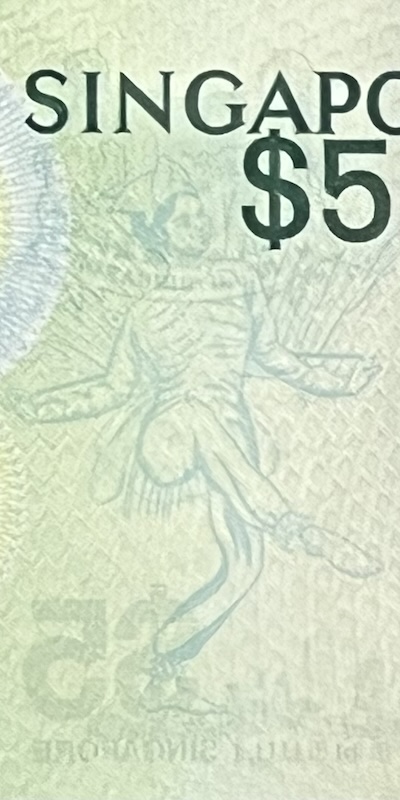
Unlike the other common denominations in the Bird Series—namely, the $1, $10, and $50 notes—the $5 note stands out for its lack of variants. It was released in only one form, with a solid security thread. When you hold it up to the light, this thread shows as a continuous line. Other notes later came with a segmented thread, which looks like broken lines when seen through light. The segmented thread did not appear on the banknotes issued on 6 August 1976, but only on those from late 1976 onwards. The Bird $5 notes were all issued on 6 August 1976, together with the first batch of the $1, $10 and $50 notes. But whereas these other denominations had a second batch issued in late 1976, the Bird $5 was never re-issued, and therefore it was the only one with no segmented thread variant.
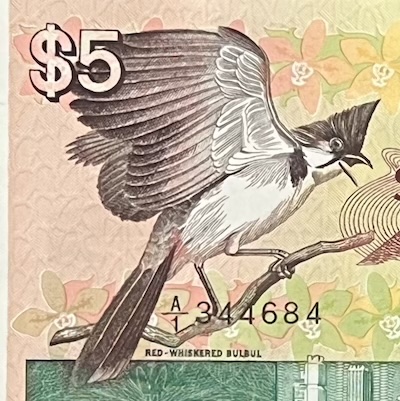
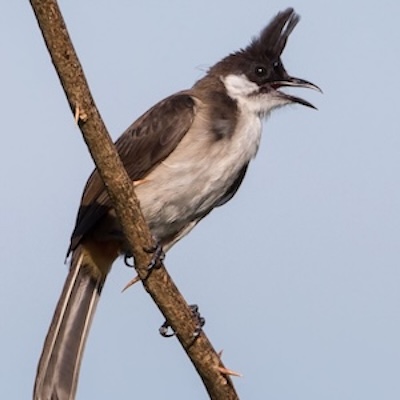
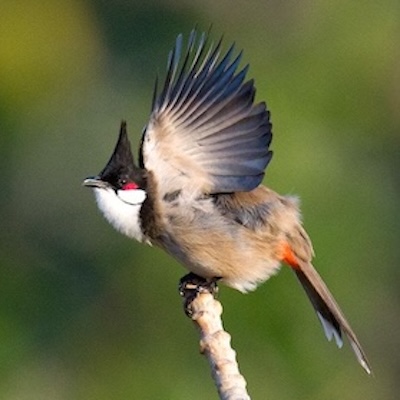
The Red-whiskered Bulbul is often seen around Singapore’s parks and green spaces like Lorong Halus, Jurong Lake Gardens, and the Botanic Gardens. About 20 cm long and weighing up to 42 grams, it is easily recognised by its upright black crest, white cheek patch, and red markings near its face—though younger birds, like the one pictured on the Bird $5 note, lack these red ‘whiskers’. Originally from the Indian subcontinent and Southeast Asia, it was introduced to Singapore through the songbird trade and is now a common sight in open areas, gardens, and wooded spots. Its clear, lively calls and occasional warbling songs make it a familiar background sound in many parts of the island. Despite its popularity and wide range, the species is not considered under threat.
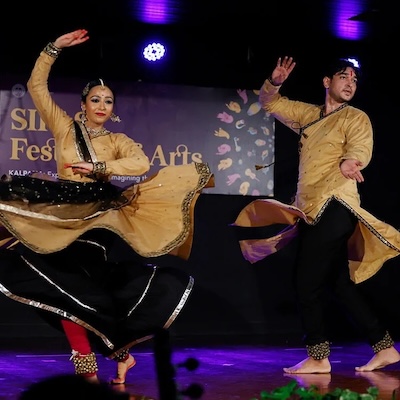
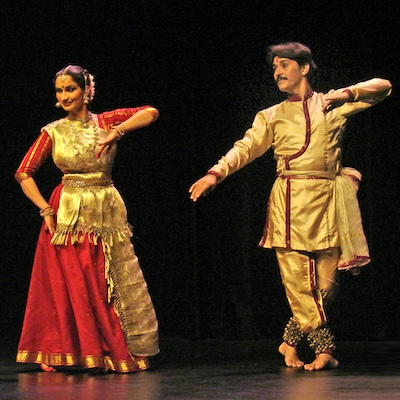
Kathak is a classical dance from North India. The word ‘Kathak’ comes from the Sanskrit word katha, which means ‘story’. This dance is known for its graceful turns, fast footwork, hand movements, and the way it tells a story through dance. Women usually wear traditional outfits like lehengas or long dresses called Anarkali, while men wear kurta with churidar pants or dhoti, along with a shawl. Kathak is often performed at cultural events like Deepavali, weddings, and other celebrations.
Cable Cars, A Landmark in Our Sky
Cable Cars
In February 1974, the Singapore cable car system was officially opened. It was a commercial project that was built without direct government funding. The project was led by the Port of Singapore Authority and involved help from private companies. When it first opened, it was the first cable car in the world to cross a major harbour. This was a big engineering achievement, as it needed very careful planning to make sure it didn’t affect the work at the busy port below.
Cable Cars Today7
Our cable car system first started out with 43 cabins. These first-generation cabins were not automated and had doors that needed to be manually opened and closed by cable car attendants. Today, the system has 67 cabins, collectively able to support up to 2,000 passengers per hour each way.
1983 Cable Car Accident8
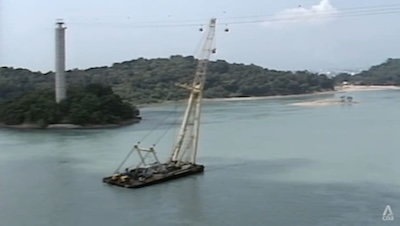
On 29 January 1983, seven people died when the derrick (lifting device) of an oil-drilling vessel struck the cableway and severed one of the cable car ropes, causing two cable cars to plunge into the sea. 13 others were stranded in four cabins suspended mid-air. Helicopters from the Singapore air force were called in. Hovering above the suspended cabins, airmen were lowered to rescue the stranded passengers. After this incident, regulations to control vessel heights were tightened, surveillance and monitoring protocols were enhanced, and the cable car system was upgraded with stronger cables and a back-up safety line.
Market Value in 2024
Market Price: $180
Condition
• Ungraded
• Brand new
• No tears, pinholes, stains, foxing, creases or folds
Context
• The information here refers specifically to the banknote featured on the top of this page.
1. Prefix and banknote details from Vincent Tan and Tan Wei Jie, Singapore Banknotes: Complete Prefix Reference, Mr Banknotes, 2017.
2. Information about birds from Yong Ding Li and Lim Kim Chuah, A Naturalist’s Guide to the Birds of Singapore, 2016; and Birds of Singapore, https://singaporebirds.com.
3. Image by Andrew Hardacre. Source: https://ajh57.wordpress.com/tag/juvenile-birds/.
4. Image Andrew Hunt, Facebook. Source: https://www.facebook.com/photo/?fbid=10161439914438096&set=pcb.1016183486374821..
5. Image from Singapore Indian Fine Arts Society. Source: https://www.esplanade.com/whats-on/festivals-and-series/free-programmes/2024/cool-classics/kathak-dance-showcase#synopsis.
6. Image by Jean-Pierre Dalbera. Source: https://upload.wikimedia.org/wikipedia/commons/0/00/Sharmila_Sharma_et_Rajendra_Kumar_Gangani_2.jpg.
7. Image from Trip Advisor. Source: https://dynamic-media-cdn.tripadvisor.com/media/photo-o/07/11/10/9e/singapore-cable-car-sentosa.jpg?w=1100&h=-1&s=1.
8. Image by Aqil Haziq Mahmud. Source: https://www.channelnewsasia.com/singapore/sentosa-cable-car-accident-survivor-trauma-rescue-40-years-3100286.
Disclaimer
I built this website as a hobby, to share with others what I’ve learnt. All the information here is written based on my own research and understanding, and I don’t guarantee that everything is correct, complete, or updated. While I sell banknotes here, I don’t profit from them, as they are spare pieces from my private collection. All the banknote images here are taken by myself and they belong to me. The non-banknote images, with sources that I’ve attributed on every page, are used solely for illustration and non-commercial education purposes. If you are a copyright holder and believe something has been used inappropriately, please contact me, and I will immediately review or remove it.