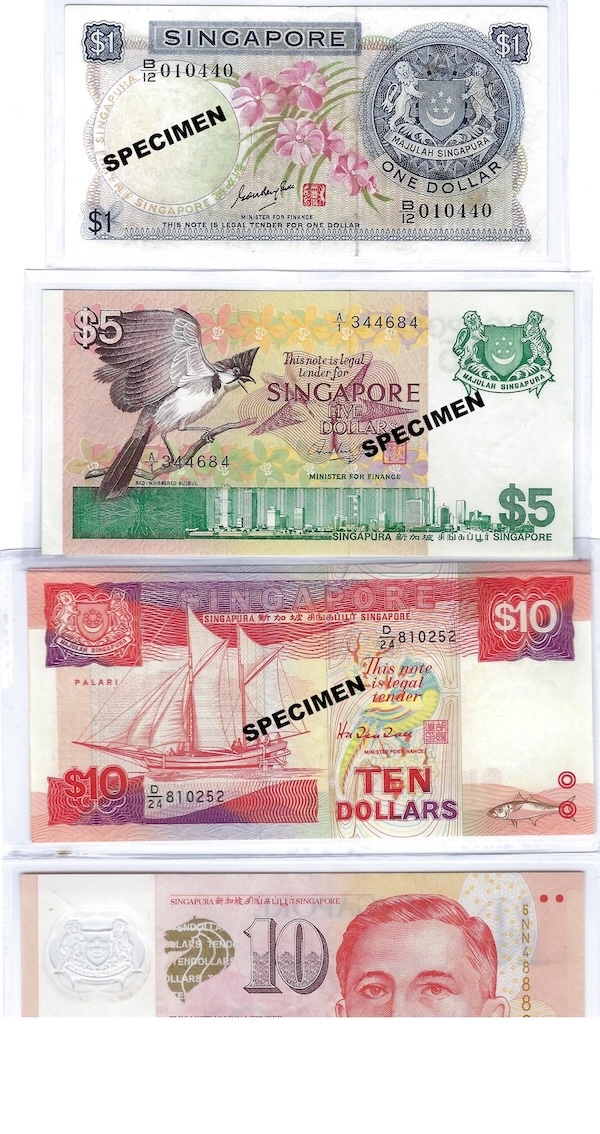
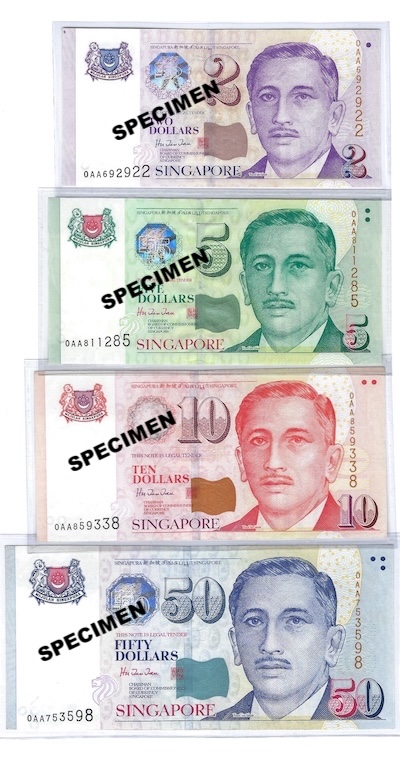
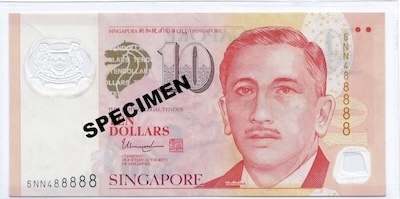
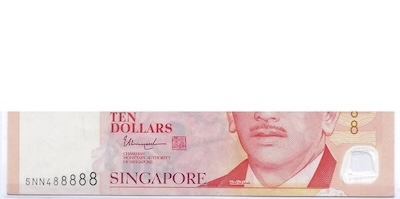
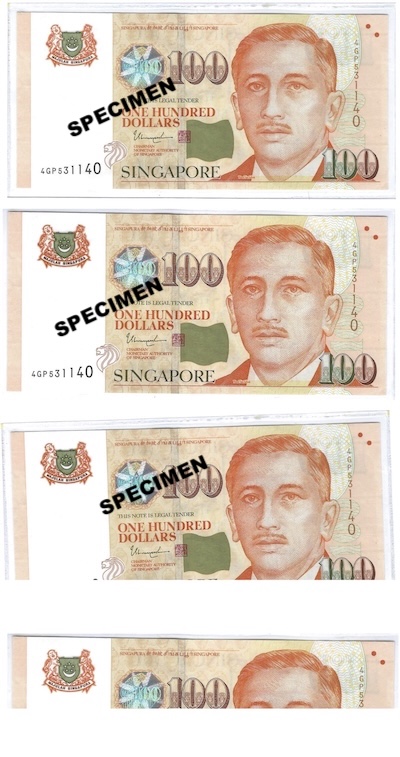
• Portrait series after early prefixes, for all denominations except $10000
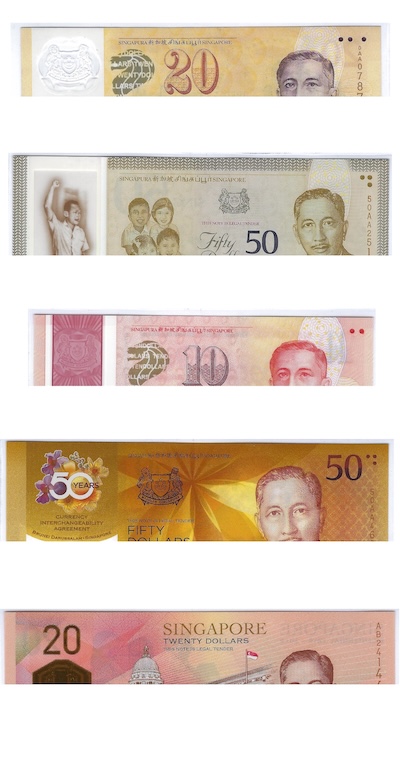
• 2007 CIA40 $20, 2015 SG50 $50 and $10, 2017 CIA50 $50, and 2019 B200 $20 commemorative notes
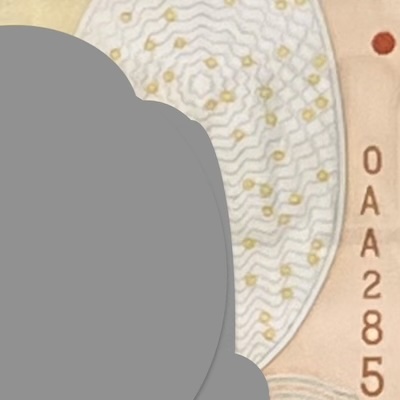
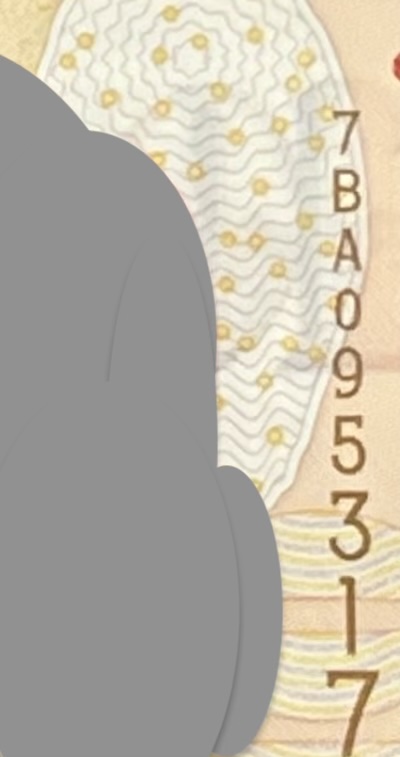
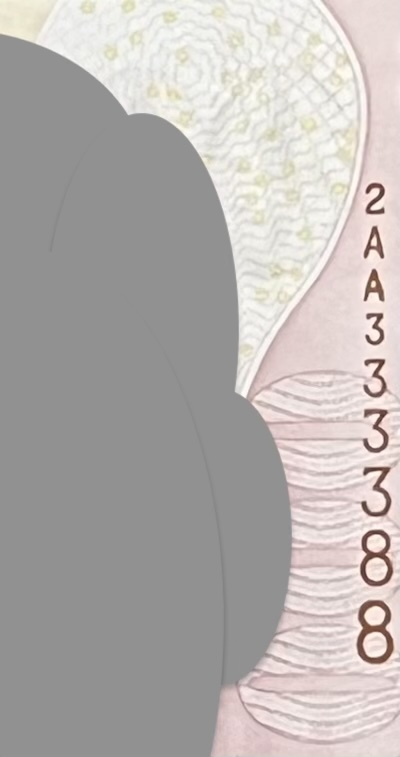
The EURion constellation is a pattern made up of small yellow, green, or orange circles printed on banknotes. These circles are arranged in a specific way that looks like part of the background design but serve as a hidden security feature. The pattern is designed so that when photocopiers or scanners detect it, they automatically block or disrupt the copying process. Similarly, image-editing software like Photoshop will refuse to open or edit a banknote image if it detects this pattern or a hidden digital watermark. The EURion constellation was first noticed in the early 2000s by researchers studying Euro banknotes. They found that certain dot patterns caused printers and software to stop functioning. The researchers named it “EURion” by combining “Euro” and “Orion,” since the pattern resembled the Orion star constellation. No central bank, including Singapore’s, has officially acknowledged its presence, but it has been found on many currencies around the world.
P10: Orion Star Constellation
P1000: Orion Star Constellation
P1000: Orion Star Constellation
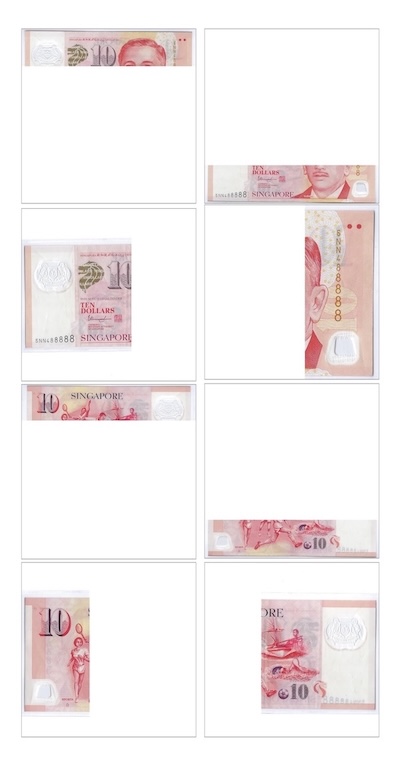
Failed Scan of Portrait Series Note
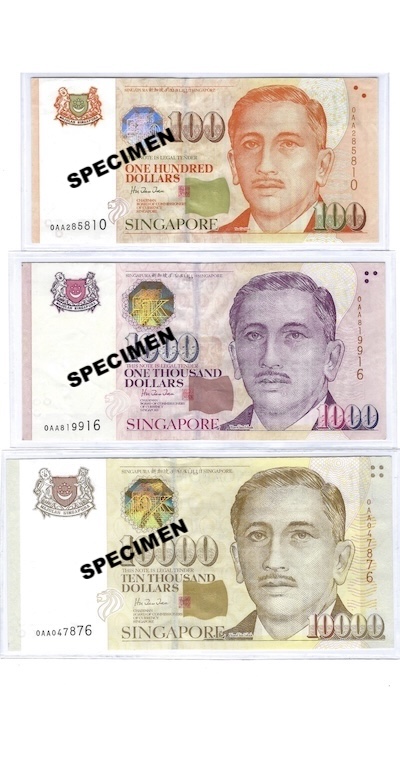
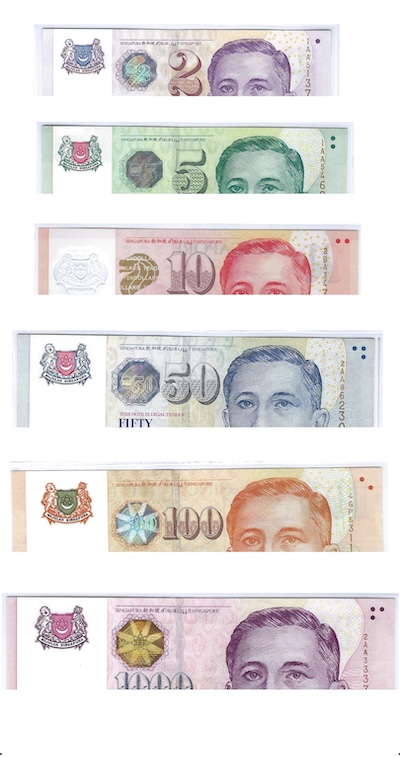
The EURion Constellation was used only starting from the Portrait series notes. However, it did not feature in the initial prefixes, and was introduced only in slightly later prefixes. For example, the first-prefix Portrait notes could still be scanned successfully, but those prefixed slightly later could no longer be done. For this reason, the Portrait $10000 notes did not have this feature, as all of them were printed before this feature was introduced. Among commemorative notes, the three pieces issued before the millennium—the 1990 SG25, 1996 MAS25, and 1999 M2—could be scanned, but not the ones that came after.
P2 to P50: First Prefix: Successful Scans
P100 to P10000 First Prefix: Successful Scans
P2 to P1000 Later Prefixes: Failed Scans
Commemorative Notes After 2000: Failed Scans
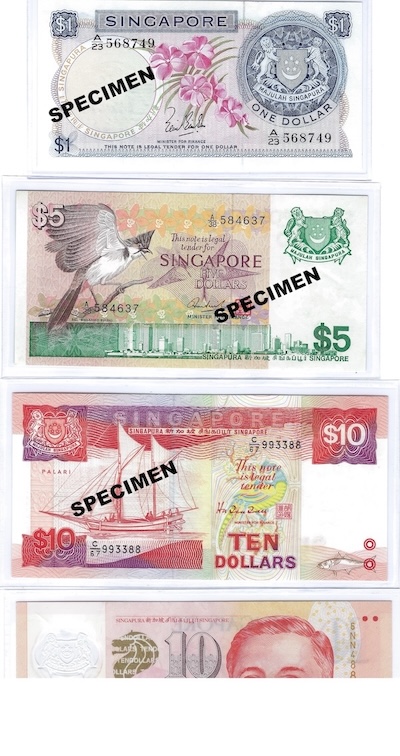
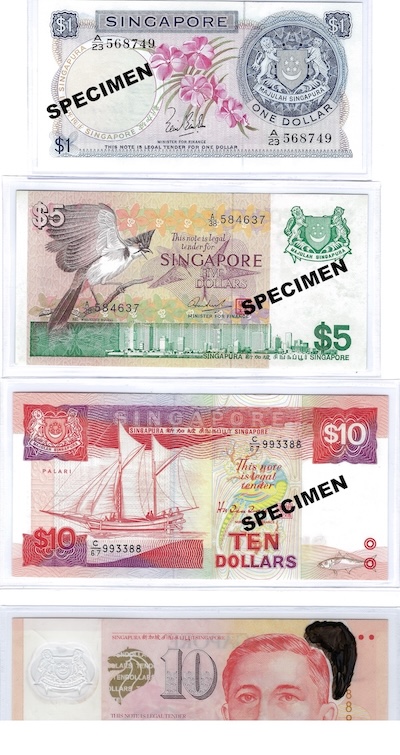
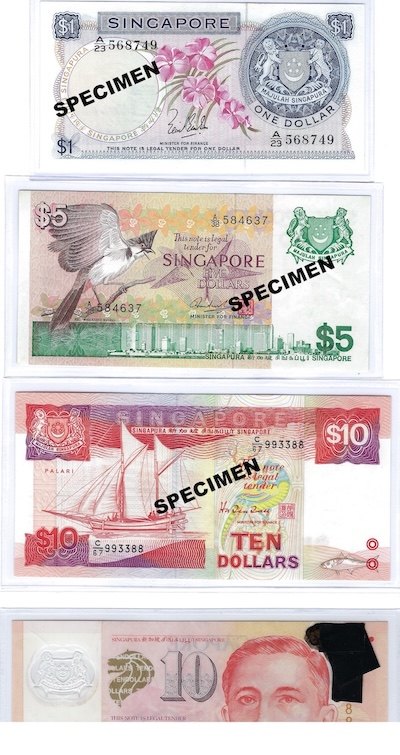
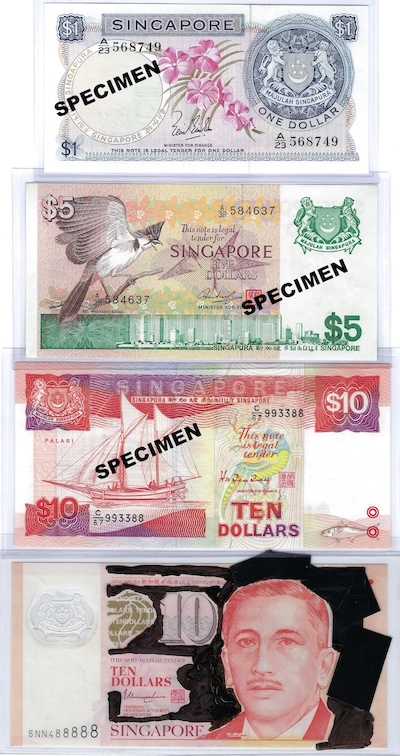
The EURion pattern is visible on the cowrie shells behind President Yusof Ishak’s portrait. However, I believe it is also hidden elsewhere on the note. To test this, I scanned one note from each of the four series. All scanned successfully—except the Portrait note, which was blocked at the halfway point of the note, likely because the scanner had detected the hidden pattern. In Step 2, I used a black marker to conceal the cowrie area—where the visible EURion dots appear—but the scan was still blocked. In Step 3, to rule out the possibility that the scanner’s light was passing through the marker ink, I covered the same area with opaque black tape. The scan was still blocked, suggesting the EURion pattern is not limited to that section. In Step 4, I covered large areas of the note’s background with marker and tape. Only then did the scan proceed successfully. This suggests the pattern is embedded in multiple locations on the note. (*The note in the images was not defaced. The marker and tape were applied to the protective plastic seal enclosing the note, not on the note itself.)
Step 1: Scan of Portrait vs Other Series
Step 2: Cowrie Covered by Marker Ink
Step 3: Cowrie Covered by Black Tape
Step 4: Background Covered by Marker Ink
While the EURion system is known to work on many machines, its detection may be inconsistent. Some printers and scanners still block banknotes containing the pattern; others allow the process without any warning. When I tested the feature in January this year, the scans were blocked. But when I tried again in July, I was able to complete a scan of the same note. However, this only worked for the first few attempts—after which my scans were blocked again. I can’t be certain, but perhaps the software is programmed to allow a few scans before activating the block. The machine or the note itself might also produce inconsistent results. When I scanned the same Portrait $100 several times, the scan was successful on two occasions but failed on another two. Whether this was a specific problem with my printer or my note, it suggests this feature is not an entirely reliable one.
Disclaimer. I built this website as a hobby, to share with others what I’ve learnt. All the information here is written based on my own research and understanding, and I don’t guarantee that everything is correct, complete, or updated. While I sell banknotes here, I don’t profit from them, as they are spare pieces from my private collection. All the banknote images here are taken by myself and they belong to me. The non-banknote images, with sources that I’ve attributed on every page, are used solely for illustration and non-commercial education purposes. If you are a copyright holder and believe something has been used inappropriately, please contact me, and I will immediately review or remove it.