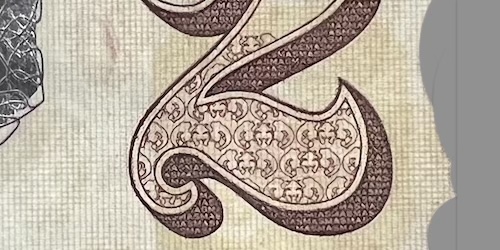
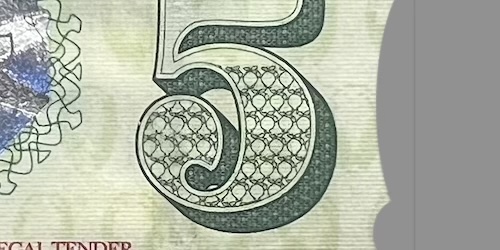
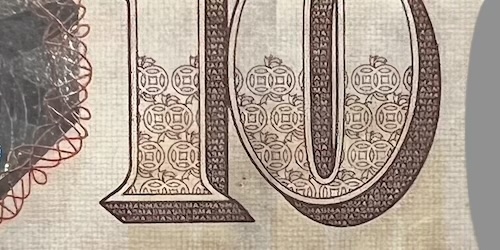
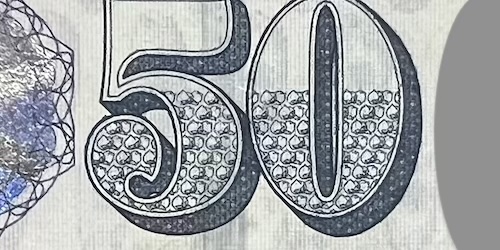
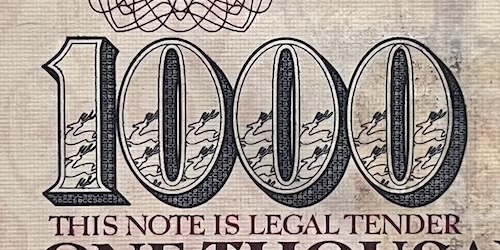
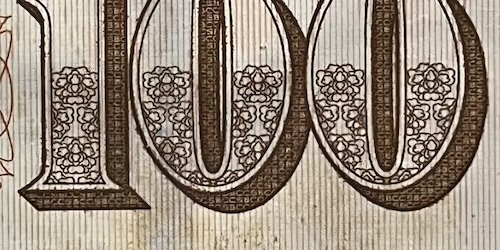
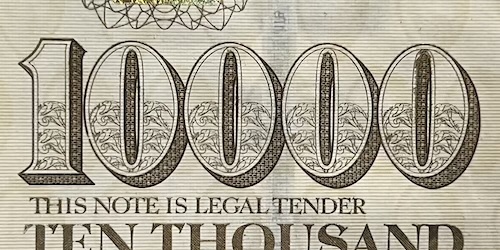
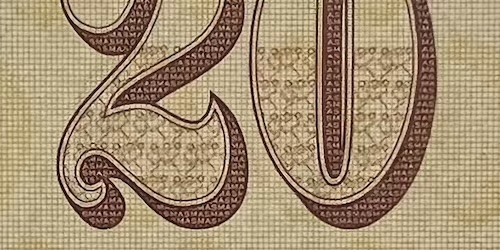
All the paper notes in the Portrait Series feature auspicious symbols—animals, plants, and objects—used in feng shui practices and believed to bring good fortune. But unlike the mythical creatures in the Ship Series, almost all of them are real: Chinese bats, pomegranates, ancient Chinese coins, peaches, Chinese peonies, and the Chinese crane. The qilin is the only one that isn’t. These symbols are concealed within the denomination numerals on the front and back of the Portrait paper notes. They also appear on commemorative notes like the 1999 Millennium note, 2007 CIA40, and the 2015 SG50 $10.
P2: Bats
P5: Pomegranates
P10: Chinese Coins
P50: Peaches
When used in feng shui, these symbols are often placed as decorations in homes or offices. Chinese bats (P2) are popular because the word for bat (蝠 fú) sounds like good fortune (福 fú). Pomegranates (P5), with their many seeds, stand for family and fertility. Ancient coins (P10) tied with red string are hung near doors to attract wealth. Peaches (P50) are symbols of long life, often shown in paintings. Chinese peonies (P100), also known as the “king of flowers”, are used to attract romance and beauty. The qilin (P1000) is used as a statue to protect homes and invite success. Cranes (P10000) represent health and are often seen in paintings. The 2007 CIA40 note featured a different type of feng shui symbol: a pair of books. Instead of good fortune, books are meant to bring learning, wisdom, and self-cultivation.
P1000: Kirins
P100: Chinese Peonies
P10000: Chinese Cranes
CIA40: Books
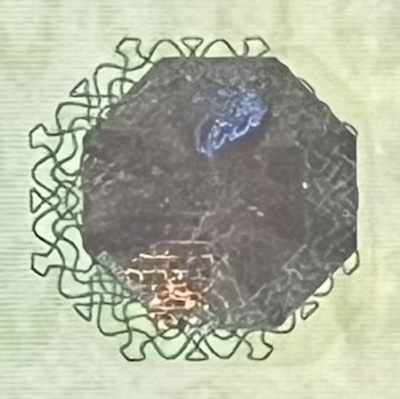
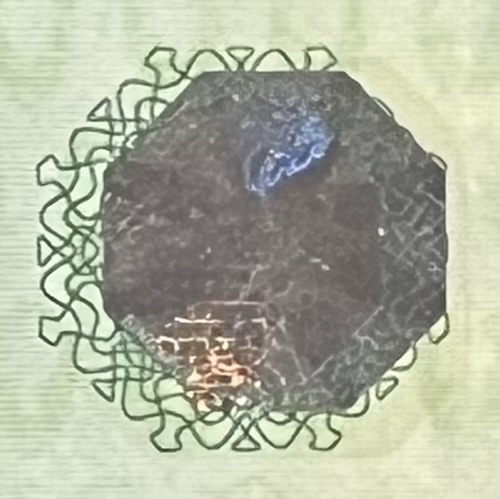
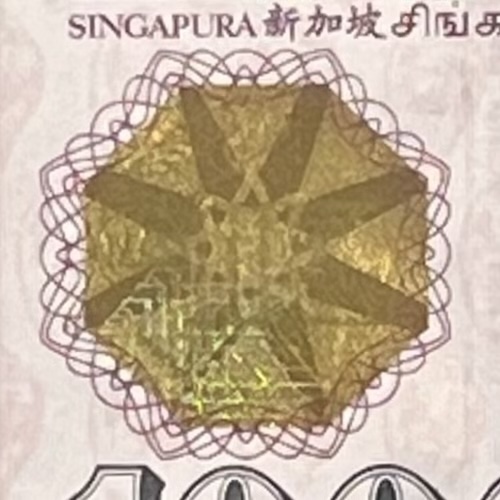
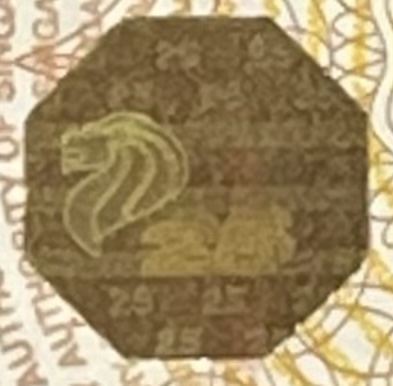
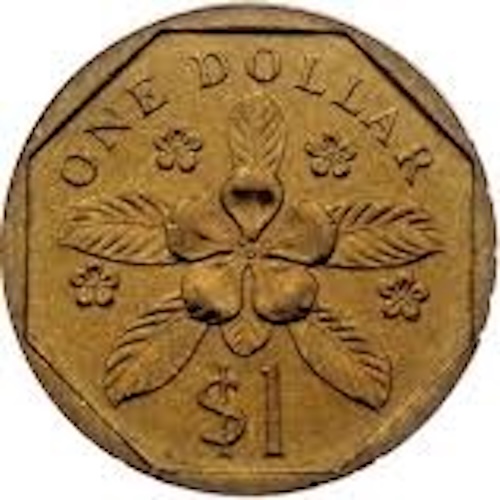
All the Portrait notes, as well as the MAS25 commemorative note, also include an octagonal Kinegram. This Kinegram looks like a bagua (八卦), a feng shui device for balancing energy. While the 1996 MAS25 note was the first note to feature this “bagua”, the shape wasn’t new—it followed the octagonal $1 coin introduced in 1987. A well-known rumour was that during a string of national troubles in the 1980s—like the Pulau Bukom fire (1981), cable car accident (1983), Air Force aircraft crashes (1983-1985), recession (1985), and the Hotel New World collapse (1986)—a fortune teller had warned Lee Kuan Yew that MRT tunnelling had disturbed the ground and brought misfortune. The supposed remedy was for everyone to carry a bagua. But this wasn’t practical, so the idea was to mint the $1 coin in the shape of an octagon, like a bagua. The government then stopped issuing the Ship $1 note after just two years and promoted the use of this $1 coin instead. If this story is true, the octagonal Kinegram in the Portrait notes may have shared the same protective intent.
Disclaimer. I built this website as a hobby, to share with others what I’ve learnt. All the information here is written based on my own research and understanding, and I don’t guarantee that everything is correct, complete, or updated. While I sell banknotes here, I don’t profit from them, as they are spare pieces from my private collection. All the banknote images here are taken by myself and they belong to me. The non-banknote images, with sources that I’ve attributed on every page, are used solely for illustration and non-commercial education purposes. If you are a copyright holder and believe something has been used inappropriately, please contact me, and I will immediately review or remove it.