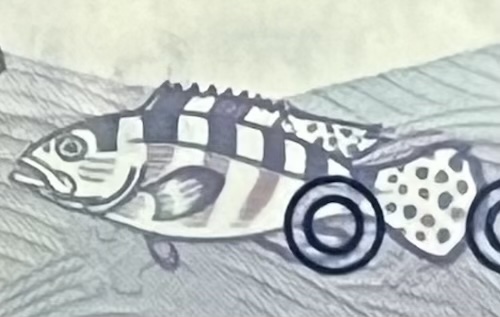
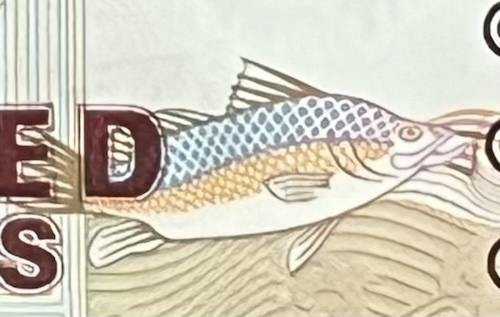
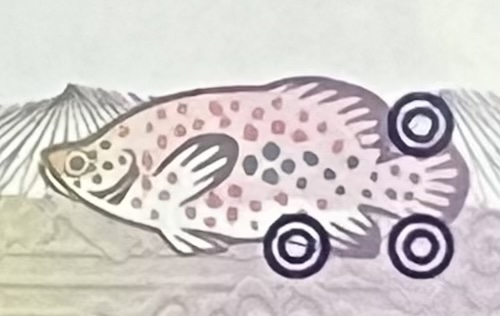
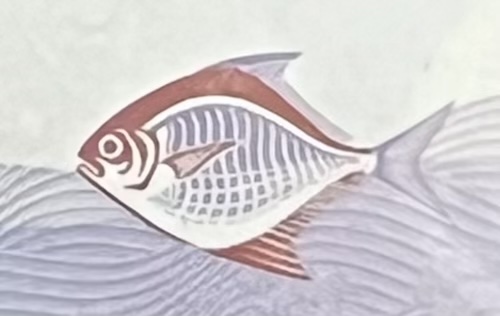
The Ship Series uses a maritime theme and a symbolic creature, but there is another often unnoticed detail—every note also features a fish. The only exception was the $2 note, which was designed and printed separately from the rest. The fish were included not only for their link to the sea and ships, but also for their cultural and historical meaning. In Chinese culture, fish are considered auspicious because the word for fish, 鱼 (yú), sounds like the word for surplus or abundance, 余 (yú). That’s why you’ll hear the phrase 年年有余 (nián nián yǒu yú) during Chinese New Year, which means “may you have abundance every year.” Fish also played a real role in Singapore’s early economy. Before container ports and high-rise buildings, we were a trading post surrounded by fishing villages. Fish wasn’t just symbolic—it was survival.
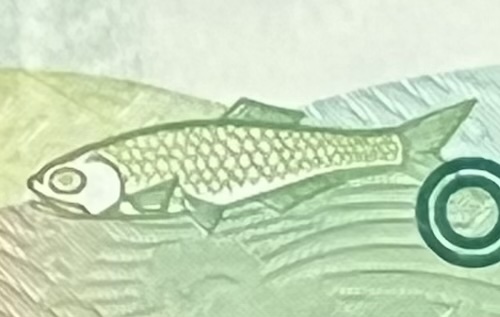
S100: Slender Shad
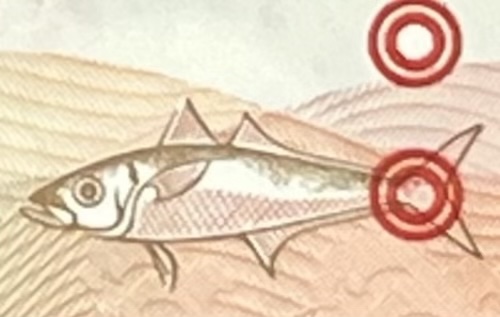
S500: Indian Mackerel
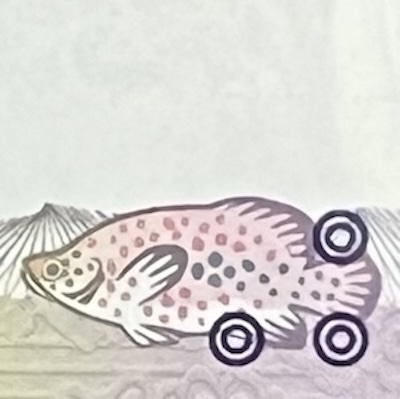
S1000: Polka-Dot Grouper
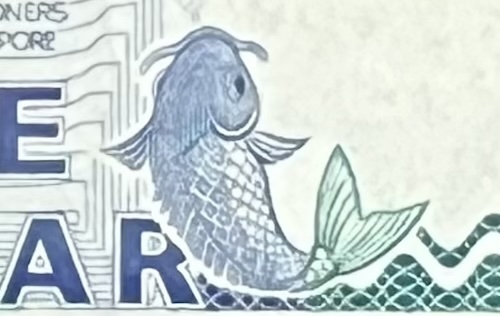
S10000: Chinese Dragon
Eight different types of fish are featured across the Ship Series. If we rank them by market price in Singapore today, the Polka Dot Grouper (S1000) and Six Banded Grouper (S50) are the most expensive, usually eaten in restaurants or at family celebrations. The White Pomfret (S10000) is also valued, especially during Chinese New Year for its clean taste and association with wealth. Chinese Carp (S1) used to be more common in Chinese households, often served whole at family meals, though its popularity has dropped a bit. Indian Mackerel (S500), Round Scad (S10), and Slender Shad (S100) are more affordable and are everyday fish often fried or used in curries—once seen as “poor man’s food,” but now appreciated for their flavour. Commerson’s Anchovy (S5)—known to us as the ikan bilis—which is small and often dried, is still found in many local dishes, from nasi lemak to soup stock. Over time, as incomes rose and tastes changed, some fish became more “premium,” but many of these species remain part of the Singaporean kitchen in one way or another.
Disclaimer. I built this website as a hobby, to share with others what I’ve learnt. All the information here is written based on my own research and understanding, and I don’t guarantee that everything is correct, complete, or updated. While I sell banknotes here, I don’t profit from them, as they are spare pieces from my private collection. All the banknote images here are taken by myself and they belong to me. The non-banknote images, with sources that I’ve attributed on every page, are used solely for illustration and non-commercial education purposes. If you are a copyright holder and believe something has been used inappropriately, please contact me, and I will immediately review or remove it.