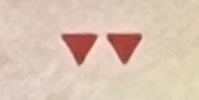
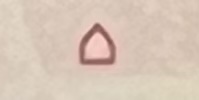
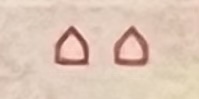
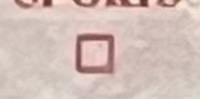
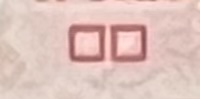
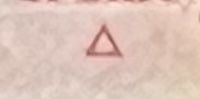
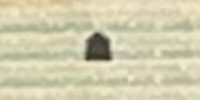
Since 2008, Portrait notes signed by either Goh Chok Tong or Tharman Shanmugaratnam have included a new feature: small geometric shapes printed on the back. These shapes also appear on the 2015 SG50 commemorative notes. You will find one, two, or three shapes — squares, triangles, diamonds, stars, houses, or bells — in either solid or hollow form. The shapes can appear upright or inverted. They seem broadly linked to the prefixes, but there is no clear pattern. They are probably used for MAS’s internal tracking, and MAS has not explained how the shapes are chosen — which shape appears when, what each one means, or how they are sequenced. Most likely, they relate to the batch in which the notes were printed.
P10: One Square
P100: Two Squares
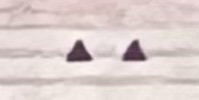
P5: One Triangle
P1000: Two Triangles
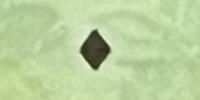
P5: One Diamond
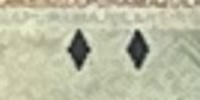
P50: Two Diamonds
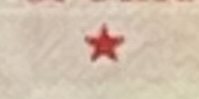
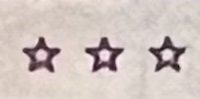
P10: One Star
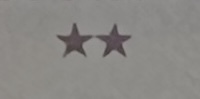
P2: Two Stars
This list shows where every shape appears on the Portrait notes. (The $10000 note, issued before 2008, does not have these shapes.)
Squares: One or two squares on all denominations except the $1000 note.
Triangles: One or two triangles on all denominations.
Diamonds: One or two diamonds on all denominations.
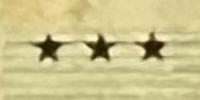
Stars: One, two, or three stars on all denominations.
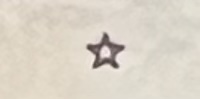
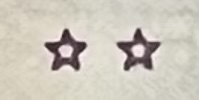
Hollow stars: One, two, or three hollow stars only on $2 notes.
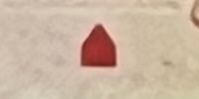
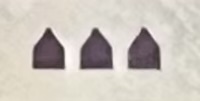
Houses: One, two, or three houses on $2, $10, $50, and $1000 notes.
Inverted triangles: One or two inverted triangles only on $2 and $10 notes.
Hollow houses: One or two hollow houses only on $10 notes.
Hollow squares: One or two hollow squares only on $10 notes.
Hollow triangle: One hollow triangle only on $10 notes.
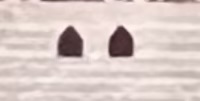
Bells: One or two bells only on $100 notes. (The bells look like houses but have slightly rounded tops and sloping sides, so I classified them as bells.)
P100: Three Stars
P2: One Hollow Star
P2: Two Hollow Stars
P2: Three Hollow Stars
P10: One House
P1000: Two Houses
P2: Three Houses
P2: One Inverted Triangle
This list shows the first prefixes that correlate with each shape:
I’ve considered several theories to explain the geometric shapes on Singapore banknotes but have found inconsistencies in each. One theory is that the shapes follow a fixed sequence—squares, triangles, diamonds, stars, and houses—which fits the $10 and $50 notes but not others; for example, $2 notes include hollow stars before houses, $100 notes replace houses with bells, and $1000 notes begin with triangles, skipping squares entirely. Another theory suggests that the shapes match the prefix numbers, such as the $2 prefix 3 series having squares and prefix 4 series having triangles, but this too breaks down—$2 prefix 6 series includes both stars and hollow stars, $10 prefix 5 series shows both houses and hollow houses, and $100 prefix 2 series has both triangles and diamonds. I now believe the shapes are determined by a formula, similar to how NRIC numbers have a final letter calculated from the digits as a hidden verification tool. Likewise, the geometric symbols on banknotes may follow a hidden formula based on the prefix, batch, or other internal data. The Monetary Authority of Singapore has likely kept this system opaque to add an extra layer of authentication without revealing patterns that counterfeiters could easily copy.
Disclaimer. I built this website as a hobby, to share with others what I’ve learnt. All the information here is written based on my own research and understanding, and I don’t guarantee that everything is correct, complete, or updated. While I sell banknotes here, I don’t profit from them, as they are spare pieces from my private collection. All the banknote images here are taken by myself and they belong to me. The non-banknote images, with sources that I’ve attributed on every page, are used solely for illustration and non-commercial education purposes. If you are a copyright holder and believe something has been used inappropriately, please contact me, and I will immediately review or remove it.