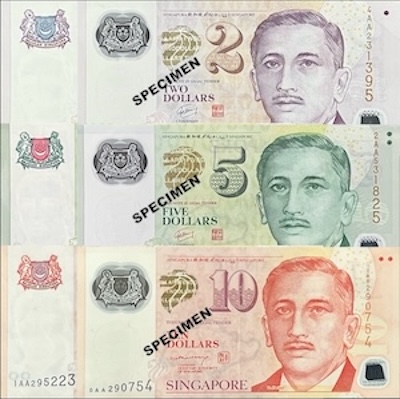
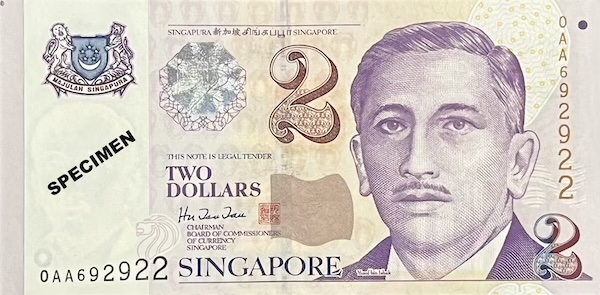
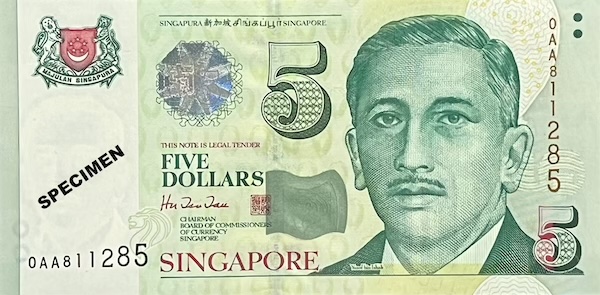
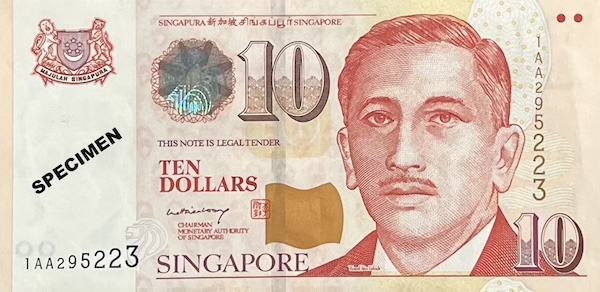
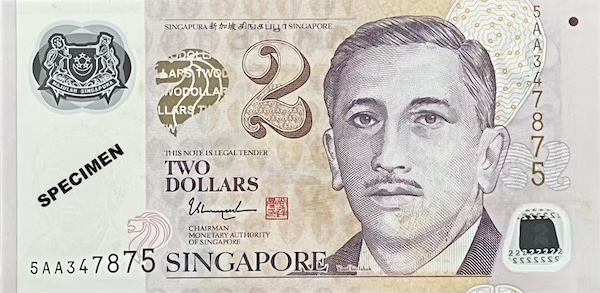
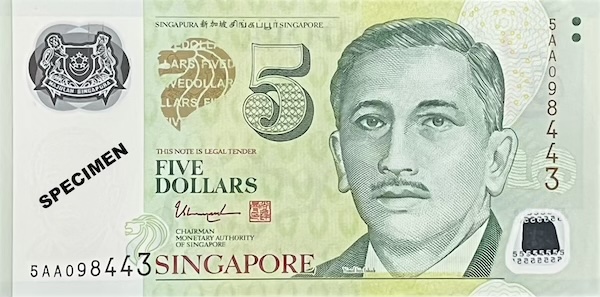
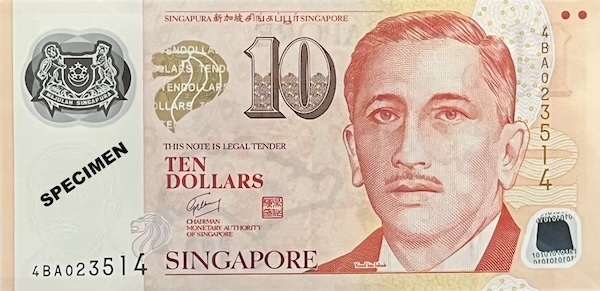
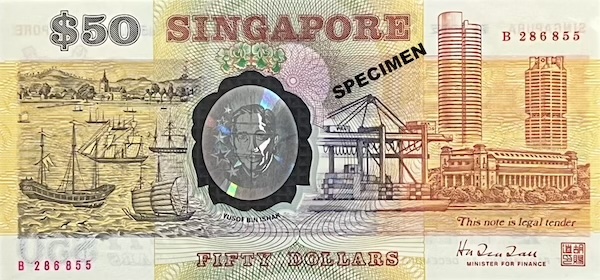
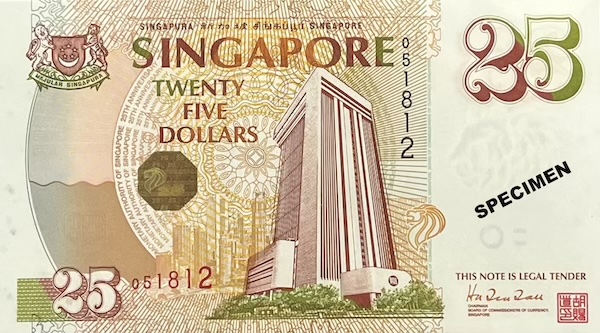
Singapore’s banknotes are made from two types of material: paper and polymer. All notes in the Orchid, Bird and Ship seres were printed on paper. The Portrait notes were also printed on paper when first issued, but this changed in 2004, when the $10 Portrait note became the first to be issued in polymer. The $5 followed in 2005, and the $2 in 2007. Today, only the $2, $5, and $10 Portrait notes are printed in polymer. The higher denominations—$50, $100, and the now-discontinued $1000 and $10000—remain in paper. Among commemorative notes, only the 1996 MAS25 and 1999 M2 were printed in paper. The rest, including the 1990 SG25 note—which is in fact Singapore’s first-ever polymer note, long before the Portrait series—were issued in polymer.
P2: Paper Note
P5: Paper Note
P10: Paper Note
P2: Polymer Note
P5: Polymer Note
P10: Polymer Note
Polymer notes last three to four times longer than paper notes because they are more resistant to moisture, dirt, and tearing. This makes them suitable for lower denominations like the $2, $5, and $10, which change hands frequently and wear out faster. Higher denominations like the $50 and $100 are used less often and tend to stay in good condition for longer. This is probably why only the lower-value Portrait notes were changed to polymer, as using polymer for the higher denominations may not save much money and may not justify the higher printing cost. On a related note, when it comes to sending notes for professional grading, polymer notes tend to get higher grades compared to paper notes of the same age, because it is easier to keep polymer notes in good condition for a longer time.
SG25: First Polymer Note
MAS25: Paper Note
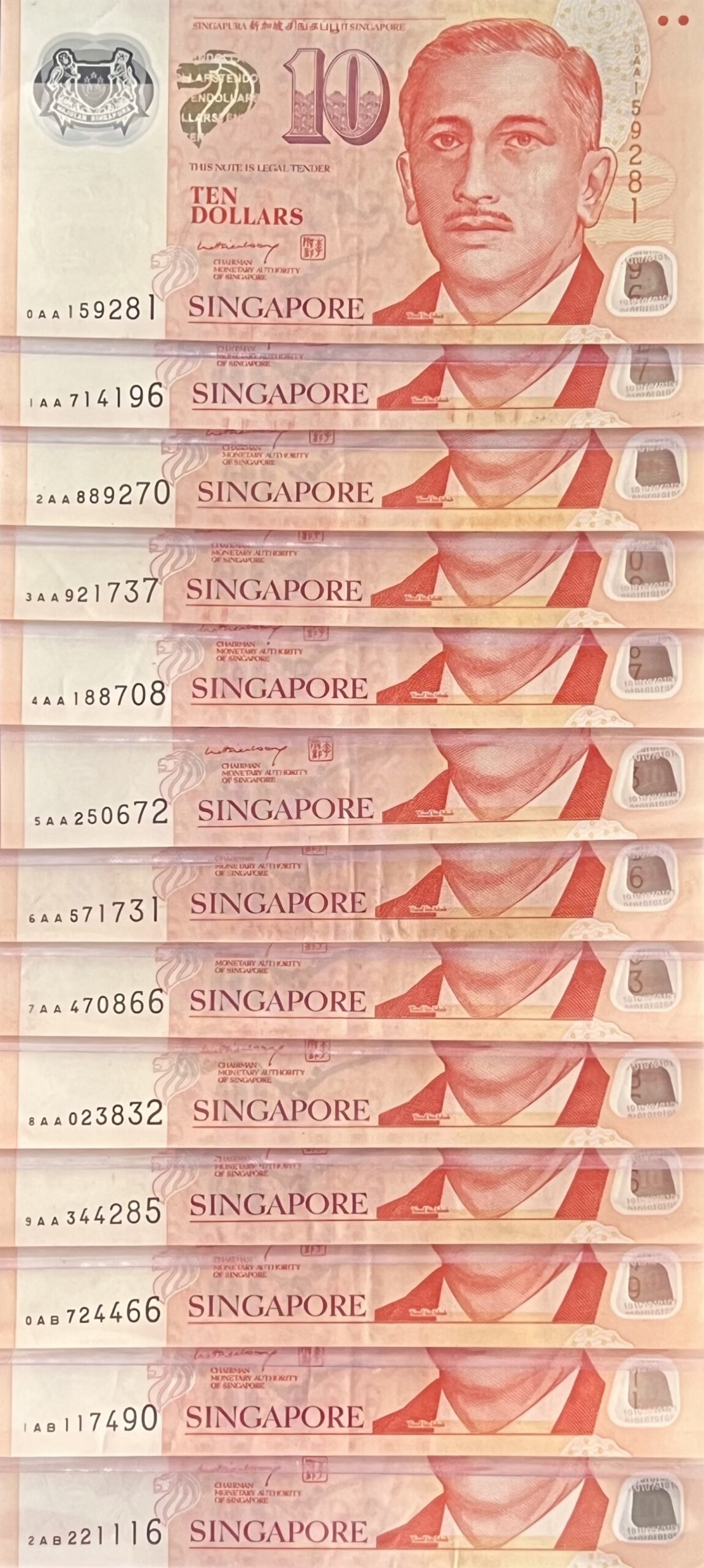
P10: Thirteen Prefixes of Polymer Note for System Testing
Although polymer notes are now widely used, they were not easy to produce at the start. When Singapore released our first polymer note—the 1990 SG25 commemorative—it was an early trial, but not the beginning of regular use. The 1996 MAS25 and 1999 Portrait notes reverted to paper, showing that polymer technology was still not ready. After 1990, it took more than ten years of research and testing before MAS was confident enough to try out polymer notes for circulation. In 2004, it launched 10 million pieces of the Portrait $10 polymer note on a trial basis. But even then, problems persisted from the start. MAS’s plan to print 10 million notes for system testing would normally require 10 prefixes, but due to the high number of damaged notes during production, 13 prefixes ended up being used instead. This highlights the challenges that MAS has had to overcome in switching from paper to polymer.
Disclaimer. I built this website as a hobby, to share with others what I’ve learnt. All the information here is written based on my own research and understanding, and I don’t guarantee that everything is correct, complete, or updated. While I sell banknotes here, I don’t profit from them, as they are spare pieces from my private collection. All the banknote images here are taken by myself and they belong to me. The non-banknote images, with sources that I’ve attributed on every page, are used solely for illustration and non-commercial education purposes. If you are a copyright holder and believe something has been used inappropriately, please contact me, and I will immediately review or remove it.