• 1990 SG25 $50, 2015 SG50 $50 and $10, and 2019 B200 $20 commemorative notes
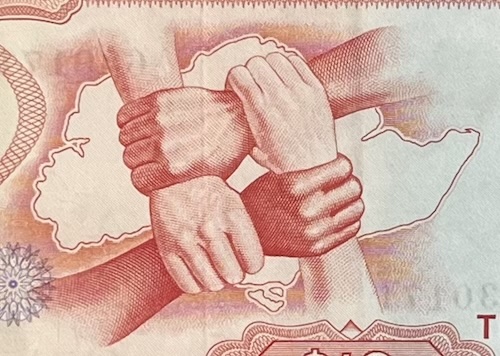
O10: Hands Representing Different Races
When Singapore became independent in 1965, one of our biggest challenges was learning to live together as a multi-ethnic society. Just a few years earlier, there had been serious racial riots. Many people still lived in communities divided by race, and there was little trust between groups. There were fears that some races would be treated better than others when it came to jobs, housing, and schools. On our banknotes, the government was careful to represent our multi-ethnic composition. The name ‘Singapore’ is printed in four languages on all of our Orchid banknotes. The $10 note had four clasped hands, each representing a major ethnic group, as a reminder of the importance of racial harmony.
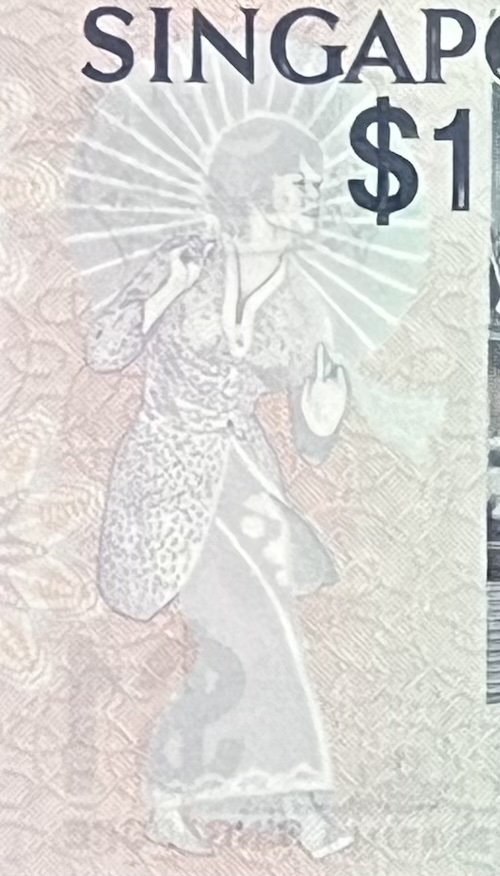
B1: Peranakan Dance
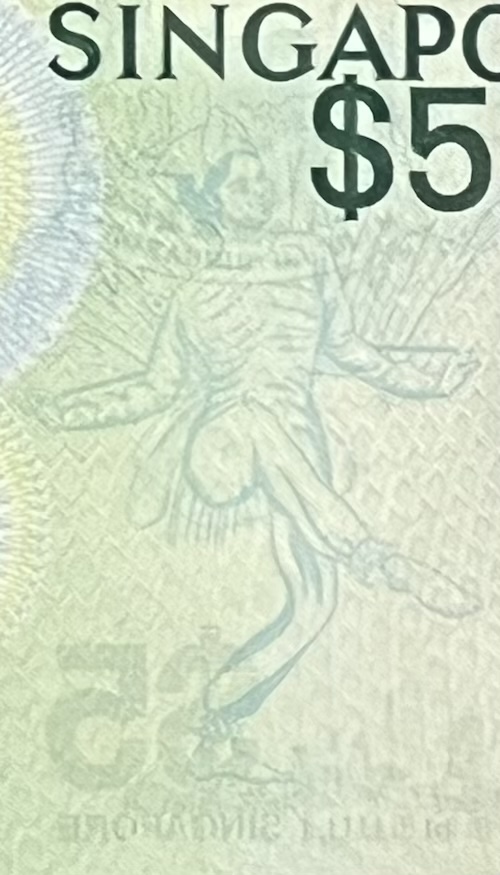
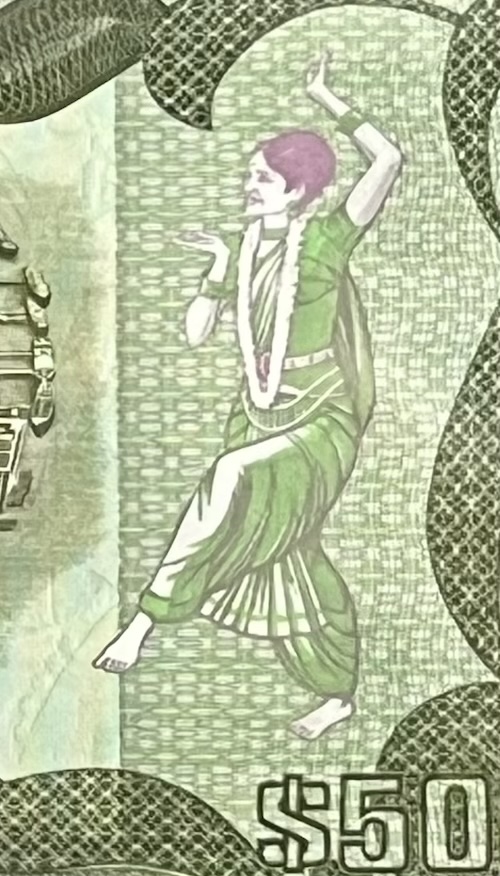
B5: Kathak Dance
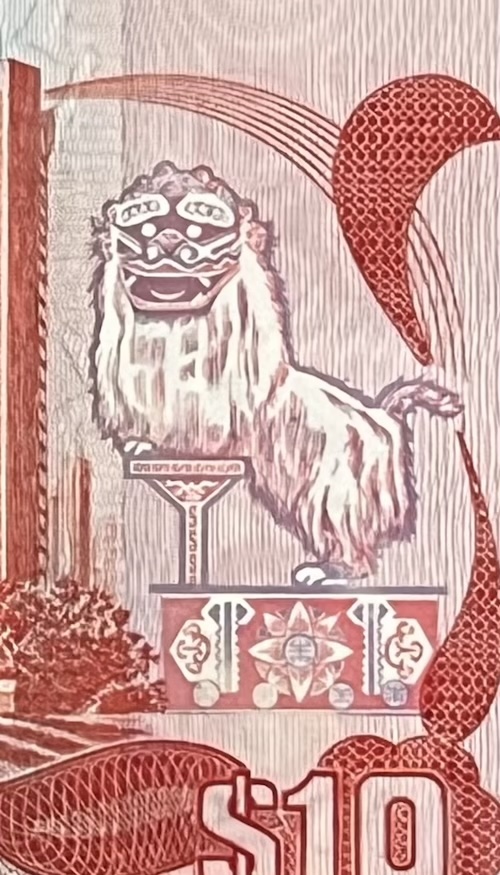
B10: Lion Dance
B20: Classical Chinese Dance
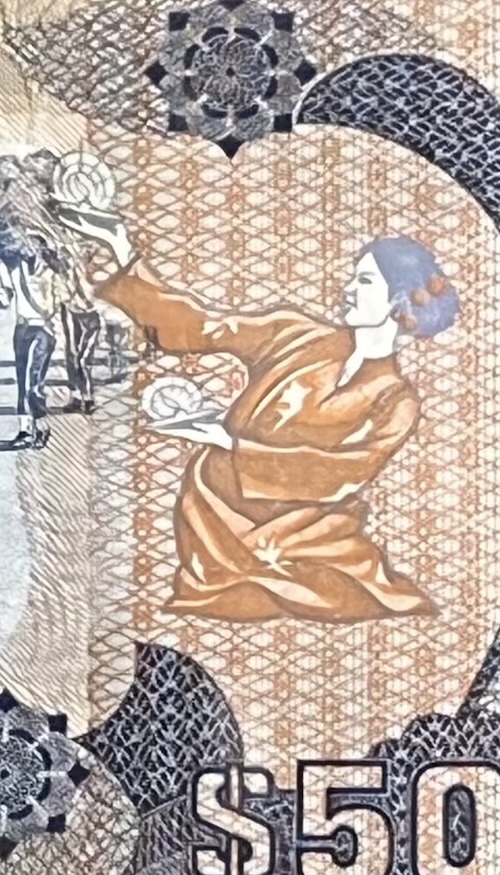
B50: Zapin Dance
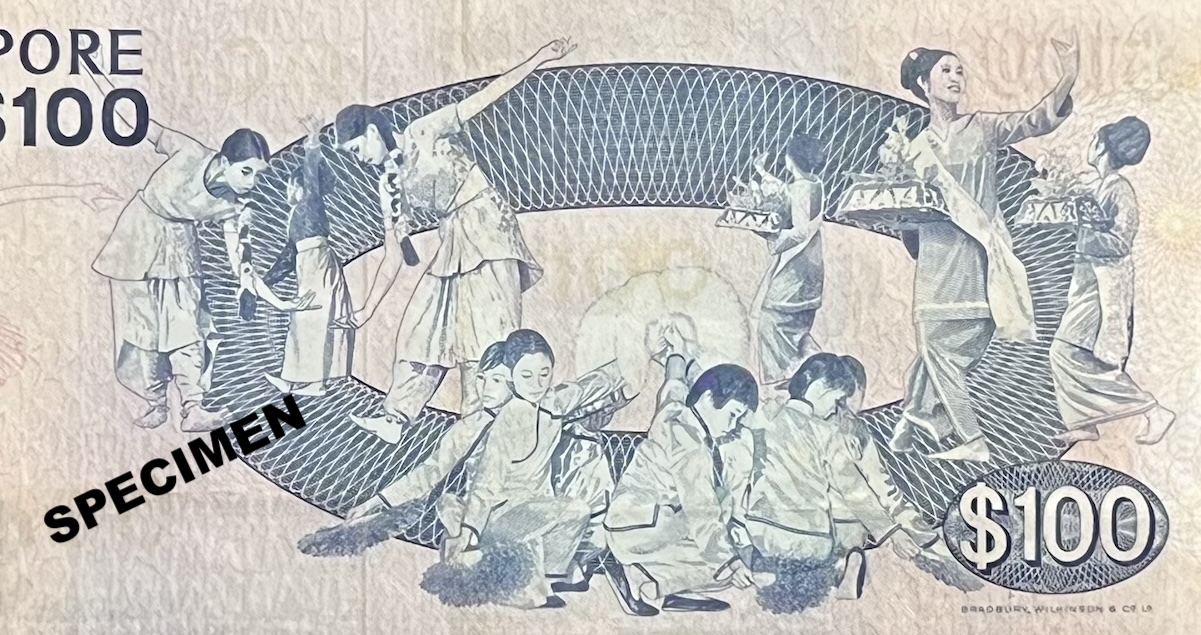
B100: Dancers of Different Races
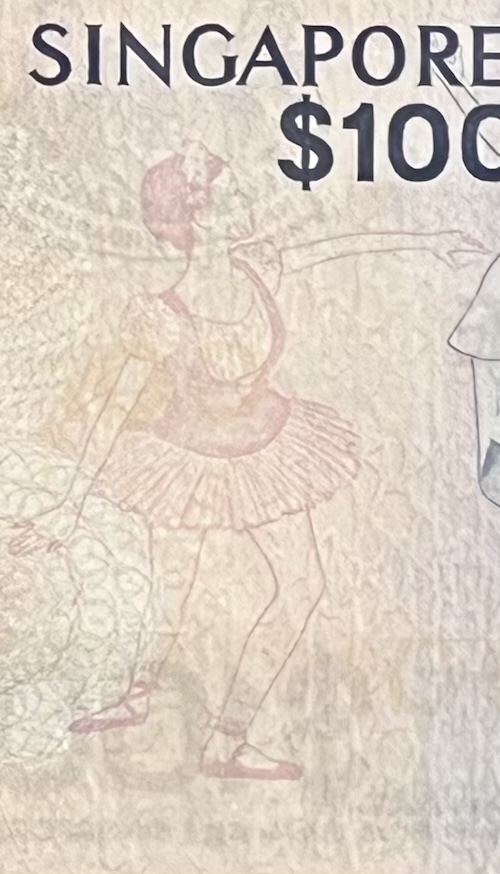
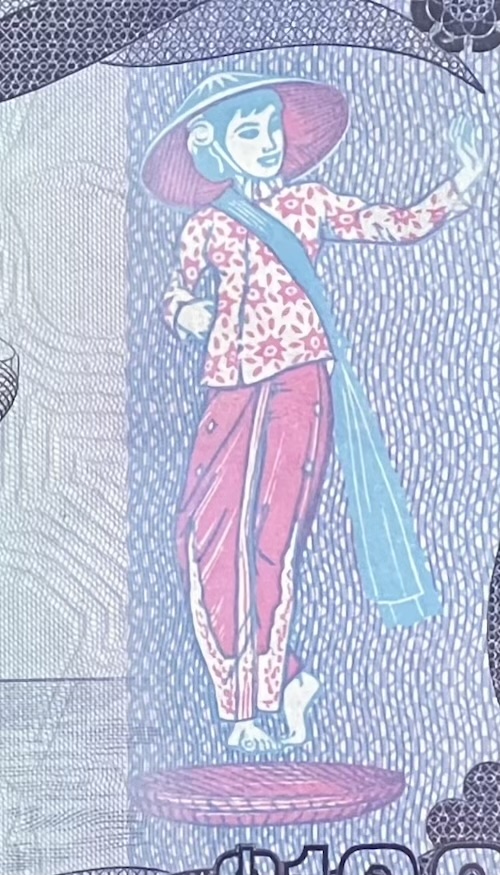
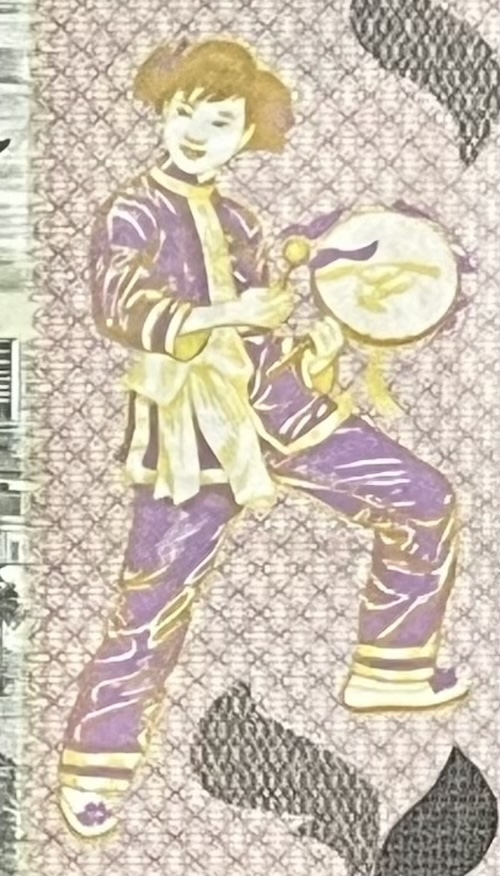
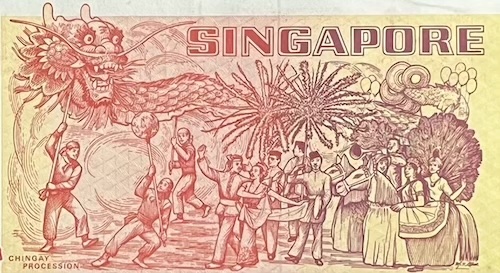
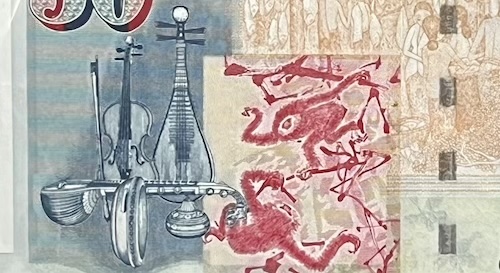
Thegovernment continued to provide a multi-ethic representation in the subsequent series. The Bird series featured dances from different ethnic communities such as the lion dance, kathak, zapin, and ballet; specifically, the Bird $100 note also showed dancers from different races. The Ship $2 note featured a Chingay scene with performers of various races, while the Portrait $50 note had musical instruments of different ethnic groups, like the Chinese pipa, Malay Kompang, Indian Veena, and classical violin.
B100: Western Ballet
B500: Bharatanatyam Dance
B1000: Joget Dance
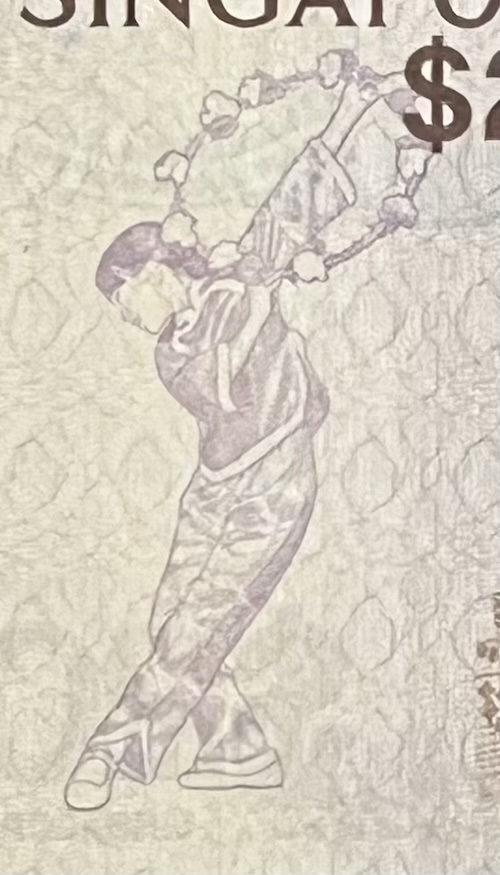
B10000: Hand Drum Dance
S2: Multi-Racial Chingay Performers
P50: Multi-Ethnic Musical Instruments
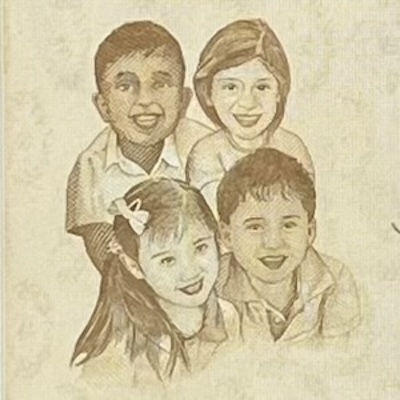
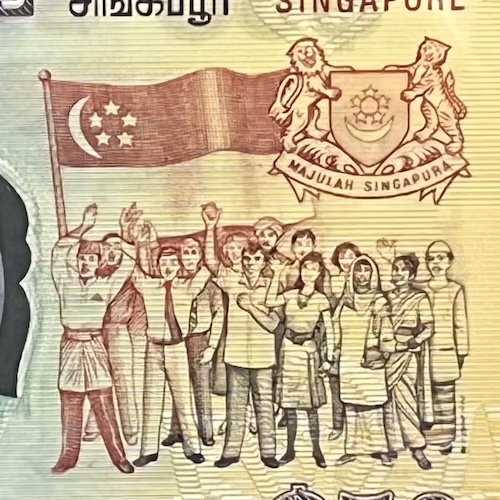
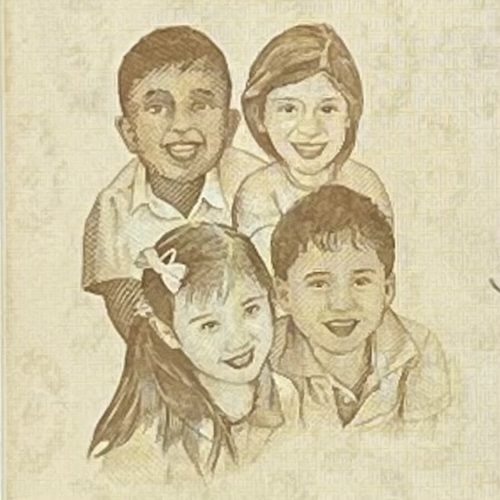
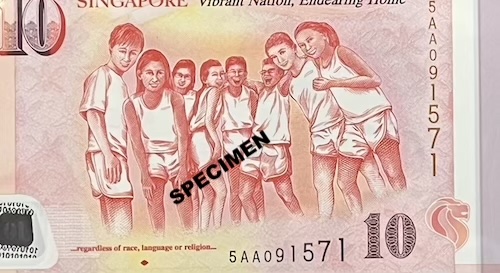
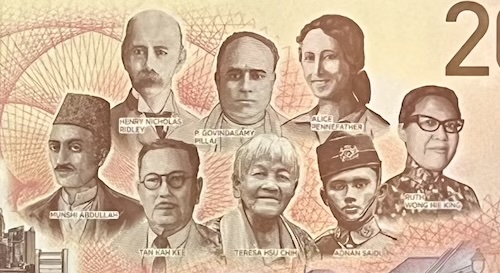
The 1990 SG25 and SG50 $50 notes showed people of different races together, and one version of the SG50 $10 note was designed based on the line from our pledge: “regardless of race, language or religion”. Even in the 2019 Bicentennial note that did not have the name of Singapore in four languages, the eight pioneers featured were also selected to represent different races.
SG25: People of Different Races
SG50-50: Children of Different Races
SG50-10: "Regardless of Race, Language or Religion..."
SG50-10: "Regardless of Race, Language or Religion..."
Many policies in Singapore have been introduced to reduce racial divides. Public housing quotas were planned to mix different races. Schools brought students of all backgrounds together, with English as the common language. National Service let young men from all races train and serve together. Race-based political parties were restricted, and a Presidential Council for Minority Rights was set up to check that new laws would not harm any racial or religious group. Today, most people in Singapore live, study, and work in mixed settings, and many have close friends of different races. These policies and practices are intended to strengthen the shared Singaporean identity that binds all ethnicities.
Disclaimer. I built this website as a hobby, to share with others what I’ve learnt. All the information here is written based on my own research and understanding, and I don’t guarantee that everything is correct, complete, or updated. While I sell banknotes here, I don’t profit from them, as they are spare pieces from my private collection. All the banknote images here are taken by myself and they belong to me. The non-banknote images, with sources that I’ve attributed on every page, are used solely for illustration and non-commercial education purposes. If you are a copyright holder and believe something has been used inappropriately, please contact me, and I will immediately review or remove it.