Image: Peaceful Scenes Along Singapore’s Waterfront
Where Still Waters Speak of Peace
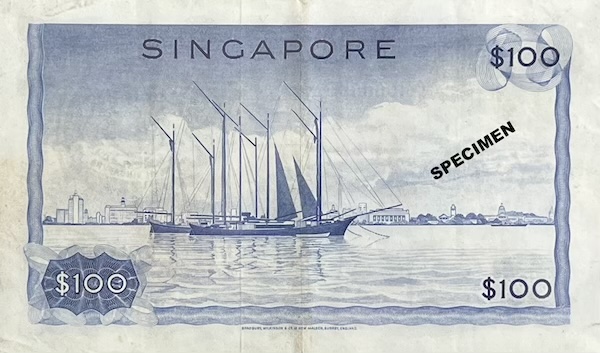
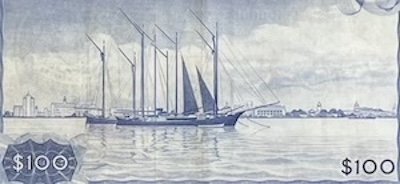
The peaceful scenes along our waterfront were more than just picturesque views; they were symbols of our desire for peace and stability. These calm vistas remind us of the importance of harmony, not just within our borders but also with our regional neighbours. These peaceful scenes were a stark contrast to the tumultuous times we faced in the years leading up to our independence, reminding us of the importance of diplomacy and goodwill.
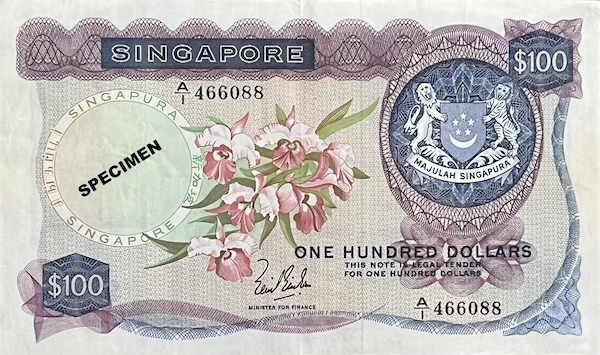
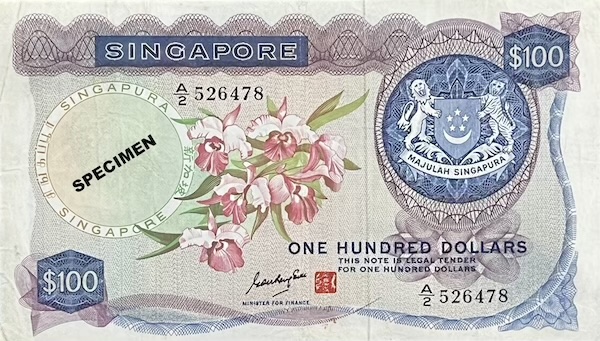
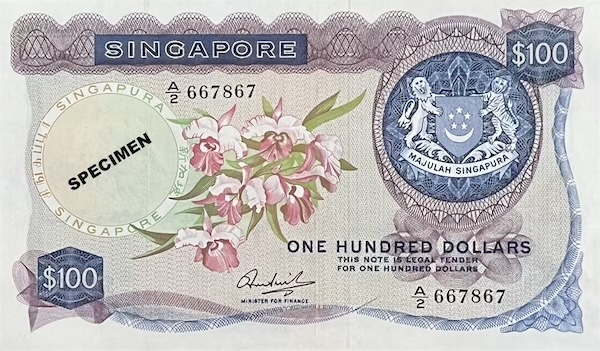
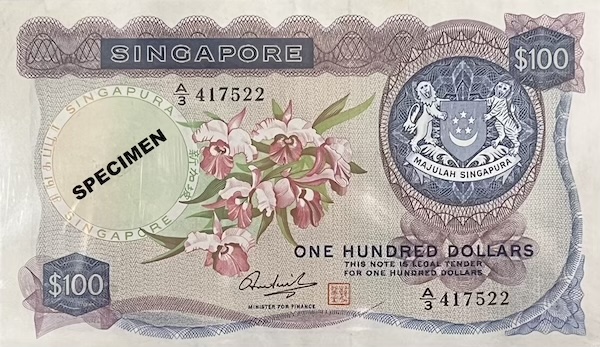
The $100 note has a long history in Singapore. It was already used during the colonial days, showing up in the Straits dollar, Malayan dollar, and later the Malayan and British Borneo dollar. Its inclusion in the Orchid Series marked its place among the first batch of notes issued by independent Singapore. Back then, it was a mid-range note, smaller than the bigger ones like the $500, $1000, and $10000. But over time, things changed. The $500 note was stopped after the Ship Series, and the $1000 and $10000 notes were removed during the Portrait Series. Because of this, the $100 note is now the highest-value note still being issued in Singapore today.
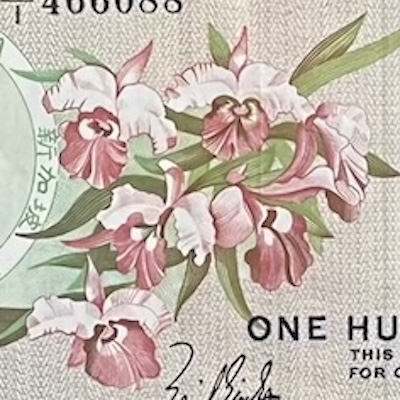
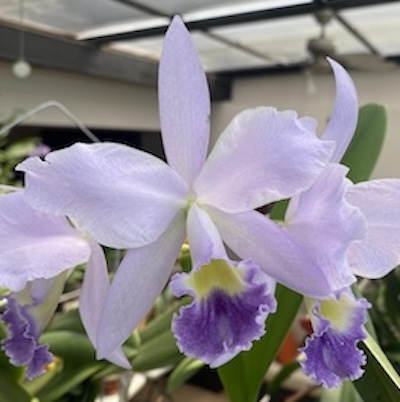
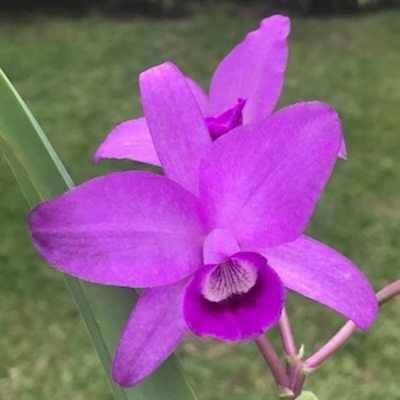
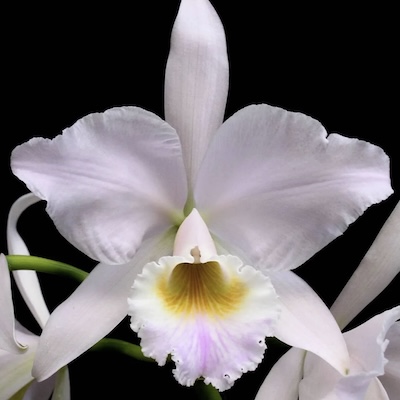
The Cattlianthe Portia is one of the oldest orchid hybrids in the world, first registered in 1897 by Veitch & Sons, a well-known English nursery during the Victorian-era orchid craze. It is a cross between Cattleya Labiata, also known as the ‘Queen of Orchids’, and Guarianthe Bowringiana. Back in 1967, this hybrid was still called Cattleya Portia, but its name changed after Cattleya Bowringiana was reclassified into a different genus called Guarianthe—that’s why the orchid is now known as Cattlianthe Portia. During colonial times, this orchid was seen as a status symbol and was highly prized by the upper class for its beauty and elegance.
When Independence Was Not A Choice
Peaceful Singapore Waterfront
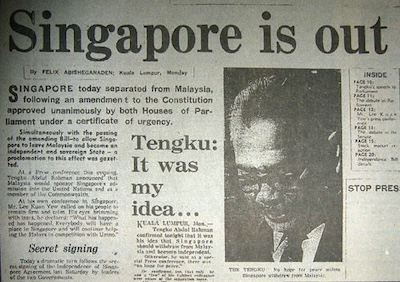
Singapore attained self-governance in 1959 after years of being a British colony. In 1963, we merged with Malaysia, with Prime Minister Lee Kuan Yew seeing the merger as necessary for our economic survival. But the federal government in Kuala Lumpur had concerns over Singapore’s Chinese-majority population, political influence, and free-market economy, which clashed with Malaysia’s protectionist policies and the notion of Malays’ special rights.
Declaration of Independence in 19656
Unlike many other independent nations, Singapore did not set out with a clear plan to leave Malaysia. For a long time, the public understanding was that we were suddenly expelled on 9 August 1965, leaving us with no choice but to become independent. However, in 2025, the Albatross files showed that separation was in fact privately discussed months before. There were deep political and economic disagreements, and fears of further racial violence. Goh Keng Swee favoured a clean and controlled separation, while Lee Kuan Yew wanted to keep Singapore within Malaysia, or in a looser federation. But eventually, given the political deadlock and rising tensions, both accepted that separation was unavoidable.
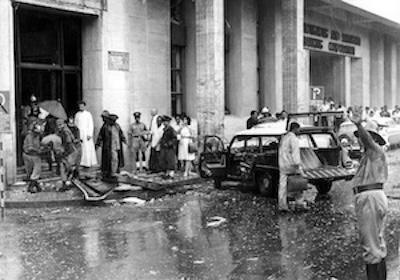
MacDonald House Bombing in 19657
Around the time of our independence, we also had to contend with Konfrontasi, a conflict with Indonesia, who was opposed to the the merger of the federation of Malaya (existing states on the Malay Peninsula), Singapore, Sabah and Sarawak into a single federation. Indonesian saboteurs targeted Singapore with several bombings, including the infamous MacDonald House bombing in 1965, killing three people. This created additional strain on our already tense relationship with Malaysia.
Market Value in 2024
Market Price: $350
Condition
• Ungraded
• Well used
• No tears or pinholes
• Soft stains & foxing
• Visible creases & folds
Context
• The information here refers specifically to the banknote featured on the top of this page.
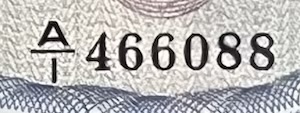
• The same note may fetch a lower price if it lacks the first prefix A1, is in poorer condition, or does not have a serial number that ends with the auspicious digits ’88’.
1. Prefix and banknote details from Vincent Tan and Tan Wei Jie, Singapore Banknotes: Complete Prefix Reference, Mr Banknotes, 2017.
2. Orchid registration details from International Orchid Register.
3. Image by Ronald Fonseca Luna. Source: https://orchidroots.com/display/photos/orchidaceae/100072457/?role=pub.
4. Image from OrchidRoots. Source: https://orchidroots.com/display/summary/orchidaceae/100094990.
5. Image from Orquídario Durval Ferreira. Source: https://www.orquidariodurvalferreira.com.br/ztkymuul8-blc-melody-fair-carol-x-mike-nagata.
6. Image from The Straits Times. Source: https://www.straitstimes.com/life/home-design/the-straits-times-marks-178-years-as-region-s-oldest-newspaper.
7. Image from National Archives of Singapore. Source: https://www.nas.gov.sg/archivesonline/photographs/record-details/7e9422be-166c-11e5-9f6b-0050568939ad.
Disclaimer
I built this website as a hobby, to share with others what I’ve learnt. All the information here is written based on my own research and understanding, and I don’t guarantee that everything is correct, complete, or updated. While I sell banknotes here, I don’t profit from them, as they are spare pieces from my private collection. All the banknote images here are taken by myself and they belong to me. The non-banknote images, with sources that I’ve attributed on every page, are used solely for illustration and non-commercial education purposes. If you are a copyright holder and believe something has been used inappropriately, please contact me, and I will immediately review or remove it.