PMG-Graded Notes​

Paper Money Guaranty (PMG), established in 2005, revolutionised the field of banknote collecting by introducing an independent, unbiased, and standardised system of grading. Before PMG, grading was largely subjective and inconsistent, as dealers would assign their own grades to the notes they were selling. PMG addressed this issue by implementing a professional third-party grading system where every note is examined by multiple graders who are not allowed to trade notes commercially. PMG also seals graded notes in protective holders with clear labels, appealing to collectors who intend to preserve their notes for years. Today, PMG has become the world’s largest third-party paper money grading service, certifying over two million notes globally. It is the company of choice for grading Singapore banknotes.


PMG uses a 70-point numeric scale with matching adjectival grades. In general, the higher the PMG grade, the better the condition of the note—fewer folds, sharper corners, better centring, and cleaner paper:

Grades 4–6Good (GD)

Grades 8–10Very Good (VG)

Grades 12–15: Fine (FN)

Grades 20–35: Very Fine (VF)

Grades 40–45: Extremely Fine (XF)

Grades 50–58: About Uncirculated (AU)

Grades 60–64: Uncirculated (UNC)

Grades 65–70: Gem Uncirculated (GEM)


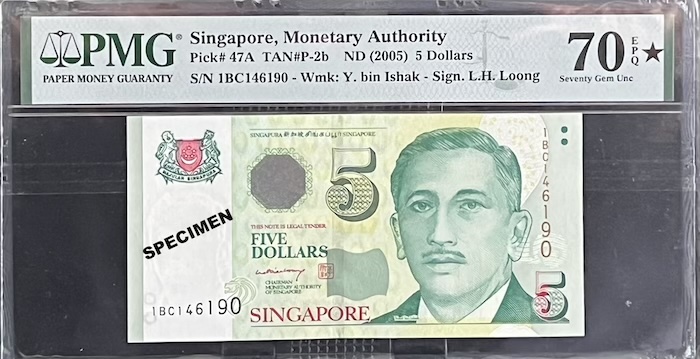
Sometimes, the terms “Choice”, “Superb”, and “★ (Star)” are used by PMG to highlight notes with exceptional qualities beyond their numeric grade. “Choice” indicates that a note is better than average for its grade—perhaps with cleaner paper, stronger colour, or more balanced margins. For example, a note graded PMG 40 might be described as “Choice Extremely Fine” if it stands out among others at the same level. “Superb” is used for notes graded 67 to 70, meaning they are virtually flawless in terms of centering, print quality, and visual appeal. The ★ (Star) symbol is added to notes graded PMG 70 that have exceptional eye appeal even among other top-graded notes—often due to vibrant inks, wide margins, or unusual freshness. PMG may also include the designation “Exceptional Paper Quality (EPQ)” for notes that have original, unaltered paper with no signs of pressing, cleaning, or other modifications. These additional descriptors help collectors identify notes that are not just technically sound, but also visually and physically superior.


For collection process, I simplify graded notes into three categories: museum, collectible, and antique grades. This is my heuristic to decide which notes to consider, and denotes the types of grades suitable for different collectors and collections. 

Museum Grades

Museum-grade notes refer to notes graded 60 and above (UNC and GEM). These notes are in superb condition, good enough to be showcased in major museum collections, and serious collectors are willing to pay a fortune for them. Some even collect exclusively notes of grade 65 or above and designated “Exceptional Paper Quality”. Museum-grade notes will be the choice of collectors with a substantial budget. 

PMG 70 EPQ

Market Price: $1100

Value Per Dollar: 220x

(2024)

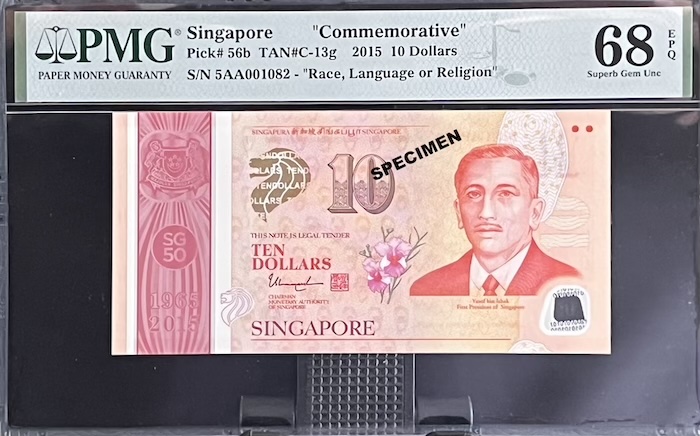
PMG 68 EPQ

Special-design note

Market Price: $100

Value Per Dollar: 10x

(2024)

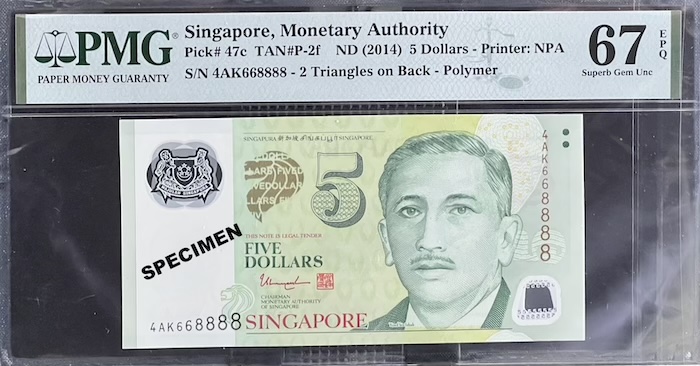
PMG 67 EPQ 

Fortune number 

Market Price: $190

Value Per Dollar: 38x

(2024)

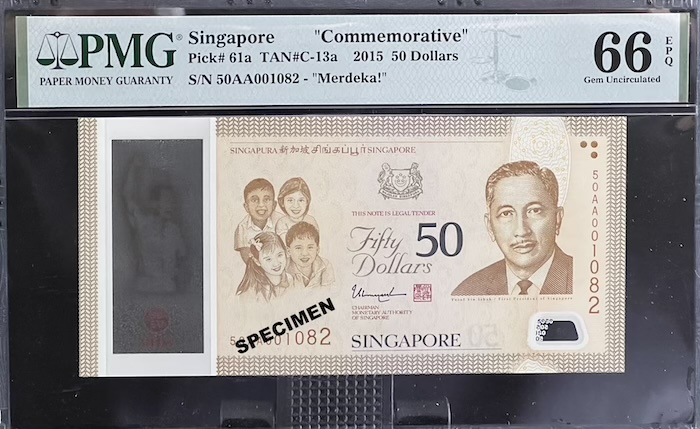
PMG 66 EPQ 

Special-design note

Market Price: $150

Value Per Dollar: 3x

(2024)

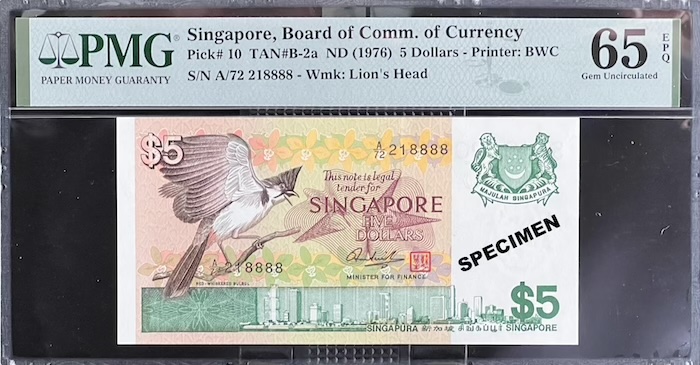
PMG 65 EPQ 

Auspicious number 

Market Price: $110

Value Per Dollar: 22x

(2024)

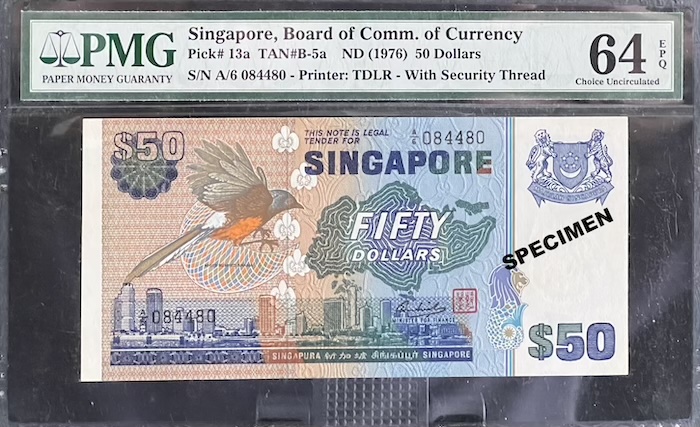
PMG 64 EPQ

First-prefix variant 

Market Price: $340

Value Per Dollar: 6.8x

(2024)

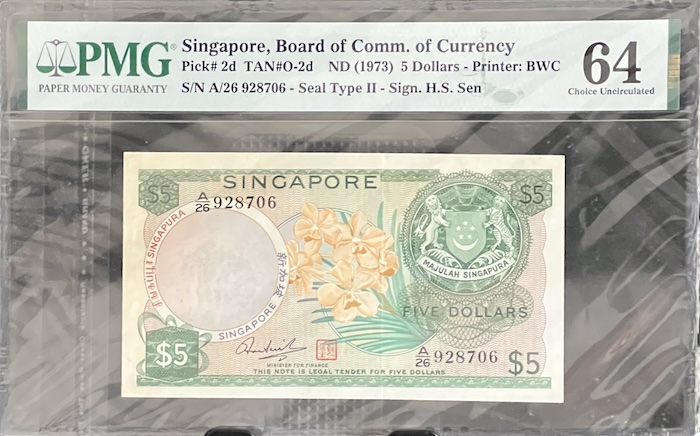
PMG 64, no remarks 

First-prefix variant 

Market Price: $400

Value Per Dollar: 80x

(2024)

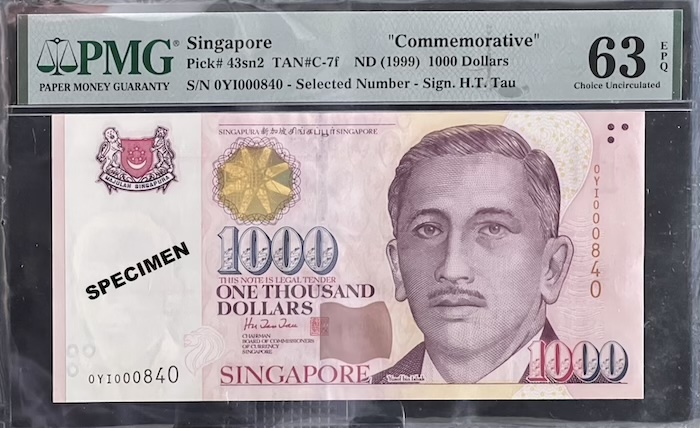
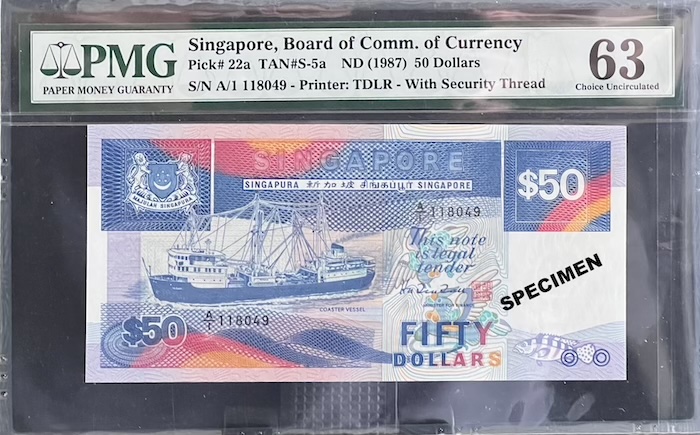
PMG 63 EPQ 

Special-edition note

Market Price: $3,000

Value Per Dollar: 3x

(2024)

PMG 63, closed pinhole 

First prefix 

Market Price: $150

Value Per Dollar: 3x

(2024)

Collectible Grades

Collectible-grade notes are notes graded between 20 to 58 (VF, XF and AU). They may not be in perfect condition, but are still very presentable, without any tears or stains. They may have small pinholes, light foxing, or minor creases and folds, but their overall condition is good enough for casual collectors—and I consider myself as one. 

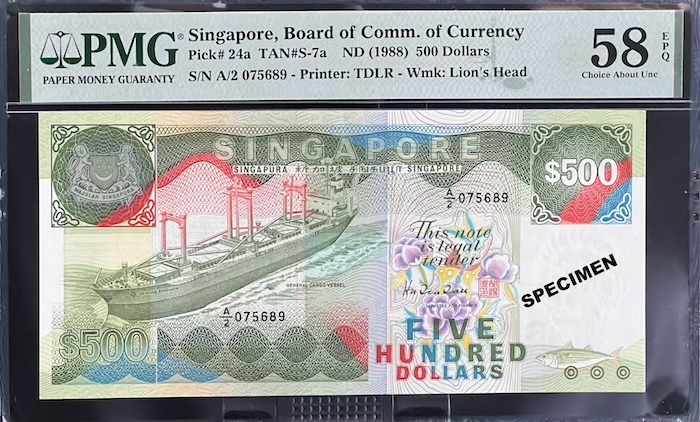
PMG 58 EPQ

Market Price: $800

Value Per Dollar: 1.6x

(2024)

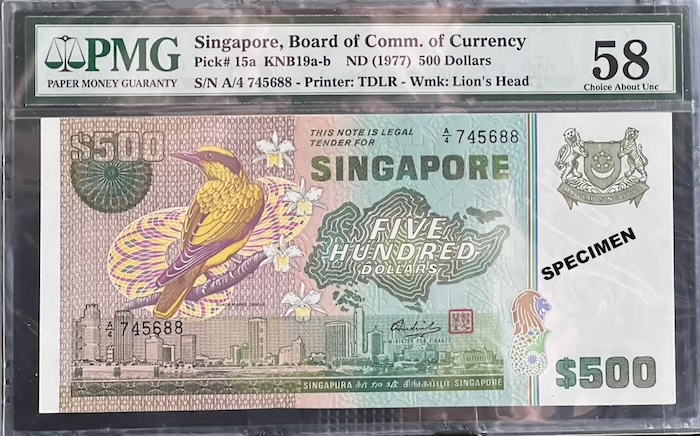
PMG 58, no remarks

Lucky number

Market Price: $700

Value Per Dollar: 1.4x

(2024)

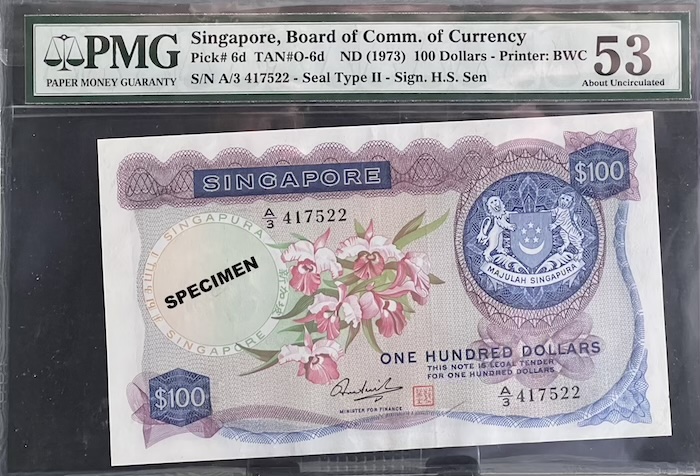
PMG 53, no remarks

First-prefix variant 

Market Price: $380

Value Per Dollar: 3.8x

(2024)

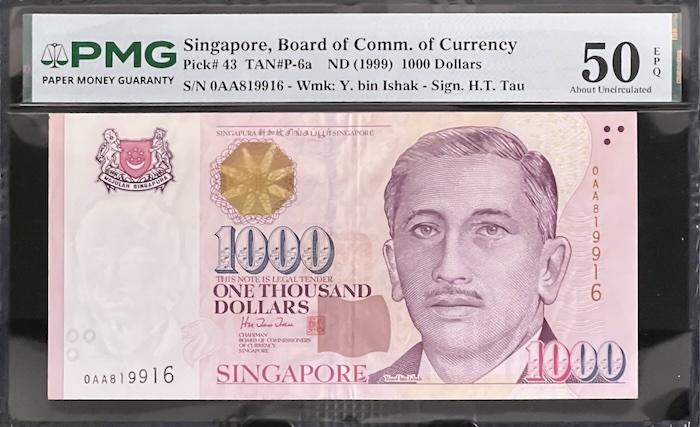
PMG 50 EPQ

First prefix 

Market Price: $1,250

Value Per Dollar: 1.25x

(2024)

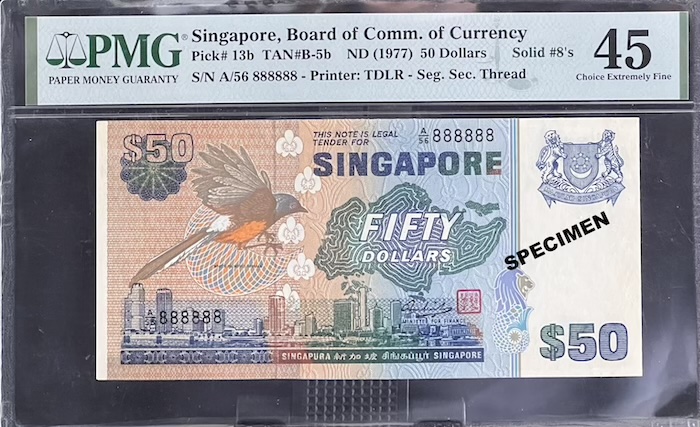
PMG 45, no remarks

Solid 8

Market Price: $1,400

Value Per Dollar: 28x

(2024)

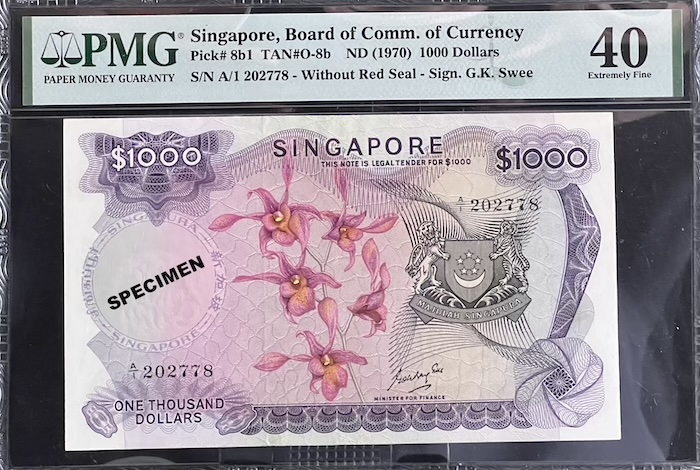
PMG 40, no remarks

Market Price: $2,700

Value Per Dollar: 2.7x

(2024)

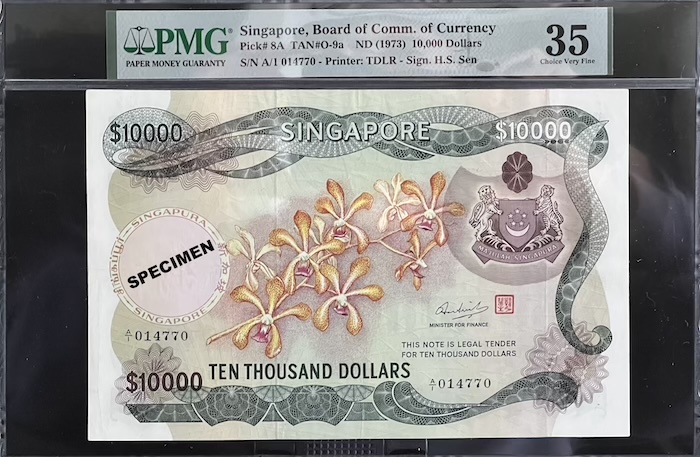
PMG 35, pinhole 

Market Price: $32,000

Value Per Dollar: 3.2x

(2024)

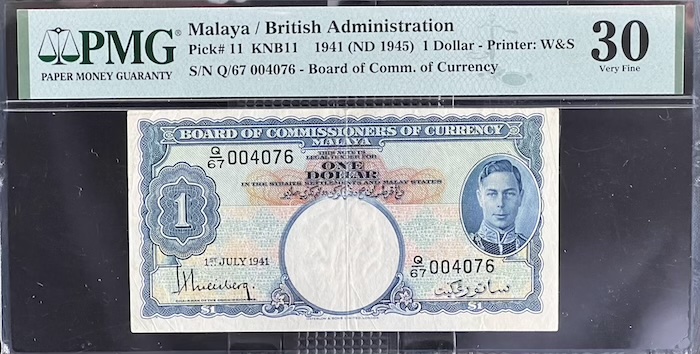
PMG 30, no remarks

Market Price: $90

Value Per Dollar: 90x

(2024)

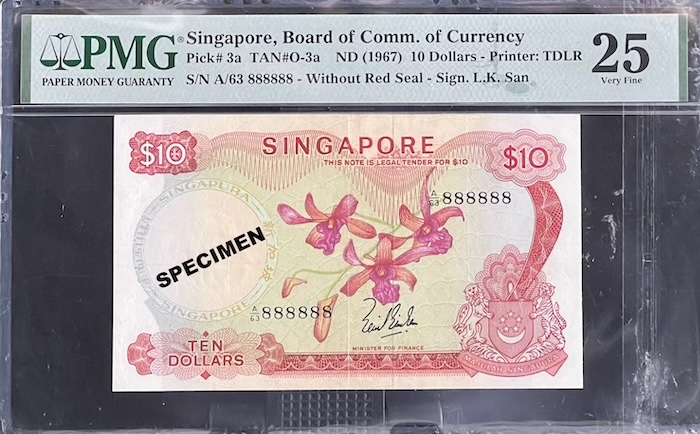
PMG 25, no remarks

Solid 8

Market Price: $3,200

Value Per Dollar: 320x

(2024)

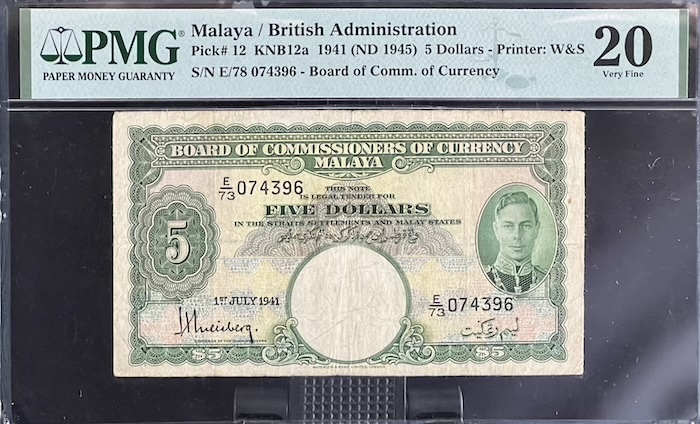
PMG 20, no remarks

Market Price: $160

Value Per Dollar: 160x

(2024)

Antique Grades

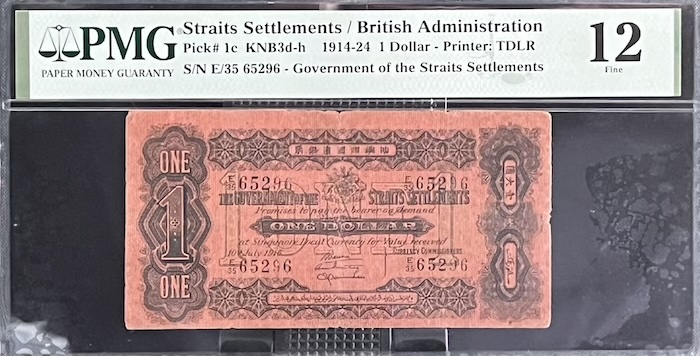
Antique-grade notes are notes graded below 20 (GD, VG, and FN). They are heavily used, worn, or damaged. They are not aesthetically presentable, but the key reason for grading them is the assurance of authenticity, as grading confirms the note is authentic. This may be advisable for notes classified as antiques (close to or more than a hundred years old), or that rarely ever appear in the market (e.g. the Straits dollar, Malayan dollar, or Malayan and British Borneo $1000 or $10000). These are the only notes I will consider with a PMG grade of lower than 20. 

PMG 12, no remarks

Market Price: $780

Value Per Dollar: 780x

(2024)

Disclaimer. I built this website as a hobby, to share with others what I’ve learnt. All the information here is written based on my own research and understanding, and I don’t guarantee that everything is correct, complete, or updated. While I sell banknotes here, I don’t profit from them, as they are spare pieces from my private collection. All the banknote images here are taken by myself and they belong to me. The non-banknote images, with sources that I’ve attributed on every page, are used solely for illustration and non-commercial education purposes. If you are a copyright holder and believe something has been used inappropriately, please contact me, and I will immediately review or remove it.
Shudoo: [email protected] 
Shopping Basket