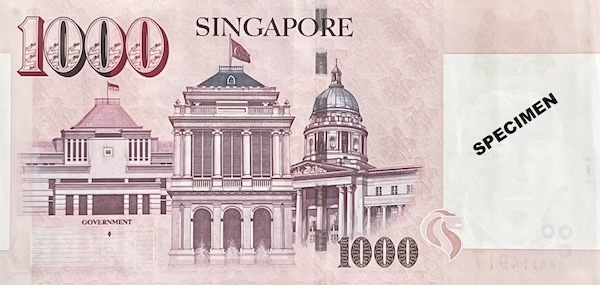
From the day Singapore was born, good governance was the cornerstone of our progress. We placed immense trust in the executive, legislative, and judicial arms of our government to guide us with wisdom and integrity. Our leaders worked tirelessly to ensure that policies were fair and just, reflecting the needs and aspirations of our people. We had no doubt these principles must continue to be upheld, as they were the basis of the social fabric and trust that held our nation together.
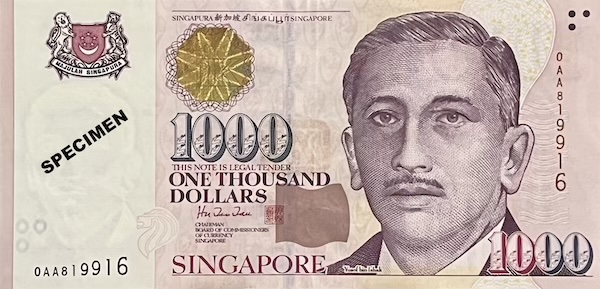
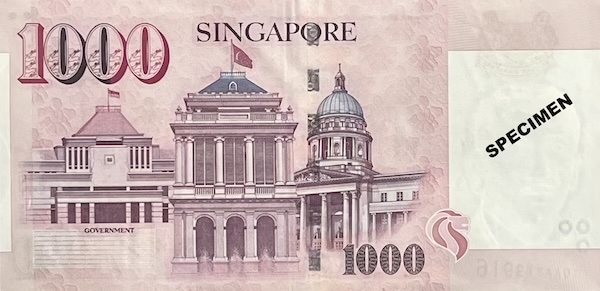
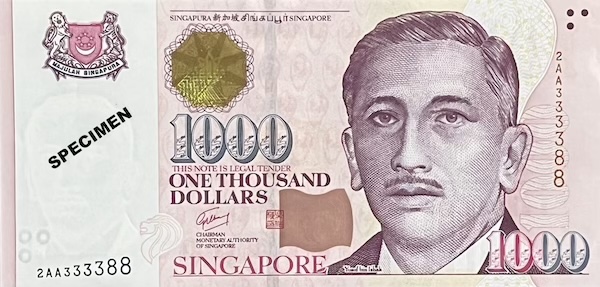
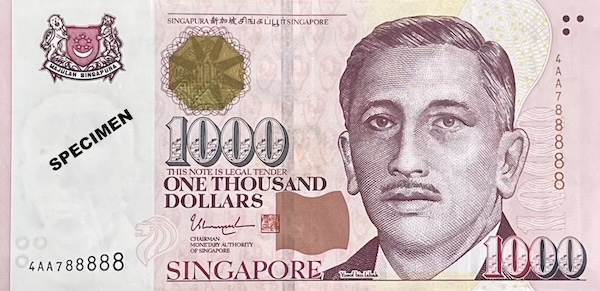
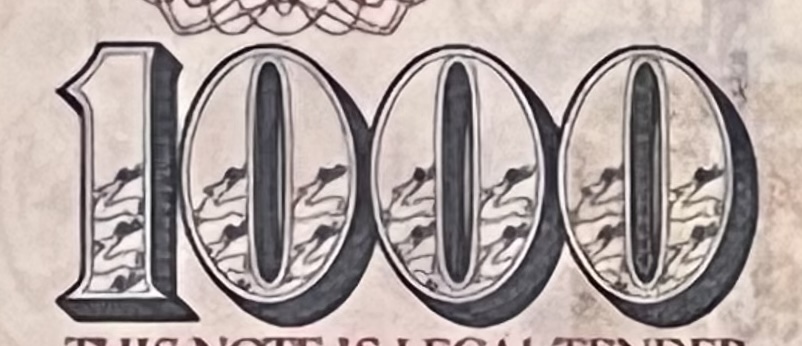
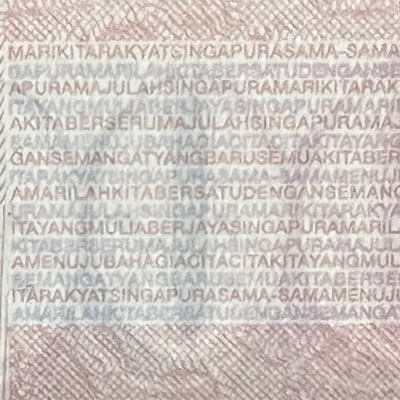
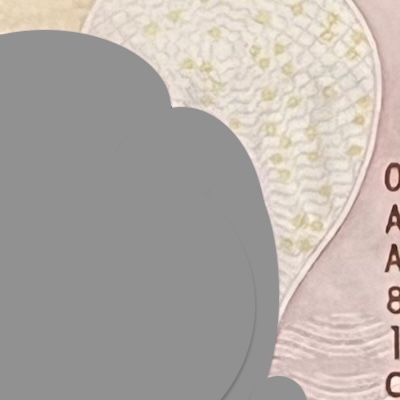
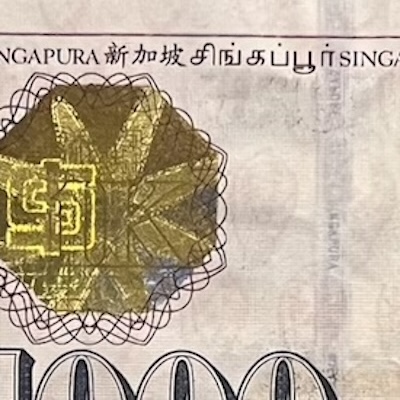
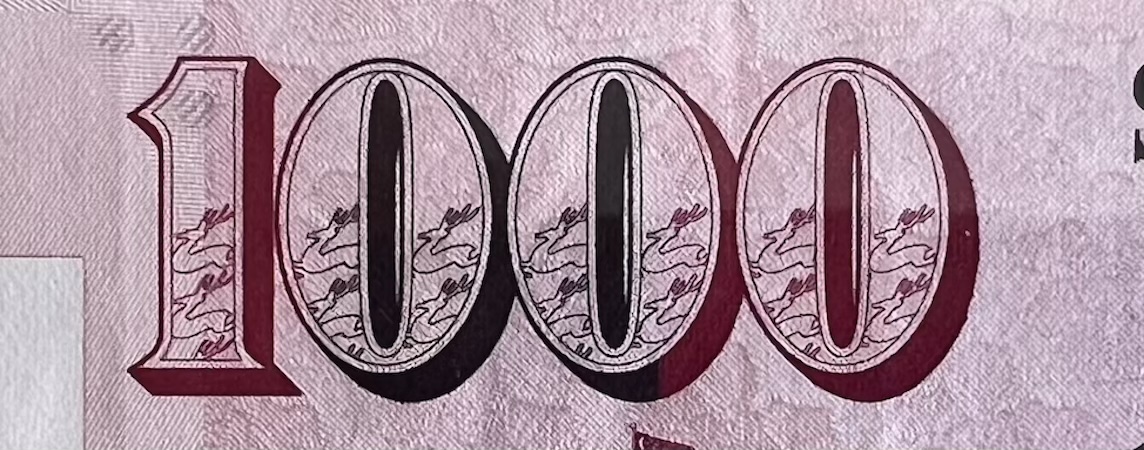
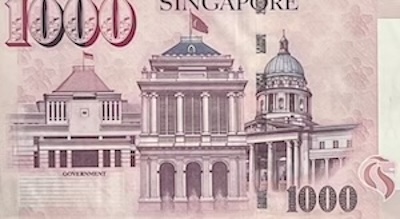
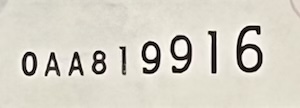
The Portrait $1000 was the last $1000 note ever issued in Singapore, and it was discontinued in 2021 to help prevent money laundering. Among all of Singapore’s banknotes, it is the only one to have the full lyrics of Majulah Singapura, our national anthem, printed on it. Meant as a security feature called micro-lettering, you can only see the words under high magnification. Among the Portrait series, it is the only note that features the Vanda Miss Joaquim, our national flower. Other Portrait notes have orchid designs in the background too, but this is the only one that features our national flower. Another unique thing about this $1000 note is its prefixes. They skipped from ‘0AA’ to ‘2AA’, omitting the 1AA series entirely, which has never happened before in Singapore’s banknote history.
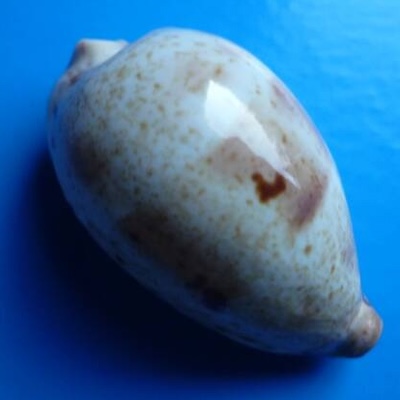
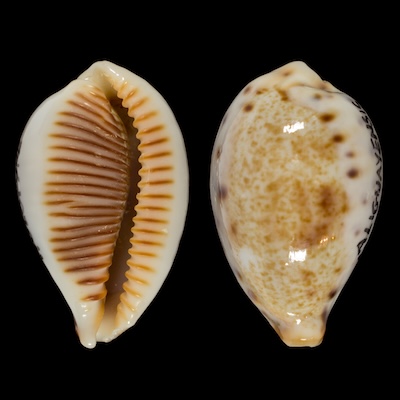
The Beautiful Cowrie, once known as Cypraea pulchella and now called Ficadusta pulchella, is a small sea snail that lives in warm, shallow waters across the Indo-Pacific. You can find it in places like the Philippines, Indonesia, and parts of the western Pacific. This cowrie has a shiny, smooth shell often decorated with soft patterns and gentle colors, giving it a delicate, attractive look. The name pulchella comes from Latin and means ‘little beautiful one’—a name that describes its charming shell. Like several other cowries, the Beautiful Cowrie wasn’t used for trade, but instead admired for its elegance. Collectors especially like it for its gentle appearance and how its patterns seem to glow under the light. It often hides under rocks or coral during the day, coming out at night to feed, like many other cowries.
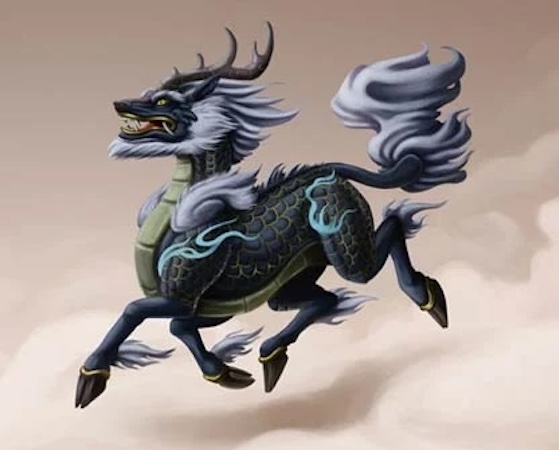
The qilin (麒麟) is a creature from Chinese legends. Often called a ‘Chinese unicorn’, it is known for its gentle nature and magical powers. A qilin looks like a mix of animals—it may have the body of a deer, the tail of an ox, hooves, and sometimes scales like a fish or dragon. It often has one or two horns and is surrounded by flames or clouds. The qilin is a symbol of peace, kindness, and good luck. In ancient China, people believed that a qilin would only appear during the time of a wise and just ruler, or to mark the birth of someone great. It is said to never harm living things—not even the grass it walks on. In Chinese art and decorations, the qilin is often shown to bring blessings and protection. Today, it is used as a symbol of harmony and good fortune.
Lee Kuan Yew and the Foundations of Singapore’s Governance
Government
Singapore has three main arms of governance: the Legislature, the Executive, and the Judiciary. The Legislature is made up of Members of Parliament who make laws. The Executive includes the President, the Prime Minister, and the Cabinet, and it is in charge of running the country and putting the laws into action. The Judiciary is made up of the courts, which make sure that the laws are followed fairly and that everyone is treated equally under these laws.
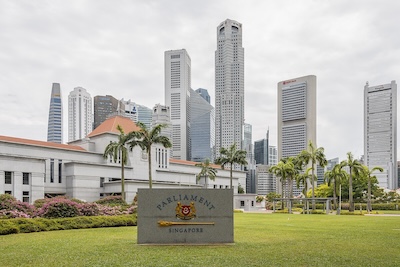
Parliament House5
Most Singaporeans see the government as one that we can trust. We agree with the strong focus on clean government, meritocracy, and long-term planning. We believe that the government makes decisions not just for today, but with the future in mind. Although not everyone agrees with every policy, most feel that the government is generally honest, hardworking, and financially prudent. Singapore continues to be seen as a model by others: our country is efficient, safe, and largely free of corruption—a rare combination in the world.
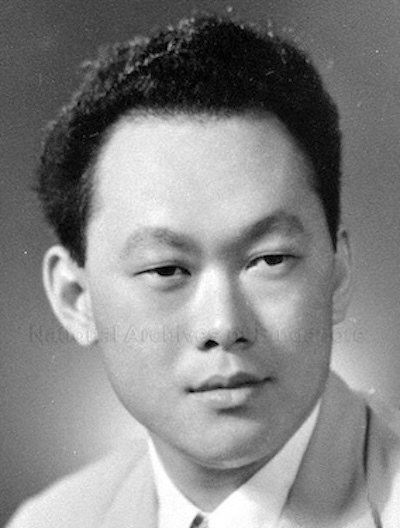
Lee Kuan Yew6
No historical account of Singapore’s governance will be complete without mentioning Lee Kuan Yew. From the moment of independence in 1965, he stood firm through uncertainty and hardship, guiding us with strength, courage, and belief in our potential. He believed in tough laws, clear direction, and long-term planning, even when his choices were not popular. Some found his leadership style too uncompromising, but many recognised that his firm hand was what Singapore needed to survive and grow. He built a system that rewarded talent and demanded discipline, honesty, and excellence. When he passed away in 2015, the nation mourned—not just a Prime Minister, but a founding father. His legacy lives on in our safe streets, clean parks, strong schools, and global reputation.
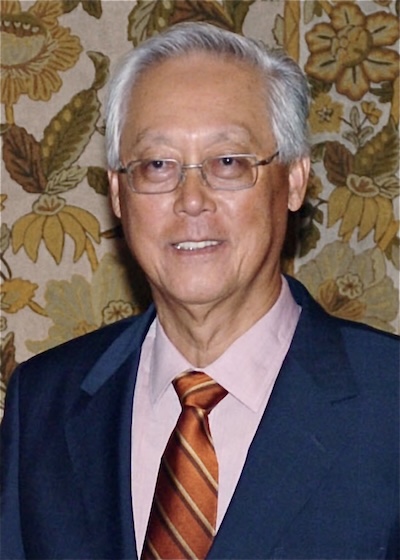
Goh Chok Tong7
When Lee Kuan Yew passed the baton in 1990, Goh Chok Tong inherited a nation that was stable, confident, and increasingly sophisticated. Though often overshadowed in popular memory by his predecessor and successor, his years as Prime Minister were a crucial bridge between consolidation and renewal. His leadership style contrasted with Lee Kuan Yew’s—less commanding, more consultative—reflecting a society that was ready for more dialogue, inclusion, and shared ownership of progress. It was under his stewardship that we began to pay greater attention to the quality of life and the softer dimensions of growth—values that would shape the next phase of our development. Goh Chok Tong’s legacy lies not in dramatic transformation, but in the steady deepening of what progress really meant.
Market Value in 2024
Market Price: $1150
Condition
• Ungraded
• Lightly used
• No tears, pinholes, stains or foxing
• Light creases & folds
Context
• The information here refers specifically to the banknote featured on the top of this page.
1. Prefix and banknote details from Vincent Tan and Tan Wei Jie, Singapore Banknotes: Complete Prefix Reference, Mr Banknotes, 2017.
2. Image from Forum Francophone des Collectionneurs de Coquillages. Source: https://www.forumcoquillages.com/t4543-ficadusta-pulchella-pericalles-melvill-standen-1904.
3. Image by Museum national d’Histoire naturelle, Wikipedia. Source: https://commons.wikimedia.org/wiki/File:Ficadusta_pulchella_aliguayensis_(MNHN-IM-2000-3592).jpeg.
4. Image by Sleepingfox. Source: https://www.ancient-origins.net/myths-legends-asia/gentle-and-benevolent-qilin-chinese-mythology-001933.
5. Image by CEphoto, Uwe Aranas, Wikipedia. Source: https://en.m.wikipedia.org/wiki/File:Singapore_Parliament-House-01.jpg.
6. Image from National Archives of Singapore. Source: https://www.nas.gov.sg/archivesonline/photographs/record-details/35b86bfb-1162-11e3-83d5-0050568939ad.
7. Image extracted from Ministry of Commerce and Industry (India). Source: https://commons.wikimedia.org/wiki/File:The_Senior_Minister_of_Republic_of_Singapore,_Mr._Goh_Chok_Tong_meeting_with_the_Union_Minister_of_Commerce_and_Industry,_Shri_Kamal_Nath,_in_New_Delhi_on_March_28,_2008.jpg
Disclaimer
I built this website as a hobby, to share with others what I’ve learnt. All the information here is written based on my own research and understanding, and I don’t guarantee that everything is correct, complete, or updated. While I sell banknotes here, I don’t profit from them, as they are spare pieces from my private collection. All the banknote images here are taken by myself and they belong to me. The non-banknote images, with sources that I’ve attributed on every page, are used solely for illustration and non-commercial education purposes. If you are a copyright holder and believe something has been used inappropriately, please contact me, and I will immediately review or remove it.