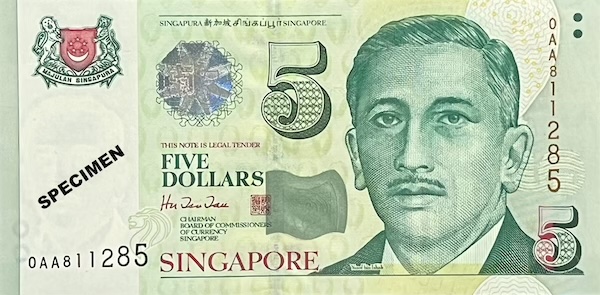
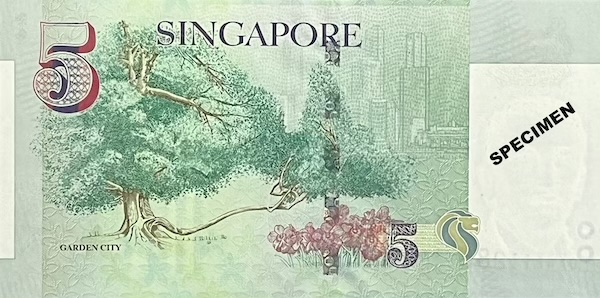
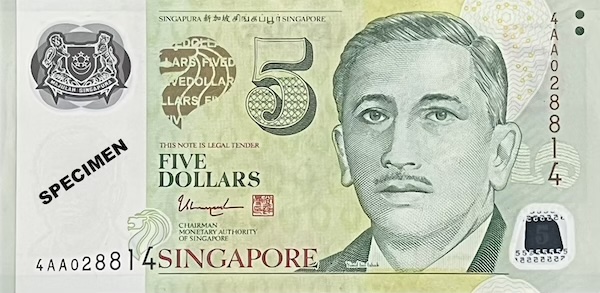
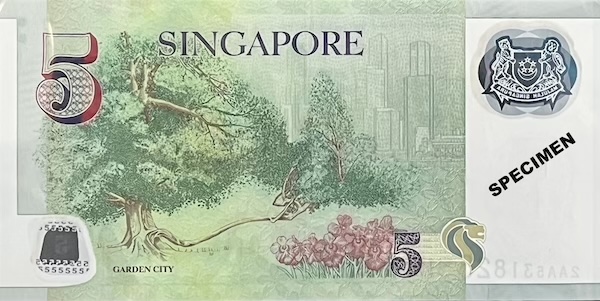
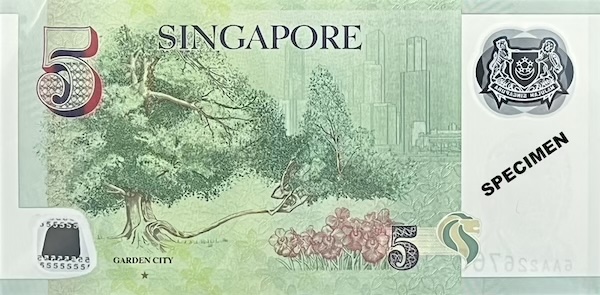
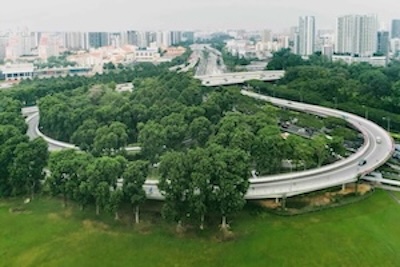
Our worries about public housing had become a thing of the past, but our commitment to building a liveable city remained steadfast. We ensured that lush greenery flourished across the urban landscape—lining our roads with trees, dotting neighbourhoods with flower beds, and weaving parks into the city’s fabric. These green spaces brought our vision of a Garden City to life, offering a welcome respite from the concrete jungle. They became sanctuaries where we could pause, breathe, and reconnect with nature—nurturing not just the environment, but our well-being too.
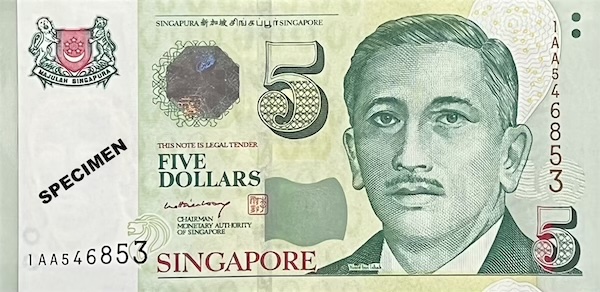
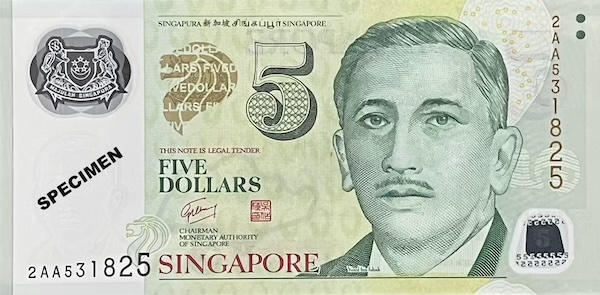
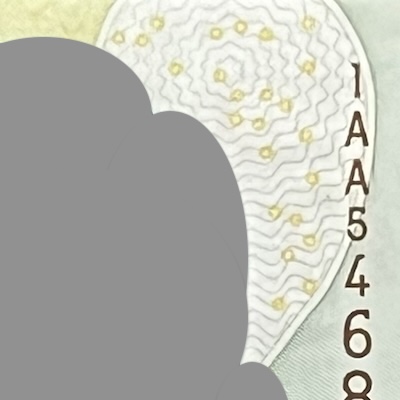
First prefix: • Paper: 0AA • Polymer: 2AA Last prefix: • Paper: 1BT
Replacement prefixes: 0CX
Signed & sealed by Chairman:
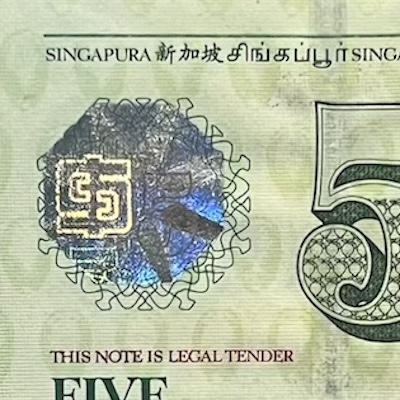
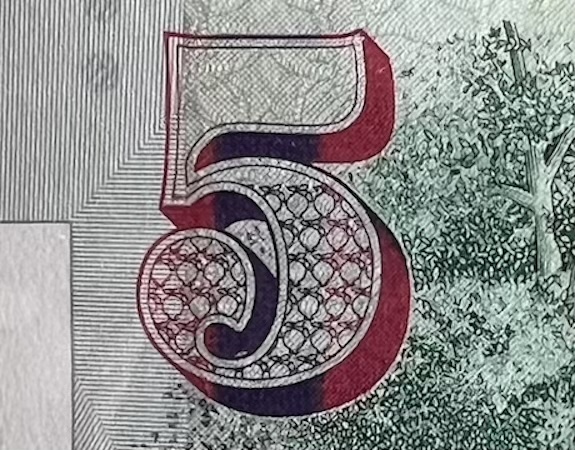
• 0AA to 0CX: BCCS Hu Tsu Tau • 1AA to 1BT: MAS Lee Hsien Loong • 2AA & 3AA: MAS Goh Chok Tong • 4AA, 5AA & 6AA onwards: MAS Tharman Shanmugaratnam Geometric shapes:
The Portrait $5 is the longest surviving common denomination in circulation today. The $1 note was discontinued after the Ship series, and the $2 note was only introduced in 1991. In fact, going back to colonial times, the $5 denomination was one of two banknotes, along with the $10, first issued by the Straits Settlements—both were dated 1 September 1898 and released into circulation on 1 May 1899. This makes the $5 denomination, along with the $10, the grand old dames in Singapore’s banknote history.
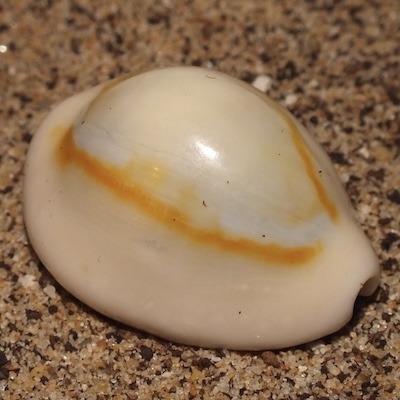
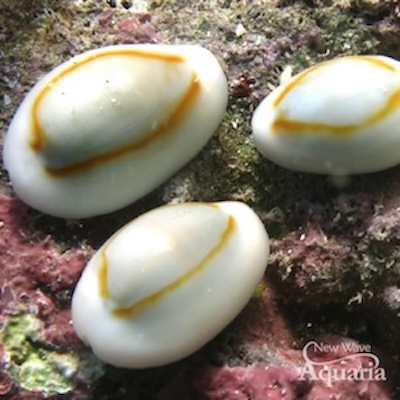
The gold ring cowrie, originally known as Cypraea annulus and now classified as Monetaria annulus, is a small sea snail from the cowrie family. It has a smooth, glossy shell, usually cream or pale in colour, marked by a distinctive golden or orange ring on its back—giving it its common name. Like the money cowrie, the gold ring cowrie was also used as currency and ornament in parts of Africa and Asia, though not as widely as the money cowrie. Its unique appearance made it popular not only in trade but also in jewellery and decorative art. It was believed to bring good fortune and spiritual protection, and was often included in rituals, talismans, and traditional attire.
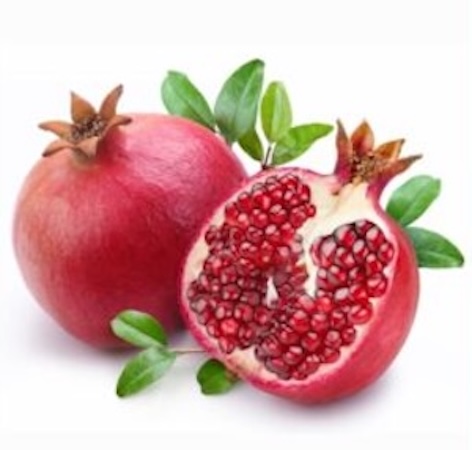
While pomegranates may simply be seen as a juicy fruit in many parts of the world, in Chinese culture, they carry deep symbolic meaning. The word for pomegranate, 石榴 (shí liú), is associated with fertility, prosperity, and family abundance, thanks to the fruit’s many seeds. In traditional beliefs, a pomegranate bursting open is seen as a sign of many children and thriving descendants—a major blessing in Chinese society, especially in the past when large families were cherished. Because of this, pomegranates often appear in wedding gifts, New Year decorations, and fine art, symbolising wishes for fertility, harmony, and generational continuity. In paintings, they are sometimes held by children or immortals, reinforcing their connection to good fortune and the hope for a flourishing family lineage.
From Vision of Garden City, To Everyday Nature
Garden City
In 1967, Singapore introduced the Garden City vision to build a clean and green urban space. The goal was to improve our quality of life by adding more greenery to the city. This meant planting trees along roads, building public parks, and protecting natural areas. In the 1980s, the idea of green buffers was introduced—strips of trees and plants were placed between buildings, roads, and industrial areas to reduce noise, clean the air, and make the city more pleasant. These green buffers became mini green homes for birds, butterflies, and other small animals.
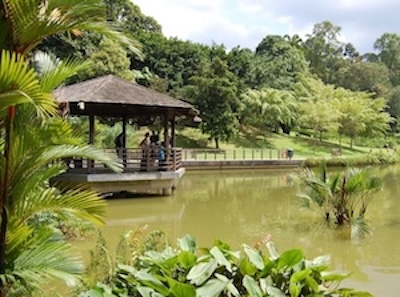
Singapore Botanic Gardens5
In 1990, the National Parks Board (NParks) took over the reins of managing our parks and greenery. They launched initiatives like the Park Connector Network, which links parks through walking and cycling paths, and Community in Bloom, which encourages residents to grow gardens in their neighbourhoods. NParks also protected important green sites such as Bukit Timah Nature Reserve and Sungei Buloh Wetland Reserve. Their most well-known project is the Singapore Botanic Gardens, which became a UNESCO World Heritage Site in 2015.
City in a Garden6
Over the years, more trees and shrubs were planted along roads and expressways to make the city cooler, cleaner, and more beautiful. Trees like the rain tree, bougainvillea, and yellow flame were chosen for their colourful flowers and ability to grow well in our climate. Expressways like the PIE and ECP became known for their green surroundings. By the early 2000s, Singapore had more than 500,000 trees, making nature a familiar part of daily life for our people.
Tembusu Tree in Botanic Gardens7
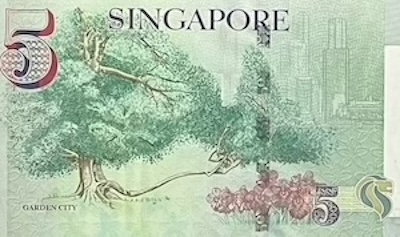
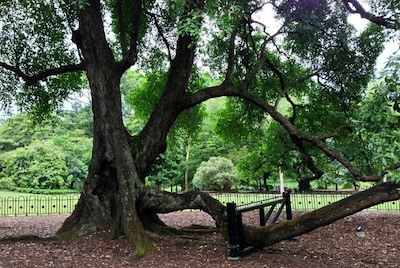
The tree on the back of the $5 note still stands in the Botanic Gardens today. It is a Tembusu tree which is over 200 years old—older than the 165-year-old Botanic Gardens itself. In 2017, despite twice-yearly inspections, it collapsed due to progressive decay in its roots and trunk, bringing down nearby palm tress with it. The collapse caused one death and several injuries. The tree has since been restored.
Market Value in 2024
Market Price: $40
Condition
• Ungraded
• Well used
• No tears, pinholes, stains, foxing, creases or folds
Context
• The information here refers specifically to the banknote featured on the top of this page.
1. Prefix and banknote details from Vincent Tan and Tan Wei Jie, Singapore Banknotes: Complete Prefix Reference, Mr Banknotes, 2017.
2. Image from Shadowshador, Flickr. Source: https://www.flickr.com/photos/29287337@N02/.
3. Image from New Wave Aquaria listing. Source: https://newwaveaquaria.com/products/snail-cowrie-gold-ring-cowrie.
4. Image from Veg Pro Singapore listing. Source: https://www.vegpro.com.sg/product-page/pomegranate.
5. Image from Trodly. Source: https://www.trodly.com/singapore/destination-6731/singapore-botanic-gardens.
6. Image from Vem. Source: https://vem.sg/blogs/vems-weekly-insights/singapore-green-plan-2030.
7. Image from Remember Singapore. Source: https://remembersingapore.org/2015/11/19/tembusu-tree-5-dollar-note/.
Disclaimer
I built this website as a hobby, to share with others what I’ve learnt. All the information here is written based on my own research and understanding, and I don’t guarantee that everything is correct, complete, or updated. While I sell banknotes here, I don’t profit from them, as they are spare pieces from my private collection. All the banknote images here are taken by myself and they belong to me. The non-banknote images, with sources that I’ve attributed on every page, are used solely for illustration and non-commercial education purposes. If you are a copyright holder and believe something has been used inappropriately, please contact me, and I will immediately review or remove it.