Serial Numbers
Printed on:
• All notes, circulation and commemorative
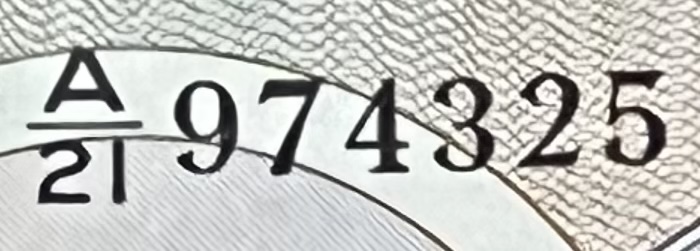
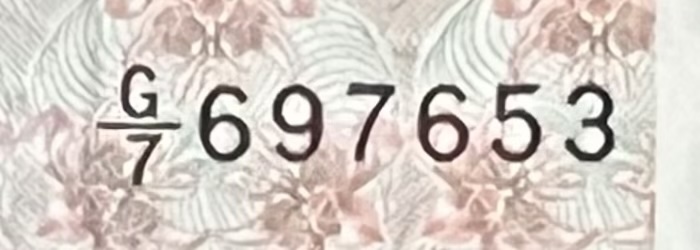
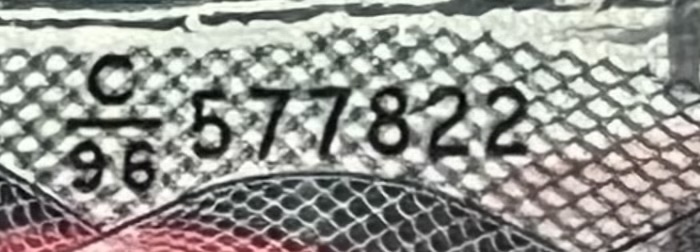
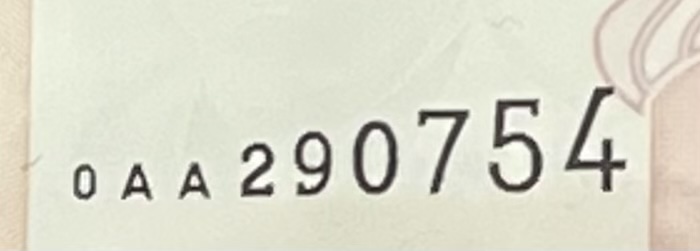
Technically, the “serial number” refers to both the prefix and the six-digit number. But in banknote collecting, because the prefix and the six-digit number each have their own importance, I will explain them separately. The serial number refers to the six-digit number—or seven digits in the case of millionth note—that appears after the prefix. Together with the prefix, it gives each banknote a unique identity, such that no two notes are exactly the same. For example, serial number B/3 180877 looks very similar to B/3 180977, but because one digit is different, their value can also be very different. Someone who already owns notes 180871 to 180876 would pay more for 180877 than 180977, so they can complete a continuous run of seven notes. Someone born on 18 August 1977 might also be willing to pay more for 180877 because it matches their birthdate. For those familiar with the NFT craze in the early 2020s, this is the idea of non-fungibility—something being unique and not replaceable.

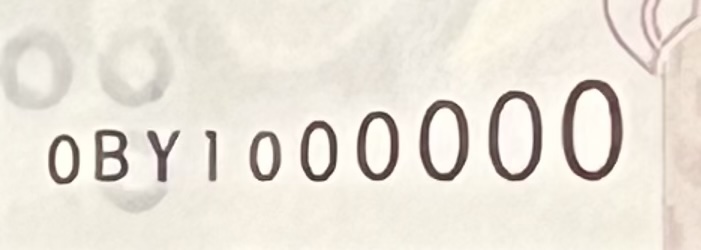
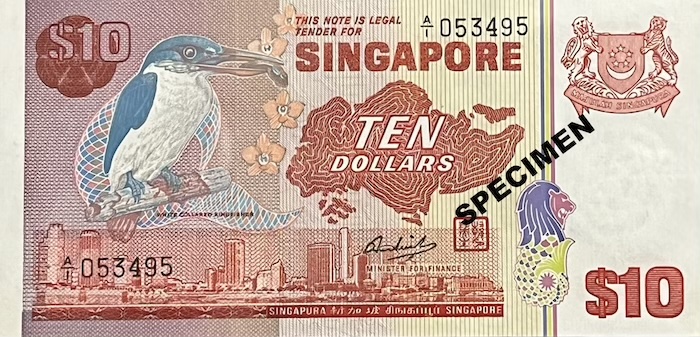
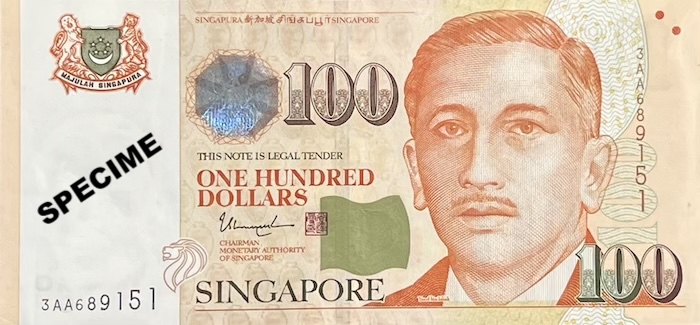
In the Orchid, Bird, Ship, and early Portrait series, each prefix was linked to one million banknotes, numbered from 000001 to 1000000. Only the millionth note carried a seven-digit serial number. Having a serial number reach 1000000 made it neat—each prefix always represented exactly one million pieces, instead of 999,999. For example, prefixes A/1 to A/8 immediately meant there were 8 million notes printed, instead of 7,999,992. If a note was damaged during printing, a replacement note with a different prefix was issued, so that the total number of notes for the original prefix still added up to one million. This system changed around 2004, when better printing technology meant that replacement notes no longer had to be issued. When a note was defective, its serial number was simply skipped, without needing a replacement. (This is why stacks of brand new notes today sometimes have gaps in their serial numbers.) Because of this change, prefixes no longer needed to reach exactly one million notes, and the 1000000 serial number became a thing of the past.
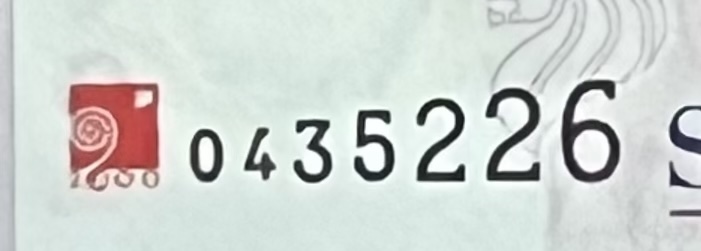
Apart from the millionth note, the only banknote in Singapore’s history to have seven digits is the 1999 Millennium commemorative note. This note replaced the prefix with the Millennium logo and used a seven-digit serial number instead, with the first digit playing the role of the prefix. This is the only note that has seven-digit versions of round numbers like 2000000 and 3000000 or ladders like 1234567 or 3456789.
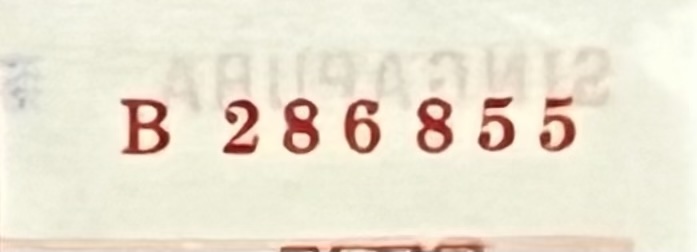
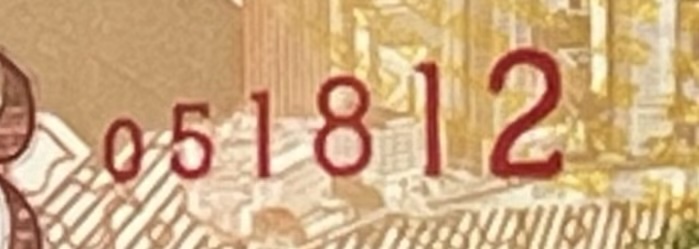
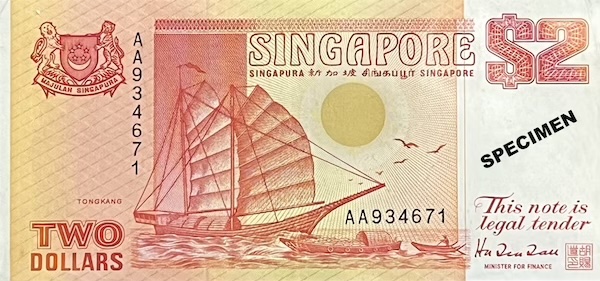
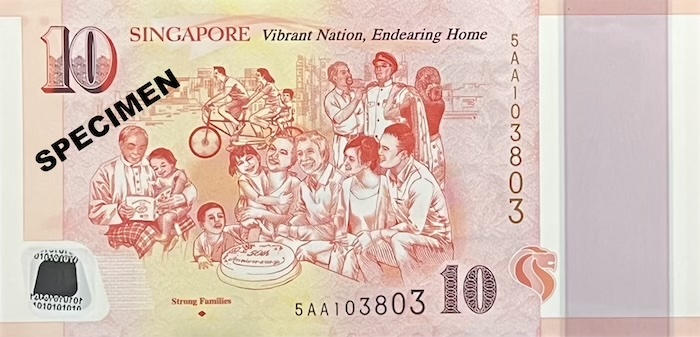
Every banknote has two serial numbers printed on the front—towards the bottom left and top right corners. There were only two exceptions. The first is the Ship $2 note, which printed the numbers on the top left and bottom right instead. The second is the 2015 SG50 $10 commemorative note, which has its numbers printed on the back instead. There have also been changed in the layout of the numbers. In the Orchid, Bird, and most Ship series notes (except for the Ship $2 and $10000 notes), as well as the SG25 commemorative note, both serial numbers are printed horizontally, and all the digits are the same size. Starting from the Ship $2 and $10000 notes, as well as all the other commemorative notes, one of the two serial numbers is printed vertically, and the digits are no longer symmetrical—every digit increases gradually in size.