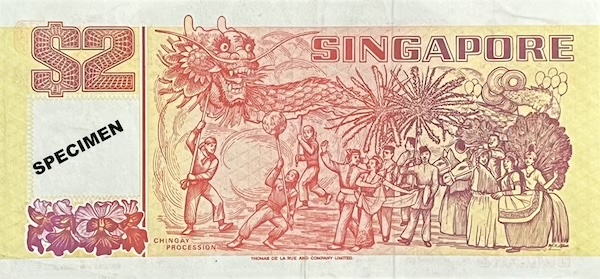
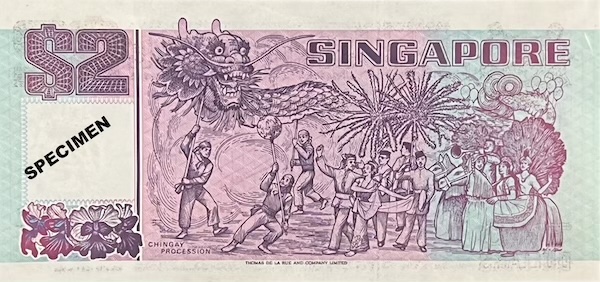
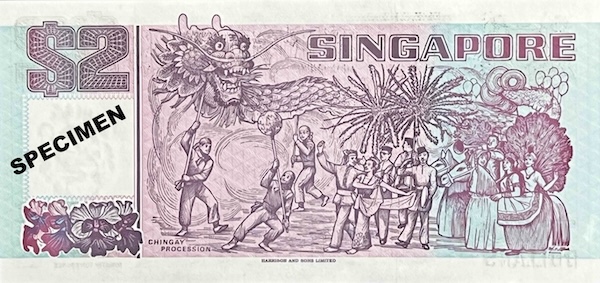
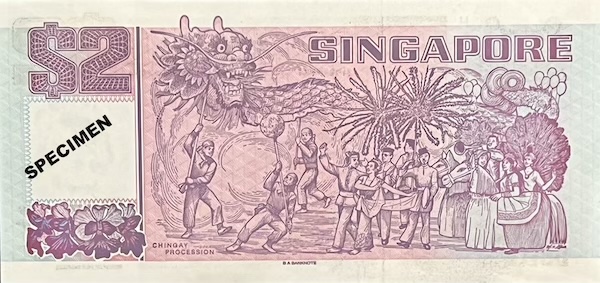
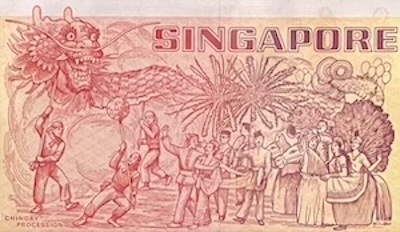
The Chingay procession was a kaleidoscope of our cultural diversity. During the parade, the streets would come alive with music, dance, and the vibrant colours of the floats. Together with family and friends, we would line the roads, cheering and clapping, creating an atmosphere of joy and unity. Chingay was more than a parade; it was a living, breathing example of our multicultural co-existence.
Orange Note (Back) Printer: Thomas De La Rue & Co Ltd
Purple Note (Back) Printer: Thomas De La Rue & Co Ltd
Purple Note (Back) Printer: Harrison & Sons Ltd
Purple Note (Back) Printer: BA Banknotes
The Unique Tale of the Two Two Dollars
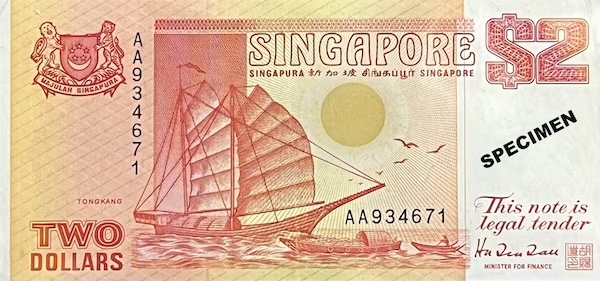
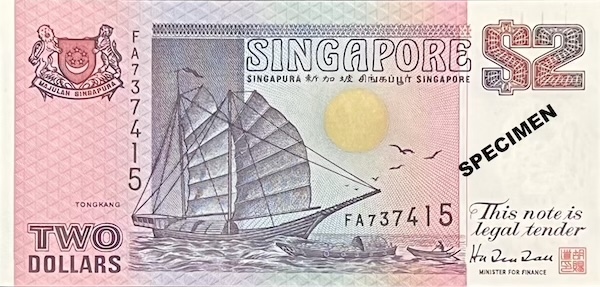
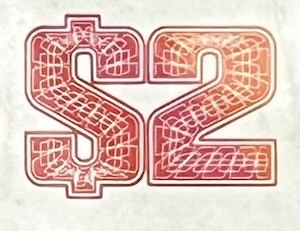
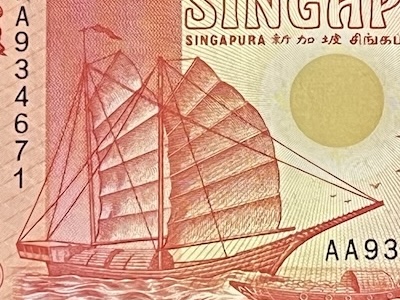
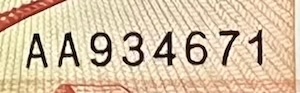
The Ship $2 banknote, first released in 1991, was Singapore’s first $2 note and replaced the old $1 note. It is the only Singapore note ever printed in two very different colours—it started in orange, but was quickly changed to purple after people said it looked too much like the $10 note, which caused confusion. This note was also special because it was printed by three different companies: Thomas De La Rue, Harrison and Sons, and BA Banknotes—something no other note has. Unlike the other Ship notes, it was not designed by Thomas De La Rue (even though some notes were printed by them), so there were several clear design differences: The $2 note did not have the usual folklore creature and fish on the front, the Vanda Miss Joaquim was moved to a different spot on the back, and the ‘$2’ denomination print appeared only twice instead of four times. Even the orange and purple versions were slightly different: the orange one had serial numbers with equal-sized digits, while the purple one had digits that grew in size as a new security feature.
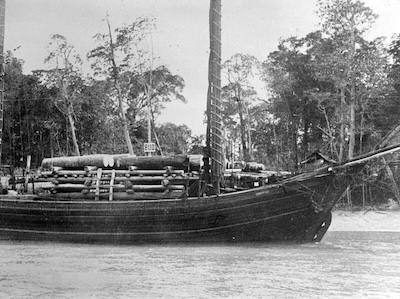
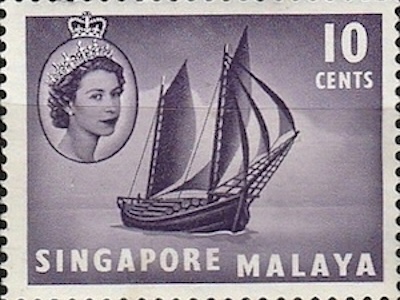
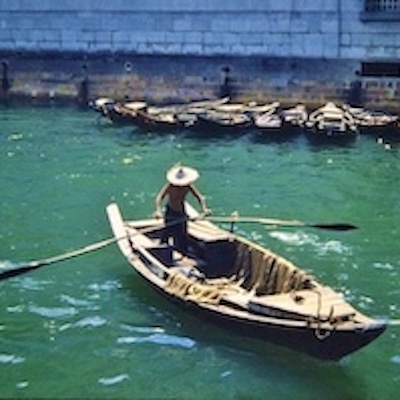
After Sir Stamford Raffles founded Singapore as a trading port in 1819, merchants from all over the region began arriving. One common way people and goods travelled to Singapore from South China was by tongkang—sturdy wooden cargo boats. These boats were a mix of Chinese boatbuilding and European design, making them perfect for sailing in shallow waters. They could even rest flat on the riverbed without tipping over when the tide went out. At first, tongkangs were found along the busy Singapore River, but as the city grew and bridges were built across the river, the boats had to move. Many relocated to areas like Beach Road and later to Tanjong Rhu, continuing to play an important role in Singapore’s early trade.
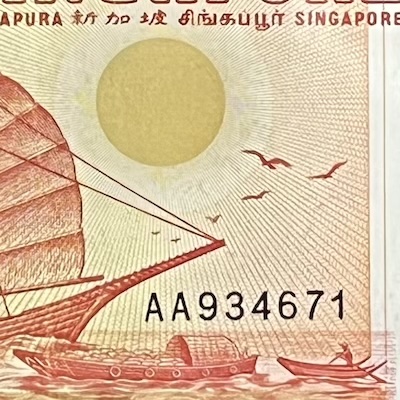
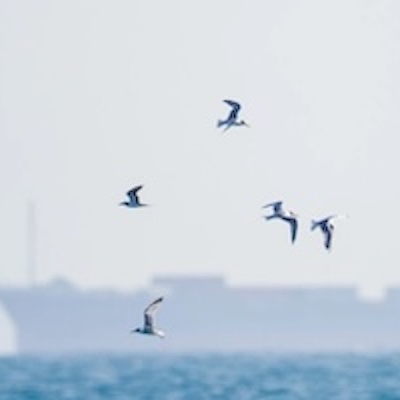
Every note in the Ship series featured a creature from Chinese folklore, except for the $2. But although they are not from folklore, the image of the sun, birds, and sampans is also a symbol of hope and good fortune. The bright sun represents warmth, life, and new beginnings. Birds flying freely in the sky suggest peace, harmony, and the idea of rising to greater heights. The sampans calmly sailing forward shows a smooth journey through life, especially meaningful to people in Singapore who have close ties to the sea and hard work. Together, these simple elements form a picture of positivity—of moving ahead with confidence, guided by nature and peaceful surroundings.
Chingay: From Tradition to Multicultural Spectacle
Chingay Procession
When the government banned firecrackers in 1972 after several accidents and fires, people feared Chinese New Year would lose its excitement. Firecrackers had long been a traditional way to ward off evil spirits and usher in good luck. To compensate people and keep the festive spirit alive, then-Prime Minister Lee Kuan Yew mooted the idea of a grand parade. Chingay made its debut the following year in 1973, reinventing a traditional street procession into a modern multicultural celebration.
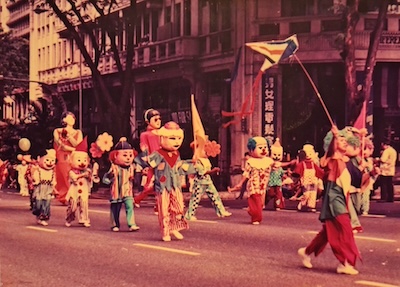
Chingay Performers Along Orchard Road in the 1980s6
Although Chingay has its roots in Chinese culture, the version we see today is largely a Singaporean creation. What began as a traditional procession has grown into the nation’s largest street performance and float parade. The word ‘Chingay’ (妆艺) comes from Hokkien and means ‘the art of costume and masquerade’, originally referring to Chinese deity parades that featured lion dances, stilt walkers, and other cultural acts. By the 1980s, Chingay had opened its doors to performers from other ethnic communities—Malays, Indians, Eurasians—turning it into a vibrant showcase of Singapore’s multicultural identity.
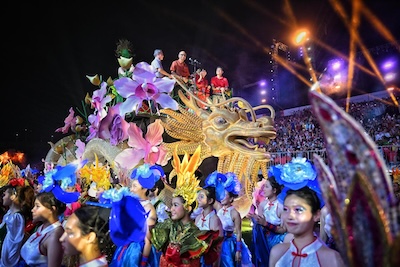
Chingay Performance in 20247
Since 1987, Chingay has also welcomed foreign performers, adding an international flavour to the parade. That year, groups from countries like Japan and Thailand joined for the first time, performing alongside local troupes. This move helped Chingay grow from a national celebration into a global showcase of cultures. Over the years, performers from countries such as China, Indonesia, South Korea, and even as far as Russia and Brazil have taken part, bringing their unique dances, music, and costumes to Singapore’s streets.
Market Value in 2024
Market Price: $20
Condition
• Ungraded
• Lightly used
• No tears, pinholes, or foxing
• Minor stains
• Visible creases & folds
Context
• The information here refers specifically to the banknote featured on the top of this page.
1. Prefix and banknote details from Vincent Tan and Tan Wei Jie, Singapore Banknotes: Complete Prefix Reference, Mr Banknotes, 2017.
2. Image from Wikimedia Commons. Source: https://commons.wikimedia.org/wiki/File:COLLECTIE_TROPENMUSEUM_Een_Chinese_Tongkang_voor_een_laadsteiger_op_het_eiland_Mendol_bij_Bengkalis_Sumatra%27s_Oostkust_TMnr_10010601.jpg.
3. Taken from jojoh-li-6zr5uo, ebay listing. Source: https://www.ebay.com.sg/itm/124714065254.
4. Image from Singapore Bird Group. Source: https://singaporebirdgroup.wordpress.com/2015/04/15/pelagic-survey-on-the-singapore-strait-12-april-2015/.
5. Image by Raymond Morris, Flickr. Source: https://www.flickr.com/photos/rayso180/6297520217.
6. Image from People’s Association. Source: https://www.chingay.gov.sg/photo-gallery/1985-1999/.
7. Image from Shintaro Tay, The Straits Times. Source: https://www.straitstimes.com/singapore/thousands-dazzled-by-chingay-parade-2024-in-full-bloom.
Disclaimer
I built this website as a hobby, to share with others what I’ve learnt. All the information here is written based on my own research and understanding, and I don’t guarantee that everything is correct, complete, or updated. While I sell banknotes here, I don’t profit from them, as they are spare pieces from my private collection. All the banknote images here are taken by myself and they belong to me. The non-banknote images, with sources that I’ve attributed on every page, are used solely for illustration and non-commercial education purposes. If you are a copyright holder and believe something has been used inappropriately, please contact me, and I will immediately review or remove it.