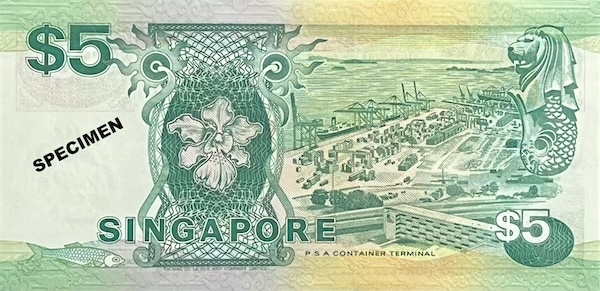
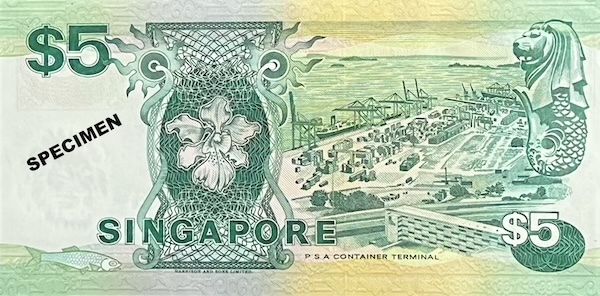
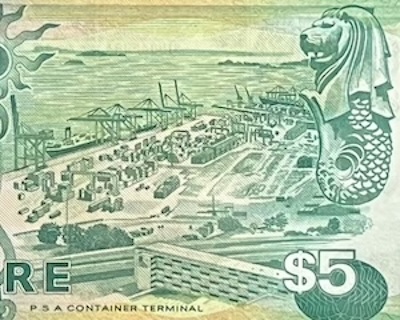
The PSA container terminals continued to be bustling hubs of activity. Ships from around the world docked on our shores, where an intricate ballet of cranes moved their containers with speed and precision. At the Tanjong Pagar Terminal, our main gateway for handling containers, the pulse of global commerce could be felt, and our nation was at the heart of it. Every container that was moved cemented our position as a leading global port.
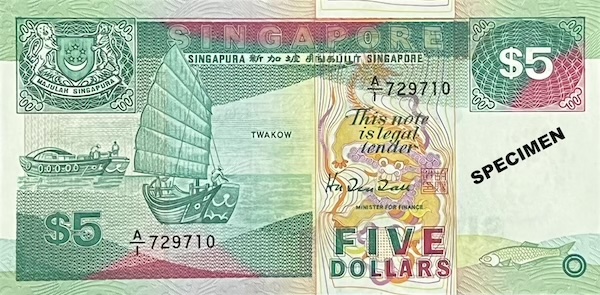
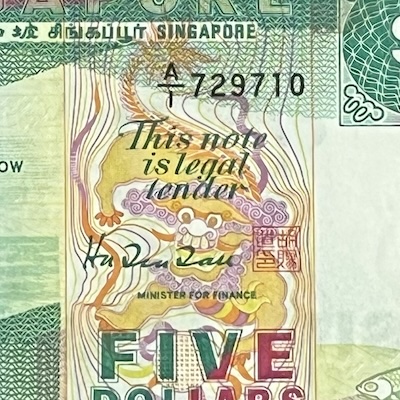
Apart from the Ship $2 and Portrait $10, the Ship $5 is the only note in Singapore’s history to use two printers. It was first printed by Thomas De La Rue, then Harrison and Sons. In addition, other than the Orchid $1000, the Ship $5 is the only one with a physical size that is not larger than its lower denomination: at 133mm X 63mm, it is of the same size as the Ship $2.
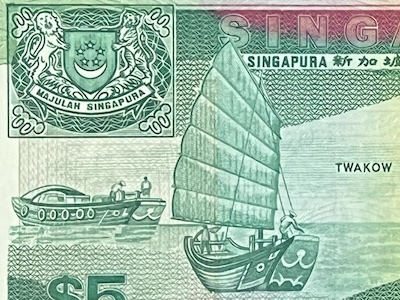
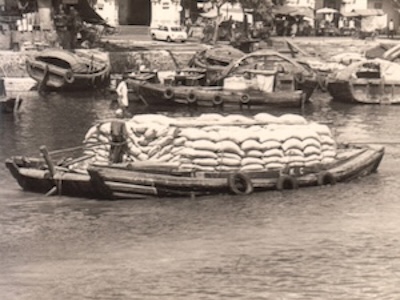
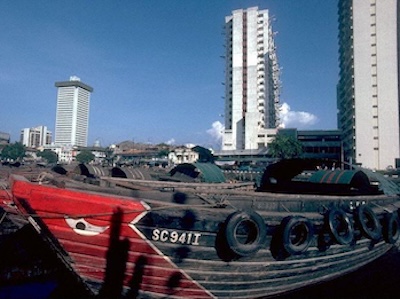
The twakow 大舠 was a type of small wooden cargo boat commonly seen in Singapore’s rivers and coastal areas during the early days. Built with a flat bottom and a strong, wide body, it was designed to move goods between big ships anchored offshore and the godowns along the Singapore River. Twakows were often painted in bright colours, with ‘eyes’ drawn on the front to help them ‘see’ danger ahead—a common belief among Chinese boatmen. These boats played an important role in Singapore’s growth as a trading port in the 1800s and early 1900s, carrying all kinds of cargo like rice, rubber, charcoal, and canned goods. Many were rowed or sailed by hardworking Chinese coolies, who made countless trips up and down the river every day.
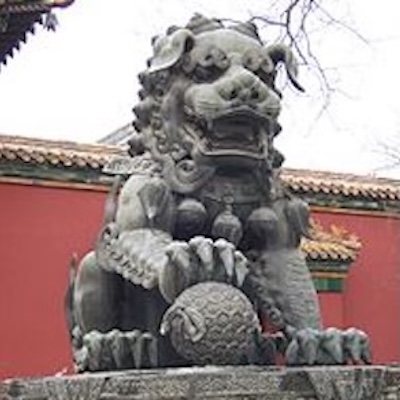
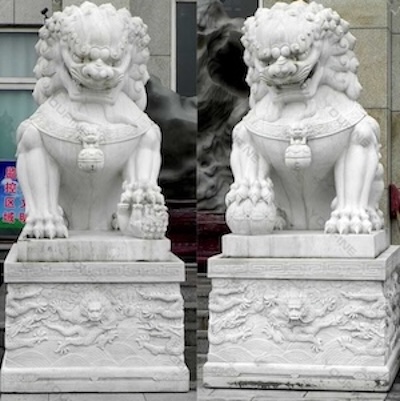
The Chinese guardian lion, also known as shishi (石獅), is a well-known symbol in Chinese folklore and can often be seen standing at the entrances of temples, palaces, and even homes or businesses. These stone lions come in pairs—usually a male lion with a ball under its paw, and a female lion with a cub. The ball under the male lion’s foot represents material power and control over the physical world, while the cub under the female’s paw stands for nurturing, protection, and the continuation of life. Together, they are believed to guard against bad luck and evil spirits, offering protection to the building and those inside.
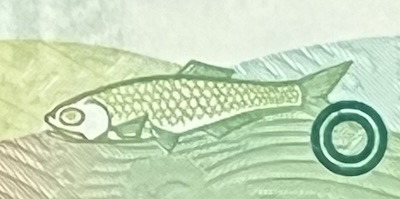
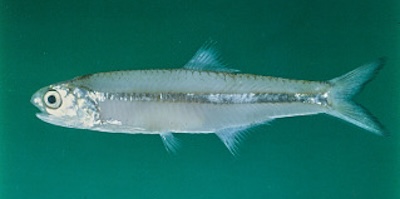
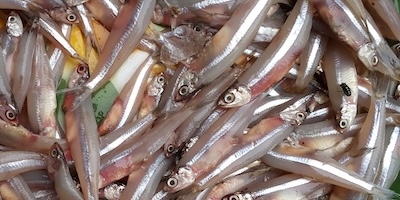
The Commerson’s anchovyis known in Singapore as the ikan bilis. This tiny silver fish may be small in size, but has long been a staple in Southeast Asian cuisine, especially in Malay, Chinese, and Peranakan dishes. It is often dried and fried to add flavour and crunch to meals like nasi lemak or sambal. Beyond the kitchen, the Commerson’s anchovy also played a big role in the early fishing economy of coastal kampongs, where fishermen would haul in large catches that were then sun-dried and sold at markets. The fish is valued not just for its taste, but also for its symbol of simplicity, community, and everyday sustenance.
From Port Pioneer to Global Powerhouse
PSA Container Terminal
PSA Corporation Limited started out as the Port of Singapore Authority in 1964. It was set up by the government as a statutory board to take care of Singapore’s port facilities. In 1997, it was changed into a company fully owned by Temasek Holdings, which allowed it to run more like a business and grow more easily. This change helped PSA expand overseas, and today, it owns or runs container terminals in over 50 places across 26 countries. This makes PSA one of the biggest container port operators in the world.
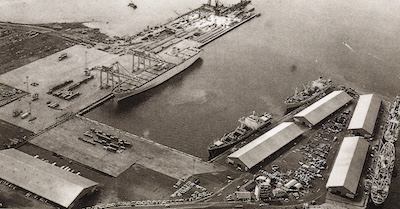
Tanjong Pagar Container Terminal in 19728
When Tanjong Pagar Terminal, which was opened in 1972, started nearing capacity in the late 1980s, PSA developed Keppel Terminal, which began operations in 1991. Strategically located near the city centre and key shipping routes, it helped handle the increasing number of containers and larger ships. But PSA didn’t stop there. Other major terminals like Brani, Sembawang, and Pasir Panjang were also developed over the years, working together to support Singapore’s role as a global transshipment hub.
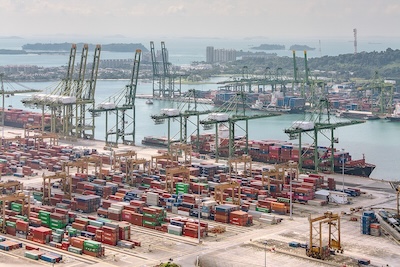
Tanjong Pagar Container Terminal in 20189
As Singapore looked to the future, plans were made to consolidate port operations. In 2017, Tanjong Pagar Terminal ceased container operations, paving the way for the development of the Tuas Mega Port, which will offer greater capacity and advanced port technologies. The Tanjong Pagar site, whose lease ends in 2027, will be transformed into the Greater Southern Waterfront—a vibrant new waterfront district. The move marks not just the end of an era, but also the start of a new chapter in Singapore’s maritime journey.
Market Value in 2024
Market Price: $25
Condition
• Ungraded
• Brand new
• No tears, pinholes, stains, foxing, creases or folds
Context
• The information here refers specifically to the banknote featured on the top of this page.
1. Prefix and banknote details from Vincent Tan and Tan Wei Jie, Singapore Banknotes: Complete Prefix Reference, Mr Banknotes, 2017.
2. Image from chinatownboy, blog. Source: https://bullockcartwater.blogspot.com/2007/10/singapore-river-and-tua-kow.html.
3. Image from National Archives of Singapore. Source: https://www.nas.gov.sg/archivesonline/photographs/record-details/85b774dc-1162-11e3-83d5-0050568939ad.
4. Image from AongKing listing. Source: https://www.animalsstatue.com/animal-sculpture-park/2016-lion-sculpture/.
5. Image from Youfine Art and Sculpture listing. Source: https://www.artsculpturegallery.com/guardian-lion-statue-for-sale.html.
6. Image by Randall J.E.Source: https://www.marinespecies.org/aphia.php?p=taxdetails&id=152017.
7. Image by Tan Hiang Ching. Source: https://www.talkaboutfish.com/herrings/anchovy/.
8. Image from PSA Singapore, Facebook. Source: https://www.facebook.com/photo.php?fbid=5269874779746792&id=610399799027670&set=a.610586619008988.
9. Image by Aaaatu, Wikipedia. Source: https://commons.wikimedia.org/wiki/File:Port_of_Singapore.jpg
Disclaimer
I built this website as a hobby, to share with others what I’ve learnt. All the information here is written based on my own research and understanding, and I don’t guarantee that everything is correct, complete, or updated. While I sell banknotes here, I don’t profit from them, as they are spare pieces from my private collection. All the banknote images here are taken by myself and they belong to me. The non-banknote images, with sources that I’ve attributed on every page, are used solely for illustration and non-commercial education purposes. If you are a copyright holder and believe something has been used inappropriately, please contact me, and I will immediately review or remove it.