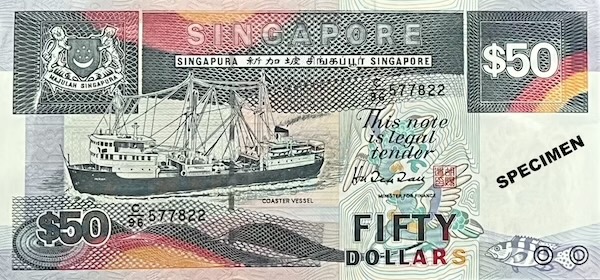
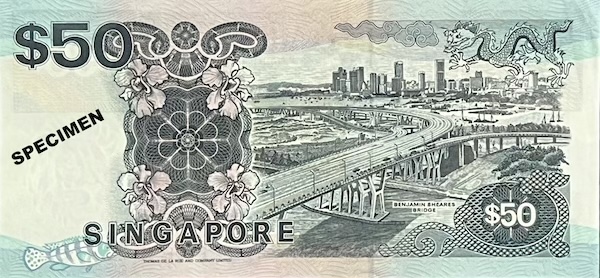
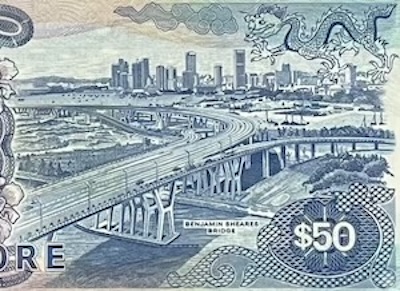
Image: Benjamin Sheares Bridge With A Chinese Dragon
Engineering Wonders Beneath The Dragon's Watch
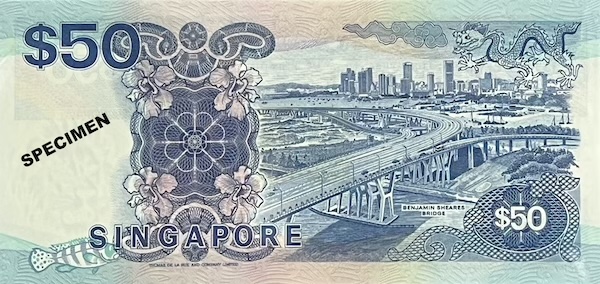
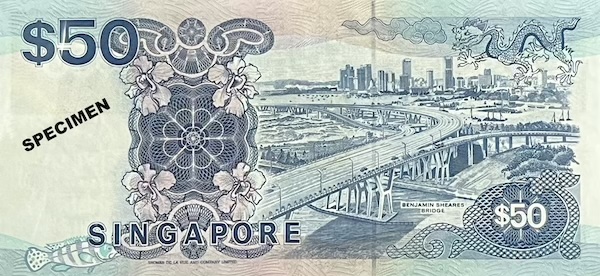
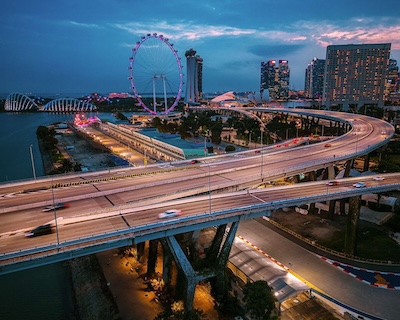
The Benjamin Sheares Bridge was another symbol of our engineering prowess. Together with the evolving city skyline, it showcased our rapid urban development and our aspirations to be a global city. The bridge, named after our second President, was also a popular spot for a scenic view. As we watched the sun set over the city, casting a golden glow on the skyscrapers, it was a reminder of how far we had come and the limitless possibilities that awaited us. In that quiet moment, with the city bathed in light and the wind gently stirring, it felt as though a great dragon stood watch over our home—steadfast and silent, guarding our progress and dreams from above.
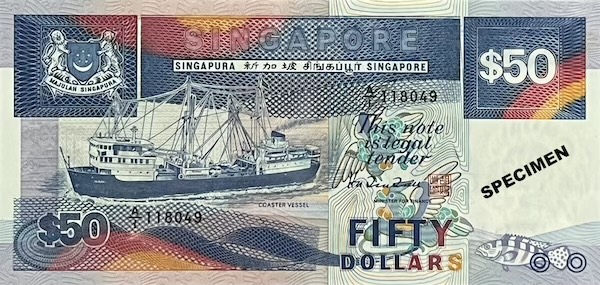
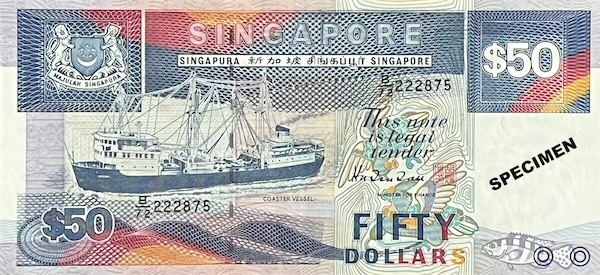
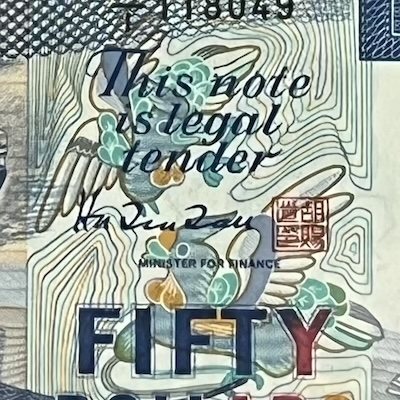
Before the Ship $50, Singapore’s banknotes used two types of security threads: a solid thread and a segmented thread. The solid thread is a continuous, unbroken metallic strip embedded vertically into the paper; when held up to light, it appears as a solid dark line running from top to bottom. The segmented thread is a metallic thread that appears in broken or dashed segments across the note—only parts are visible under normal light, but it looks more continuous when held up to light. The Ship $50 introduced a third type: the clear-text thread, an advanced thread with micro-printed text embedded within; it appears as a thin metallic line, and when viewed against light, words like ‘SINGAPORE’ can be seen repeating clearly along the thread. Uniquely, the Ship $50 was the only denomination in Singapore’s banknotes to feature all three variants: the solid, segmented, and clear-text threads. In addition, apart from the Ship $2, the Ship $50 is the only banknote in Singapore’s history to feature two shades of the same colour: light blue and dark blue. The light blue version houses the solid and segmented security thread, while the dark blue version features the clear-text thread. The reasons for the colour difference are unknown.
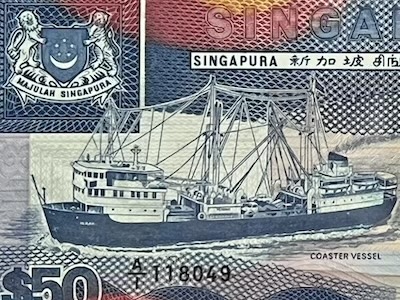
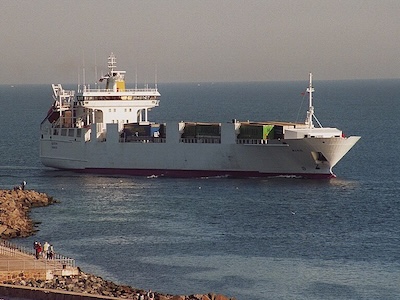
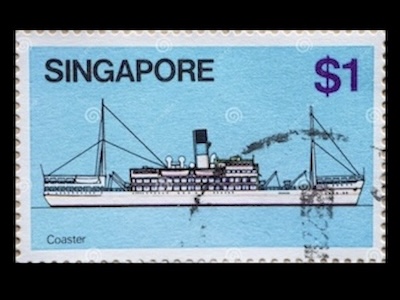
The Coastal Vessel was a useful working boat made for short trips along the coast and between nearby ports. It was smaller than large cargo ships and could move easily in shallow waters, rivers, and harbours. These boats often carried goods like food, building materials, and household items. Many of them stopped at Singapore to bring in supplies and trade with local businesses, supporting the island’s growing role as a trading hub. In the earlier years of Singapore’ history, coastal vessels played an important role in our economy. They helped move goods quickly between Singapore and nearby places like Malaysia, Indonesia, and Thailand. At a time when the country was developing fast and building up its industries, these boats supported small businesses by delivering what they needed.
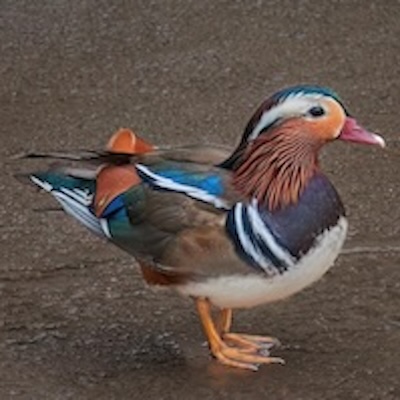
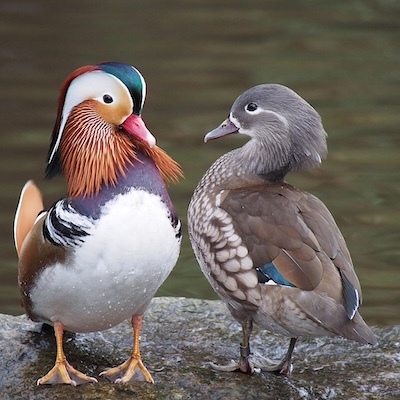
In Chinese folklore, the mandarin duck (鸳鸯, yuānyāng) is a beloved symbol of love, loyalty, and lifelong partnership. Known for their bright, colourful feathers and graceful appearance, mandarin ducks are often seen in pairs, swimming closely side by side. This image has made them a popular symbol of faithful and happy marriages. It is said that when one duck dies, the other remains single for life, which is why they are seen as a symbol of true devotion. In traditional Chinese art, the mandarin duck often appears in wedding decorations, embroidery, and paintings to bless couples with harmony and a lasting bond. They are usually pictured with their mate, reminding people of the beauty of togetherness.
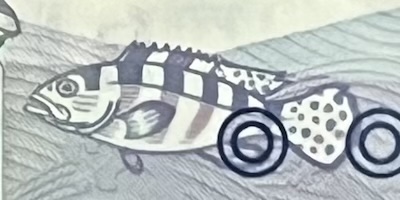
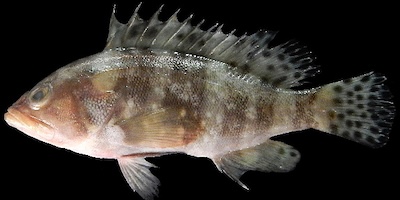
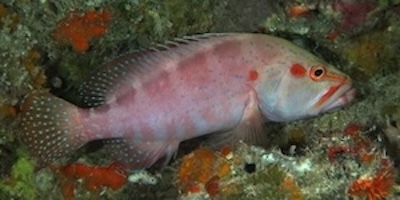
The Six-Banded Grouper (六带石斑鱼, liù dài shí bān yú) is a prized fish in Singapore and across the region, known for its firm, sweet flesh and distinctive pattern of dark vertical bands across its body. Larger and more expensive than common market fish, it is often served during special occasions such as family gatherings or festive meals, especially when steamed whole to preserve its natural flavour. In the past, catching a six-banded grouper was considered a lucky find for fishermen, as it could fetch a good price and bring pride to the dinner table. For many older Singaporeans, this fish brings back memories of celebration and the importance of sharing good food with loved ones.
Elevating Singapore: The Triumphs and Tales of Benjamin Sheares Bridge
Benjamin Sheares Bridge
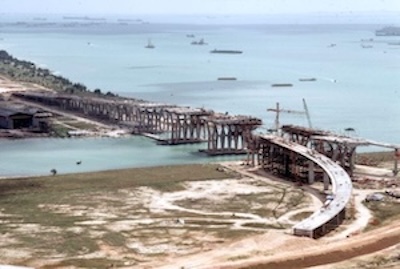
The Benjamin Sheares Bridge is Singapore’s longest and tallest bridge, stretching 1.8 kilometres and standing 29 metres above the ground. It was officially opened in 1981 and named after Dr Benjamin Henry Sheares, our second President, who passed away a few months before the bridge was completed. The bridge quickly became a key part of our road network.
Bridge Under Construction in the 1980s8
Built across land that was reclaimed from the sea, the bridge connects Tanjong Rhu on the east coast to Marina Bay on the west coast. This area was once open water, but through land reclamation, it was transformed into new land for housing, roads, and major developments. Thanks to these efforts, Singapore was able to build not only the bridge but also major landmarks like Marina Bay Sands and Gardens by the Bay, turning the area into a vibrant part of the city.
Benjamin Sheares Bridge Today9
Back in the late 1970s, when the bridge was being built, an urban legend caused fear among the public. There were rumours that children were being kidnapped and their heads were being used in the bridge’s foundation as part of a ritual. Even though this was not true, some parents were so worried that they kept their children indoors after school.
Market Value in 2024
Market Price: $150
Condition
• PMG 63 with remark ‘Closed Pinholes’
• Brand new
• No tears, stains, foxing, creases or folds
Context
• The information here refers specifically to the banknote featured on the top of this page.
1. Prefix and banknote details from Vincent Tan and Tan Wei Jie, Singapore Banknotes: Complete Prefix Reference, Mr Banknotes, 2017.
2. Image by Norbert Kaiser, Wikipedia. Source: https://en.wikipedia.org/wiki/Coastal_trading_vessel.
3. Image by Perforations, ebay listing. Source: https://www.ebay.com/str/perforations?_trksid=p4429486.m3561.l161211.
4. Image by Kelvin Ng Cheng Kwan, The Straits Times. Source: https://www.straitstimes.com/singapore/rare-mandarin-duck-spotted-in-clementi.
5. Image by Francis C. Franklin, Wikipedia. Source: https://en.wikipedia.org/wiki/File:Pair_of_mandarin_ducks.jpg.
6. Image by Sahat Ratmuangkhwang, Kasetsart University. Source: https://commons.wikimedia.org/wiki/File:Epinephelus_sexfasciatus.jpg.
7. Image by Florent Charpin. Source: https://reefguide.org/pixhtml/cephalopholissexmaculata3.html.
8. Image from National Archives of Singapore. Source: https://www.nas.gov.sg/archivesonline/photographs/record-details/1bd602d2-3c80-11e4-859c-0050568939ad.
9. Image from Global Cement and Concrete Association. Source: https://buildmytalent.com/2024/02/15/the-benjamin-sheares-bridge-is-the-longest-bridge-in-singapore-spanning-1-8km-and-tallest-at-29-metres-the-bridge-is/.
Disclaimer
I built this website as a hobby, to share with others what I’ve learnt. All the information here is written based on my own research and understanding, and I don’t guarantee that everything is correct, complete, or updated. While I sell banknotes here, I don’t profit from them, as they are spare pieces from my private collection. All the banknote images here are taken by myself and they belong to me. The non-banknote images, with sources that I’ve attributed on every page, are used solely for illustration and non-commercial education purposes. If you are a copyright holder and believe something has been used inappropriately, please contact me, and I will immediately review or remove it.