Singapore banknotes have always used watermarks as a key security feature. A watermark is a faint image built into the note itself—visible when held up to the light. Unlike printed designs, it isn’t made with ink. Instead, it’s formed during the papermaking process when the material is still wet. A metal stamp presses a design—like a lion’s head or a human face—into the paper, making some areas thinner. These thinner areas let more light through, creating a visible image that’s hard to copy and nearly impossible to add later.
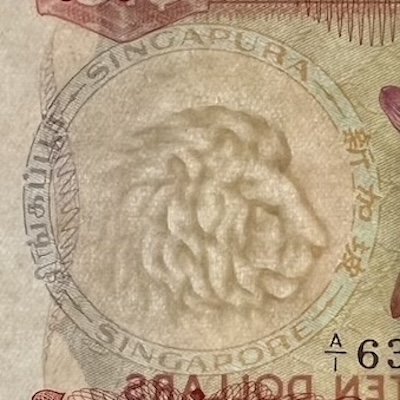
O10: Lion Head
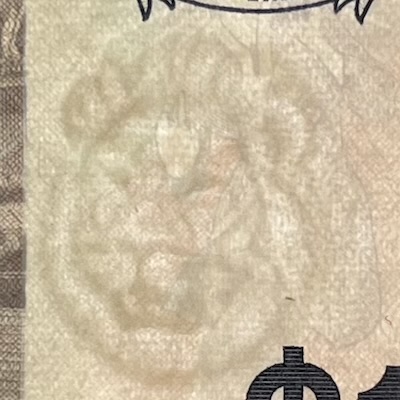
B1: Lion Head
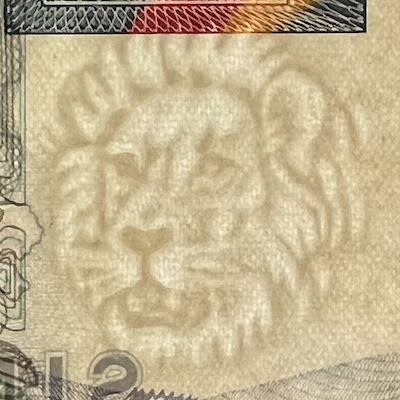
S50: Lion Head
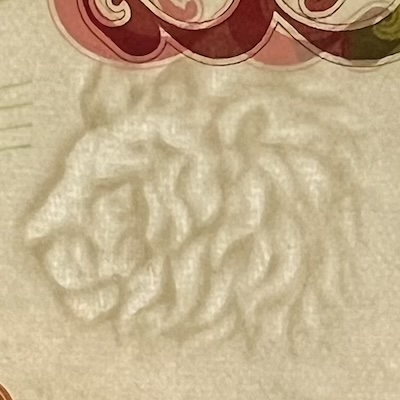
MAS25: Lion Head
The earliest notes, from the Orchid series, featured a watermark of a lion’s head in side profile. The Bird series kept the lion head but showed it from the front, and this design carried over into the Ship series. The 1996 MAS25 commemorative note, which was printed towards the end of the Ship series, also used the lion’s head seen in the Orchid series, but this time facing a different direction.
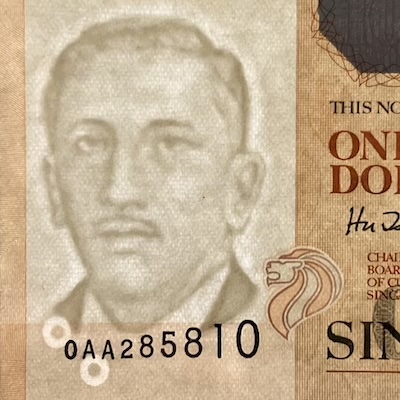
P100: Portrait
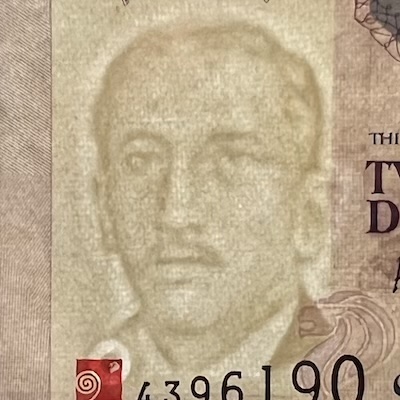
M2: Portrait
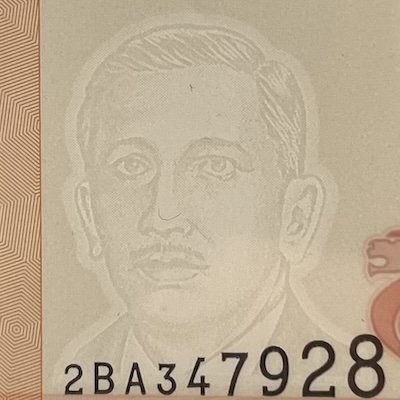
P10 Polymer: Portrait
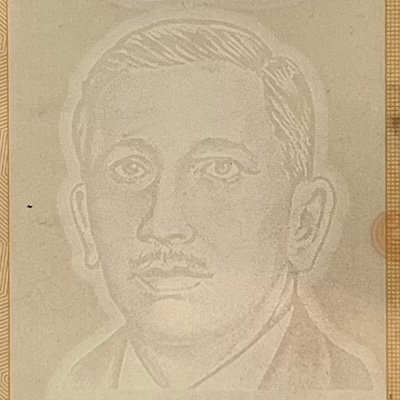
CIA40: Portrait
A major change came with the Portrait series, which replaced the lion with an image of Yusof Ishak. These notes featured two watermarks: a primary portrait and a secondary watermark of each note’s corresponding tactile identification marks beneath it. The 1999 Millennium note used the same watermark. When Singapore introduced the Portrait polymer notes in 2004, the traditional watermarks could no longer be used due to the plastic material. Instead, a shadow-like image of Yusof Ishak was embedded into the polymer to serve a similar purpose. The 2007 CIA40 $20 used same imitation shadow watermarks. From 2015 onwards, the commemorative notes started omitting watermarks totally, as they relied on other advanced security features.
Disclaimer. I built this website as a hobby, to share with others what I’ve learnt. All the information here is written based on my own research and understanding, and I don’t guarantee that everything is correct, complete, or updated. While I sell banknotes here, I don’t profit from them, as they are spare pieces from my private collection. All the banknote images here are taken by myself and they belong to me. The non-banknote images, with sources that I’ve attributed on every page, are used solely for illustration and non-commercial education purposes. If you are a copyright holder and believe something has been used inappropriately, please contact me, and I will immediately review or remove it.