• All commemorative notes, except 1996 MAS25 $50 note
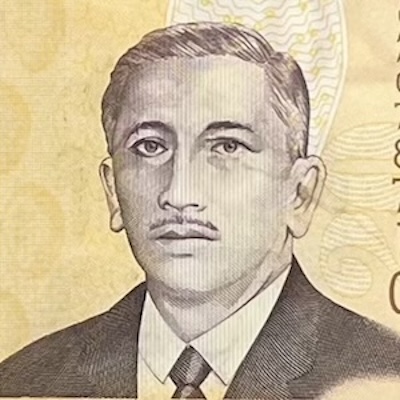
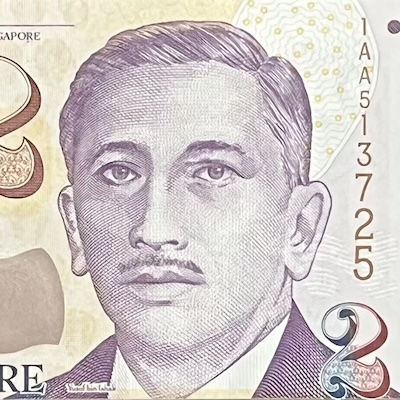
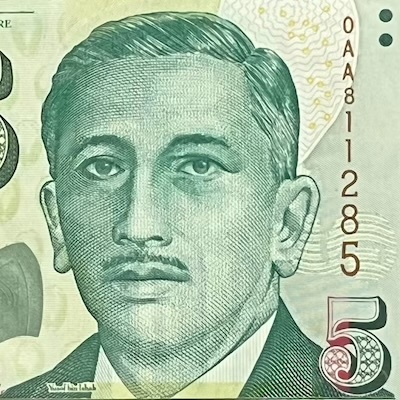
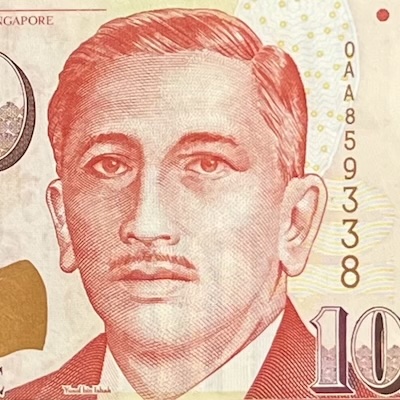
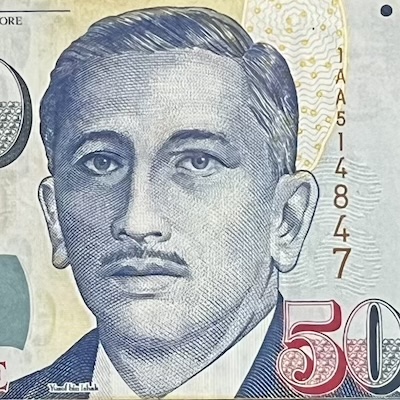
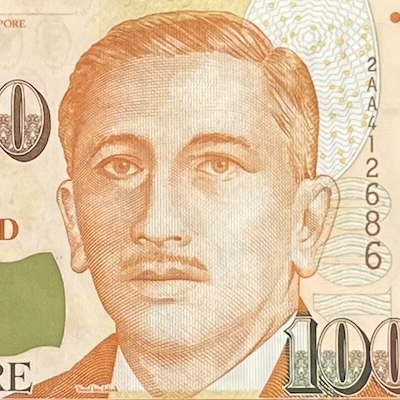
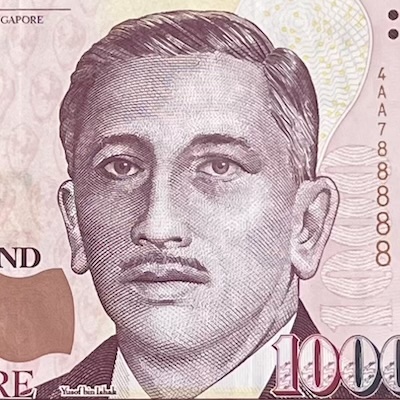
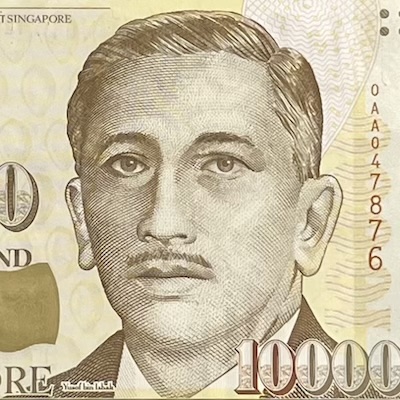
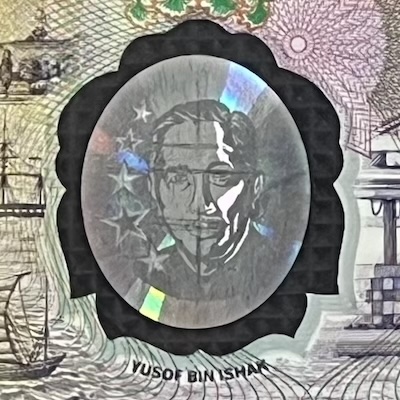
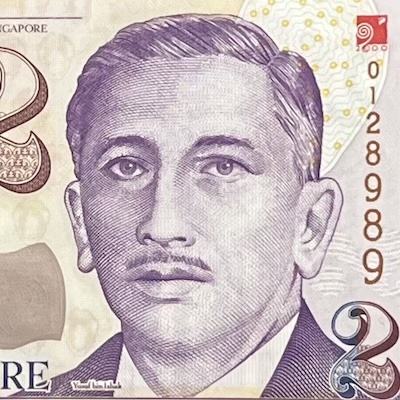
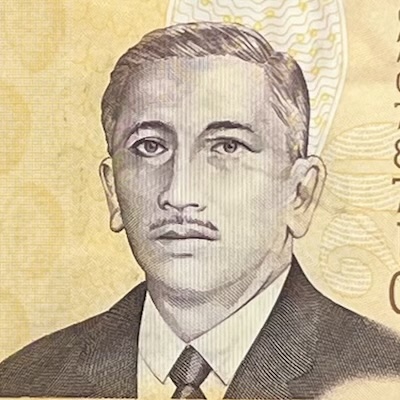
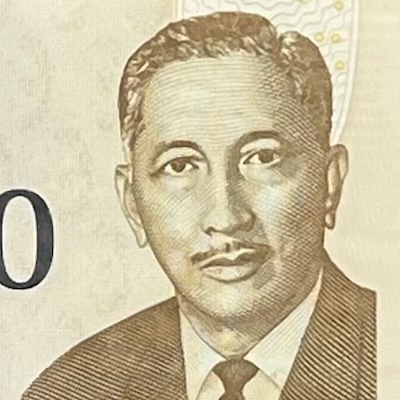
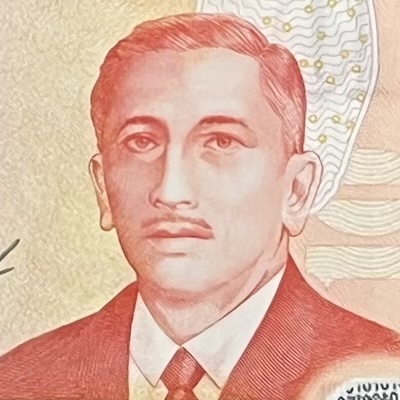
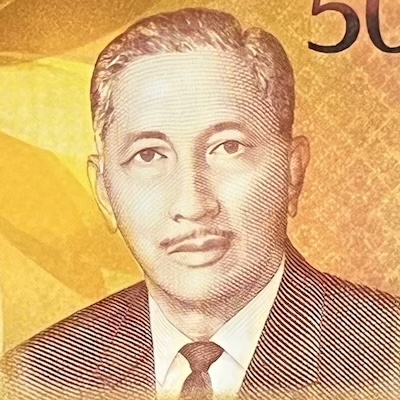
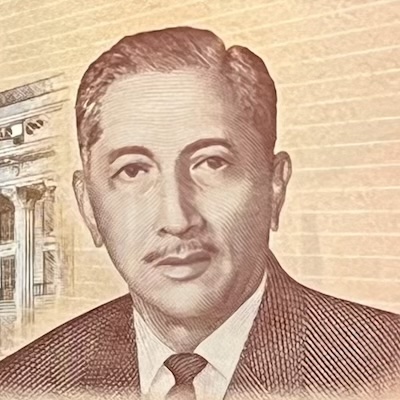
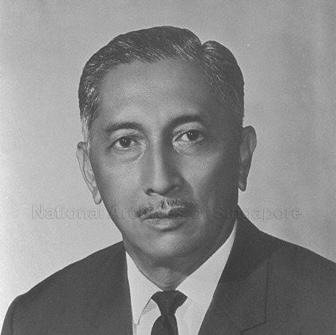
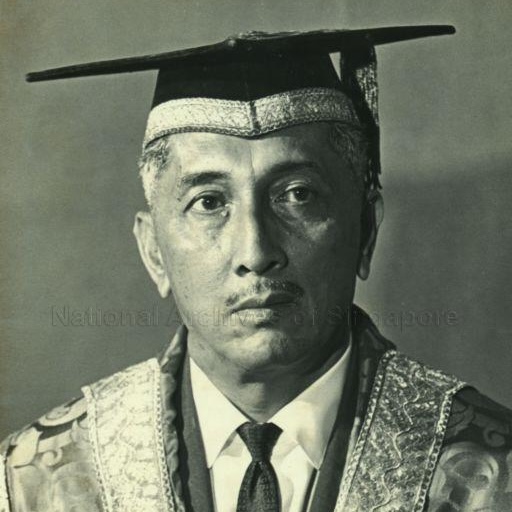
Yusof Ishak was our first President from 1965 to 1970. He led during a time when Singapore had just become independent and needed a steady hand. He stood for what we were trying to build—an honest, united, and fair society. In acknowledgement of his contributions, his portrait appears on many of our banknotes. In the Portrait series, he was featured as the theme design throughout all denominations, unlike previous series where a different orchid, bird, or ship appeared on different notes. His face is also shown on all our commemorative notes, except the 1996 MAS25 note, possibly because that was a rare milestone in our history that did not have his footprints on it.
P2
P5
P10
P50
P100
P1000
P10000
SG25
In the Portrait series, the image of Yusof Ishak was painted by local artist Chua Mia Tee. On the back of the notes are themes that reflect values important to Singapore, each linked to the late President’s life. The $2 note carries the education theme, featuring Victoria School and Raffles Institution—schools where he studied and first met students of other races. The $5 note reflects the garden city theme, an idea he supported as a keen gardener and orchid enthusiast. The $10 note highlights sports, showing his active school life, where he represented Raffles Institution in hockey, cricket, swimming, weightlifting, water polo, and boxing, and won national titles in boxing and weightlifting.
M2
CIA40
SG50-50
SG50-10
CIA50
B200
Original Portrait1
Portrait2
The $50 note presents the arts theme: he was an avid photographer who believed art could help people of different races understand one another better. The $100 note focuses on youth—he was a student leader, a prefect at Raffles Institution, and the first Singaporean student to be appointed Second Lieutenant in the National Cadet Corps. The $1000 note represents governance, reflecting his role as Singapore’s first President. Finally, the $10000 note reflects the economics theme—in 1939, he started the Utusan Melayu newspaper by raising funds directly from ordinary Malays in town and in the kampongs, making him one of Singapore’s earliest entrepreneurs. The newspaper went on to become a great success.
Attributions
1. Image from National Archives of Singapore. Source: https://www.nas.gov.sg/archivesonline/photographs/record-details/982925b6-1162-11e3-83d5-0050568939ad.
2. Image from National Archives of Singapore. Source: https://www.nas.gov.sg/archivesonline/photographs/record-details/b4415ab5-1162-11e3-83d5-0050568939ad.
Disclaimer. I built this website as a hobby, to share with others what I’ve learnt. All the information here is written based on my own research and understanding, and I don’t guarantee that everything is correct, complete, or updated. While I sell banknotes here, I don’t profit from them, as they are spare pieces from my private collection. All the banknote images here are taken by myself and they belong to me. The non-banknote images, with sources that I’ve attributed on every page, are used solely for illustration and non-commercial education purposes. If you are a copyright holder and believe something has been used inappropriately, please contact me, and I will immediately review or remove it.